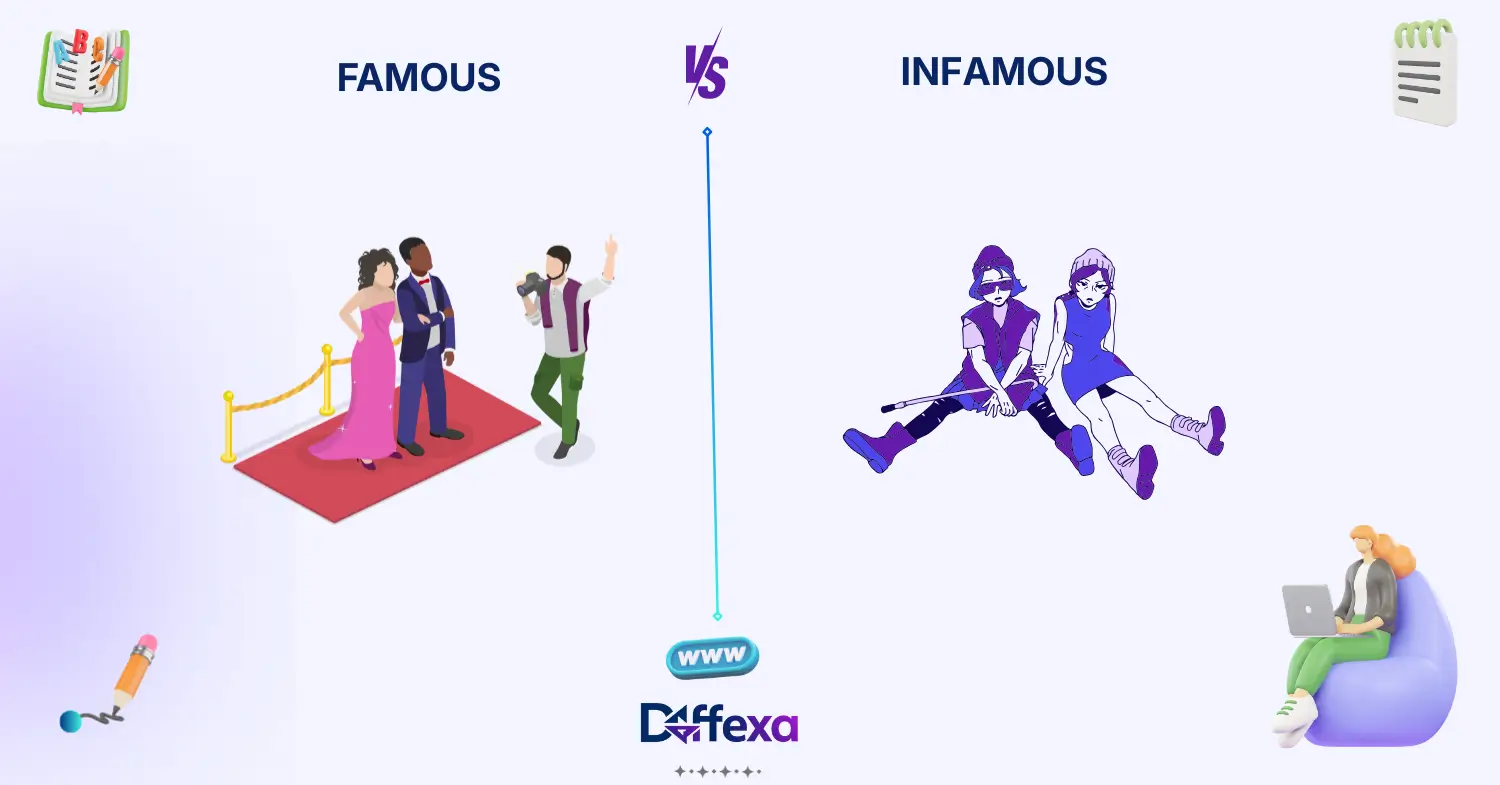
Difference between famous and infamous often confuses English learners and even native speakers. Imagine hearing someone say a person is “infamous.” Is that praise or criticism?
Many people use these two words as if they mean the same thing. Both describe someone widely known by the public. Yet their meanings carry very different emotional tones.
The difference between famous and infamous lies in reputation. Someone famous is known for positive achievements, while someone infamous is known for negative actions or scandals.
Understanding the difference between famous and infamous helps students, writers, and speakers use English more accurately. Let’s explore how these words truly differ.
Key Difference Between the Two
The main difference between famous and infamous is the type of reputation associated with each word.
The word famous describes someone who is widely known for positive reasons, such as talent, achievements, or contributions.
The word infamous describes someone widely known for negative reasons, such as crimes, scandals, or controversial actions.
In simple terms:
- Famous = well‑known for good reasons
- Infamous = well‑known for bad reasons
Both words refer to public recognition, but the emotional tone is very different.
Why Is Their Difference Necessary to Know
Knowing the difference between famous and infamous is important for learners of English because these words carry strong emotional meanings.
Students benefit from understanding this distinction when writing essays, giving presentations, or discussing historical figures.
Professionals such as journalists, teachers, and writers must choose the correct word to avoid misleading readers.
In society, language shapes how people perceive individuals and events. Using the wrong term could accidentally praise someone known for harmful actions.
Now let’s look at how these words are pronounced.
Pronunciation
Famous
US: /ˈfeɪ.məs/
UK: /ˈfeɪ.məs/
Infamous
US: /ˈɪn.fə.məs/
UK: /ˈɪn.fə.məs/
Although their pronunciation is similar, the prefix “in‑” changes the meaning dramatically.
Next, we will explore their core definitions.
Core Definitions
Famous
The word famous describes someone or something widely recognized by many people, usually for positive achievements or talents.
It often refers to celebrities, artists, leaders, athletes, or historical figures admired by the public.
Example:
Example: The chef became famous for creating unique international recipes.
Infamous
The word infamous describes someone well known for negative or shocking behavior.
People use it when someone becomes widely recognized because of crime, controversy, or wrongdoing.
Example:
Example: The criminal became infamous after a widely reported bank robbery.
10 Clear Differences Between Famous and Infamous
1. Reputation Type
Famous describes positive recognition.
Infamous describes negative recognition.
Example for Famous:
Example: The scientist became famous for discovering a new medicine.
Example for Infamous:
Example: The hacker became infamous for stealing private data.
2. Emotional Tone
Famous carries admiration or respect.
Infamous carries criticism or disapproval.
Example for Famous:
Example: The singer became famous worldwide.
Example for Infamous:
Example: The corrupt politician became infamous.
3. Social Perception
People admire famous individuals.
People condemn infamous individuals.
Example for Famous:
Example: A famous athlete inspires young players.
Example for Infamous:
Example: An infamous criminal frightens communities.
4. Cultural Impact
Famous figures often shape culture positively.
Infamous figures may shape culture through scandals or cautionary stories.
Example for Famous:
Example: A famous artist influences modern design.
Example for Infamous:
Example: An infamous scandal changes public policy.
5. Severity of Actions
Famous people gain recognition through achievements.
Infamous individuals gain attention through harmful actions.
Example for Famous:
Example: A famous writer publishes bestselling novels.
Example for Infamous:
Example: An infamous thief appears in news headlines.
6. Context of Use
Famous appears in entertainment, sports, science, and culture.
Infamous appears in crime reports, historical scandals, or controversies.
Example for Famous:
Example: A famous actor wins awards.
Example for Infamous:
Example: An infamous criminal becomes part of history.
7. Rational Evaluation
Famous recognition comes from success.
Infamous recognition comes from wrongdoing.
Example for Famous:
Example: A famous doctor saves many lives.
Example for Infamous:
Example: An infamous fraudster deceives investors.
8. Psychological Impact
Famous people often inspire admiration.
Infamous individuals create fear or criticism.
Example for Famous:
Example: A famous athlete motivates fans.
Example for Infamous:
Example: An infamous dictator frightens citizens.
9. Tone in Writing
Writers use famous in positive storytelling.
Writers use infamous in negative or cautionary contexts.
Example for Famous:
Example: The famous inventor changed technology.
Example for Infamous:
Example: The infamous crime shocked the nation.
10. Expression Style
Famous suggests pride or honor.
Infamous suggests shame or notoriety.
Example for Famous:
Example: The city is famous for its historic monuments.
Example for Infamous:
Example: The prison became infamous for harsh conditions.
Why Knowing the Difference Matters
Understanding the difference between famous and infamous improves language accuracy in communication.
Students must learn this distinction to write clear essays and academic papers. Using the wrong word could change the meaning of a sentence.
Professionals such as journalists, historians, and educators also rely on these words to describe public figures accurately.
Real‑world consequences of confusion
If someone calls a respected scientist “infamous,” the statement could sound insulting or misleading.
Correct word choice helps maintain respectful and accurate communication.
Why People Get Confused
Similar Spelling
Both words share the same root “famous,” which creates confusion.
Semantic Overlap
Both words describe people who are widely known.
Context‑Based Usage
Learners sometimes assume the prefix “in‑” simply intensifies the word rather than reversing the tone.
Informal Speech
In casual conversation, people occasionally misuse the words.
Connotation & Emotional Tone
Connotation (bold) = the emotional meaning associated with a word.
Famous
Positive: Usually linked with success, talent, or admiration.
Example: A famous musician performs worldwide.
Negative: Rarely negative, but sometimes fame brings pressure.
Example: The famous actor struggles with privacy.
Neutral: In historical discussions, it simply indicates wide recognition.
Example: The famous building attracts tourists.
Infamous
Positive: Rarely positive, but sometimes used humorously.
Example: The restaurant is infamous for huge portions.
Negative: Strongly associated with crime or scandal.
Example: The infamous fraud case shocked investors.
Neutral: Occasionally used historically to describe notorious events.
Example: The infamous battle changed history.
Usage in Metaphors, Similes & Idioms
Both words appear in figurative language.
Example:
“The actor became famous overnight.”
Example:
“The prison became infamous across the country.”
Writers use these expressions to emphasize public reputation.
Comparison Table
| Feature | Famous | Infamous |
|---|---|---|
| Meaning | Widely known for good reasons | Widely known for bad reasons |
| Tone | Positive | Negative |
| Usage | Achievements and talent | Crime or scandal |
| Context | Media, arts, culture | News, crime history |
| Formality | Neutral or positive | Critical or negative |
Which Is Better in What Situation?
When to Use Famous
Use famous when describing someone admired for achievements or talent. For example, a scientist who discovers a life‑saving treatment may become famous.
When to Use Infamous
Use infamous when describing someone known for harmful or controversial actions.
Situational Clarity
If a person gains recognition through success or talent, “famous” is appropriate. If recognition comes from wrongdoing, “infamous” fits better.
Contextual Correctness
Choosing the right word ensures readers understand whether the reputation is positive or negative.
Literary or Cultural References
Book:
Celebrity Culture (Media Studies, Ellis Cashmore, 2014) explores how famous individuals influence modern society.
Movie:
Catch Me If You Can (USA, 2002) shows how a criminal becomes infamous for elaborate fraud schemes.
These examples show how fame and notoriety appear in culture.
FAQs
1. Can someone be both famous and infamous?
Yes. Some public figures gain fame for achievements but later become infamous because of scandals. Public perception can change over time.
2. Is infamous always negative?
In most cases, yes. The word usually carries a negative tone because it refers to notoriety or wrongdoing.
3. Why do people confuse famous and infamous?
People confuse them because the words share similar spelling and both describe someone widely known.
4. Can infamous ever be used humorously?
Sometimes writers use it playfully. For example, a restaurant might be “infamous” for extremely spicy food.
5. What is the opposite of famous?
The opposite would be “unknown” or “obscure.” However, infamous is not exactly the opposite because it still means widely known.
Conclusion
The difference between famous and infamous centers on reputation. Famous describes people widely known for achievements, talent, or positive contributions. Infamous describes individuals known for wrongdoing, scandal, or controversy.
Although both words describe public recognition, their emotional tones differ sharply. One suggests admiration, while the other signals criticism or notoriety.
Understanding this distinction improves writing, speaking, and communication clarity. Students, professionals, and everyday speakers benefit from choosing the correct word.
As you continue learning English vocabulary, paying attention to subtle differences like this helps you express ideas more accurately and confidently. 🌟

Sajid Ali is an English language educator and content specialist with 7+ years of teaching experience. He holds master’s degrees in Information Technology and Education from the Virtual University of Pakistan and writes SEO-optimized, learner-friendly vocabulary content for diffexa.com.