Difference between liqueur and liquor often confuses learners when they read restaurant menus, cooking recipes, or English vocabulary books. Many people assume both words mean the same thing because they look and sound very similar.
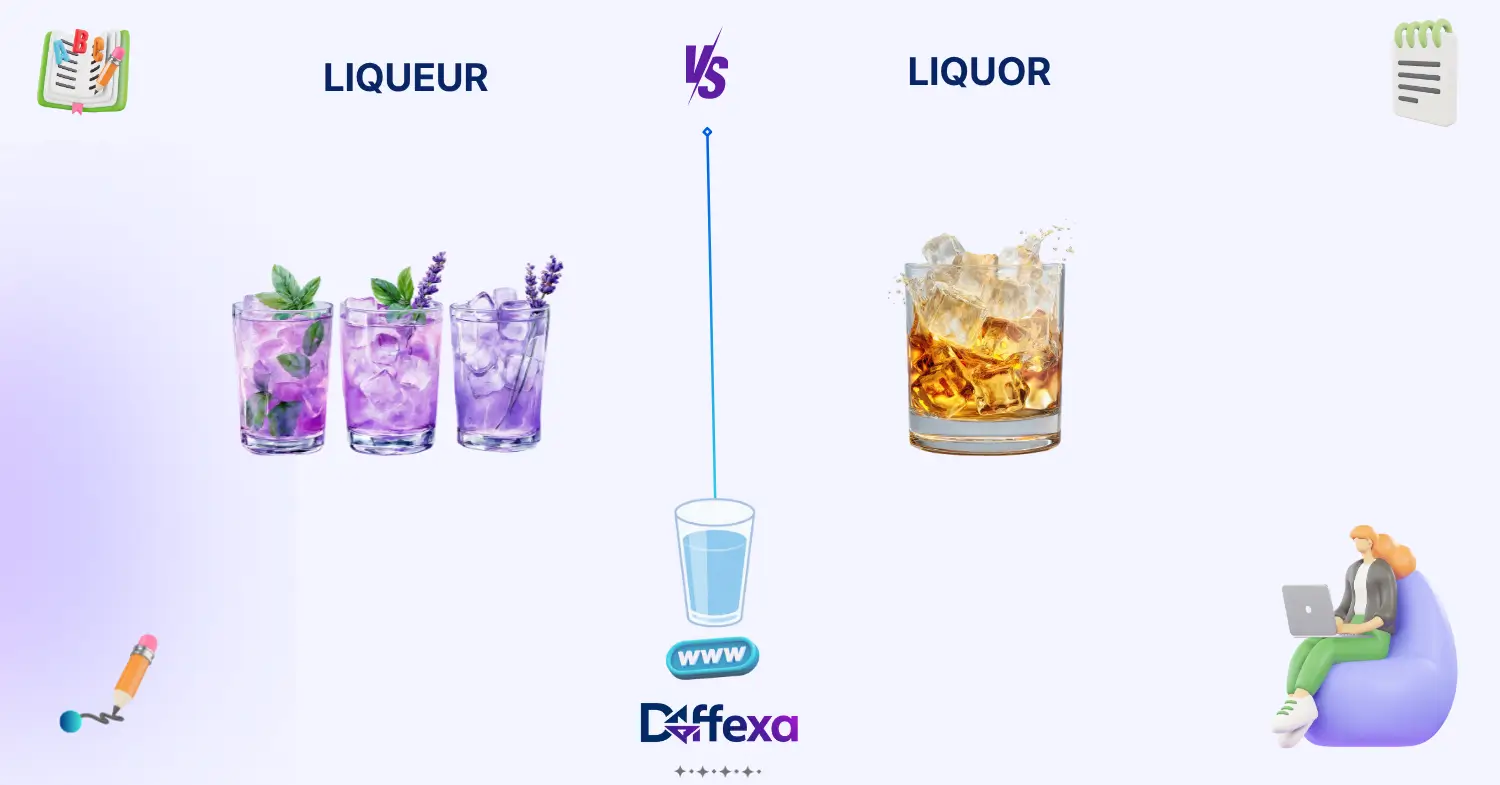
In simple terms, liquor is a strong distilled alcoholic drink, while liqueur is a sweet flavored alcoholic beverage made by adding sugar and flavorings. Understanding the difference between liqueur and liquor helps learners use the correct word in conversations, writing, and academic discussions.
Many English learners search for the difference between liqueur and liquor because both terms appear in hospitality, cooking, and everyday language. Without clear understanding, people may use the wrong term in formal or informal communication.
This guide explains the difference between liqueur and liquor in a simple and structured way so readers can easily understand meanings, pronunciation, and real-life usage.
Key Difference Between the Two
The main difference between liqueur and liquor is sweetness and purpose.
Liquor is a strong distilled alcoholic beverage such as whiskey, vodka, or rum. It usually contains high alcohol and no added sugar.
Liqueur is a flavored alcoholic drink made by adding sugar, fruits, herbs, or spices to liquor. It is sweeter and often used in desserts or cocktails.
In simple words, liquor is strong and plain, while liqueur is sweet and flavored.
This basic difference helps learners quickly understand how the two terms work in real life.
Why Is Their Difference Necessary to Know
Understanding the difference between liqueur and liquor helps English learners improve vocabulary and communication. It allows them to use the correct term in speaking and writing, especially in hospitality and culinary contexts.
For professionals such as chefs, bartenders, translators, and writers, this distinction is essential. It ensures accurate communication in menus, recipes, and international hospitality standards.
In society, correct usage avoids confusion and misunderstanding in cultural and social settings. People can communicate clearly and professionally in global environments.
Now, let us explore how these terms are pronounced correctly.
Pronunciation
Liqueur
US: /lɪˈkɜːr/
UK: /lɪˈkjʊə/
Liquor
US: /ˈlɪkər/
UK: /ˈlɪkə/
Both words sound similar, which often creates confusion for learners. Correct pronunciation helps in speaking confidently and avoiding misunderstandings.
Now, let us define both terms clearly before moving into detailed comparison.
Core Definitions
Liqueur
Liqueur is a sweet alcoholic drink made by adding sugar, fruits, herbs, or spices to distilled spirits. It usually has lower alcohol content and is used in desserts and cocktails. The emotional tone is neutral and often associated with luxury or flavor.
Example:
Example: The chef added chocolate liqueur to the dessert.
Liquor
Liquor is a strong distilled alcoholic beverage made through fermentation and distillation. It contains high alcohol and is usually not sweet. The emotional tone is neutral and often associated with strong drinks.
Example:
Example: The restaurant serves different types of liquor.
10 Clear Differences Between Liqueur and Liquor
1. Emotional Intensity
Liqueur feels lighter and more elegant in tone. Liquor sounds stronger and more direct.
Example for Liqueur:
Example: She enjoyed a sweet liqueur after dinner.
Example for Liquor:
Example: He ordered strong liquor at the bar.
2. Duration
Liqueur is often consumed slowly in small amounts. Liquor may be consumed in larger or stronger servings.
Example for Liqueur:
Example: Liqueur is sipped slowly.
Example for Liquor:
Example: Liquor is served in shots.
3. Focus
Liqueur focuses on flavor and sweetness. Liquor focuses on alcohol strength.
Example for Liqueur:
Example: The liqueur had a fruity taste.
Example for Liquor:
Example: The liquor was very strong.
4. Severity
Liqueur is mild in alcohol strength. Liquor is stronger and more intense.
Example for Liqueur:
Example: The drink was mild.
Example for Liquor:
Example: The drink was strong.
5. Rationality
Liqueur is made for taste and enjoyment. Liquor is made for strength and purity.
Example for Liqueur:
Example: It enhances flavor.
Example for Liquor:
Example: It provides strong alcohol.
6. Formality
Liqueur appears in culinary and hospitality language. Liquor appears in general and legal contexts.
Example for Liqueur:
Example: Menus list liqueurs.
Example for Liquor:
Example: Laws regulate liquor.
7. Context of Use
Liqueur is used in desserts and cocktails. Liquor is used in drinks and spirits.
Example for Liqueur:
Example: Coffee liqueur is popular.
Example for Liquor:
Example: Liquor is sold in stores.
8. Psychological Impact
Liqueur creates a refined image. Liquor creates a strong and direct image.
Example for Liqueur:
Example: Liqueur sounds elegant.
Example for Liquor:
Example: Liquor sounds powerful.
9. Tone
Liqueur sounds sophisticated. Liquor sounds straightforward.
Example for Liqueur:
Example: The liqueur was premium.
Example for Liquor:
Example: The liquor was strong.
10. Expression Style
Liqueur is expressed in culinary language. Liquor is expressed in general language.
Example for Liqueur:
Example: The recipe uses liqueur.
Example for Liquor:
Example: The shop sells liquor.
Why Knowing the Difference Matters
Students must understand the difference between liqueur and liquor to improve English vocabulary and comprehension. It helps them use accurate words in writing and speaking.
Professionals in hospitality and culinary fields must know this difference to maintain clarity in communication and documentation. Correct terminology improves international standards and professionalism.
Society benefits because accurate language reduces confusion and promotes cultural understanding in global communication.
Real‑world consequences of confusion
Confusing liqueur and liquor can lead to mistakes in menus, recipes, and conversations. A person may order the wrong drink or misunderstand instructions. Clear knowledge prevents such misunderstandings.
Why People Get Confused
Similar Spelling or Pronunciation
Both words look and sound very similar, which creates confusion for learners.
Semantic Overlap
Both refer to alcoholic beverages and appear in the same context.
Context-Based Usage
Restaurants and menus sometimes use both terms together.
Influence of Informal Speech
People often use liquor as a general term for all alcoholic drinks.
Connotation & Emotional Tone
Connotation = emotional meaning attached to a word.
The emotional meaning associated with a word.
Liqueur
Positive:
Associated with flavor and elegance.
Example: Liqueur adds richness to desserts.
Negative:
May seem expensive or luxury-focused.
Example: Liqueur sounds premium.
Neutral:
Used in culinary language.
Example: Liqueur is a flavored spirit.
Liquor
Positive:
Associated with strong traditional drinks.
Example: Liquor is widely used.
Negative:
May sound harsh or strong.
Example: Liquor suggests strong alcohol.
Neutral:
General term for distilled spirits.
Example: Liquor includes whiskey and vodka.
Usage in Metaphors, Similes & Idioms
These words rarely appear in idioms but appear in expressions.
Examples:
- His words were as strong as liquor.
- Her voice was as smooth as liqueur.
These comparisons help describe strength and smoothness in language.
Comparison Table
| Feature | Liqueur | Liquor |
|---|---|---|
| Meaning | Sweet flavored alcohol | Strong distilled alcohol |
| Tone | Elegant and refined | Strong and direct |
| Usage | Desserts and cocktails | Drinks and spirits |
| Context | Culinary and hospitality | General and legal |
| Formality | Moderate | High |
Which Is Better in What Situation?
When to Use Liqueur
Use liqueur when discussing flavored alcoholic drinks, desserts, or cocktails. It fits culinary and hospitality conversations.
When to Use Liquor
Use liquor when discussing distilled spirits or general alcoholic beverages. It suits everyday and legal contexts.
Situational Clarity
Choose liqueur for flavor-based drinks and liquor for strong spirits.
Contextual Correctness
Using the correct term improves communication and avoids confusion in professional settings.
Literary or Cultural References
Book:
The Bartender’s Bible (Hospitality, Gary Regan, 1991) explains liquor and liqueur usage in drinks.
Movie:
Casablanca (USA, 1942) shows cultural and social settings where liquor is commonly discussed.
These references highlight the role of these terms in culture and communication.
FAQs
1. Is liqueur the same as liquor?
No, liqueur is not the same as liquor. Liqueur is sweet and flavored, while liquor is strong and plain. Both belong to alcoholic beverages but differ in composition and use.
2. Is liqueur stronger than liquor?
No, liqueur is usually weaker than liquor. Liquor contains higher alcohol content. Liqueur contains added sugar and flavorings, which reduce strength.
3. Can liquor be used to make liqueur?
Yes, liquor is used as a base to make liqueur. Sugar, fruits, and herbs are added to create flavor. This process turns liquor into liqueur.
4. Why do people confuse liqueur and liquor?
People confuse them because of similar spelling and pronunciation. Both refer to alcoholic drinks. Context and knowledge help differentiate them.
5. Is liqueur used in cooking?
Yes, liqueur is commonly used in cooking and desserts. It adds flavor and aroma to dishes. Many chefs use it in sauces and sweets.
Conclusion
Understanding the difference between liqueur and liquor helps learners use accurate vocabulary in English communication. While liquor refers to strong distilled alcohol, liqueur refers to sweet and flavored alcoholic beverages.
This distinction is important for students, professionals, and language learners because it improves clarity in speaking, writing, and hospitality communication. Correct usage avoids misunderstandings in menus, recipes, and conversations.
Clear knowledge of these terms strengthens vocabulary and cultural understanding. Keep learning English word differences and apply them in real-life communication to become a confident and accurate speaker 📚

Dr. Olivia Bennett is a science and medical content specialist with a strong academic background in biology and health sciences. She has extensive experience explaining complex scientific and medical concepts in simple language for general readers. At Diffexa, Olivia writes and reviews science and health comparison articles to ensure clarity, accuracy, and factual reliability.
Expertise:
- Medical & Health Topics
- Biology & Science
- Research Writing
- Educational Content