Difference between frustration and anger often appears in everyday conversations. Imagine trying to fix a slow computer or solve a difficult math problem. You may feel irritated first, then suddenly very upset.
Many people use these emotions interchangeably. However, the difference between frustration and anger lies in intensity and emotional response. Frustration usually begins when something blocks your goals, while anger often emerges as a stronger reaction.
Understanding the difference between frustration and anger helps people communicate emotions clearly. Students, writers, and professionals benefit from knowing when each word fits better.
When you learn the difference between frustration and anger, you describe feelings more accurately and avoid misunderstandings. Let’s begin with the key distinction between these two emotions. 🙂
Key Difference Between the Two
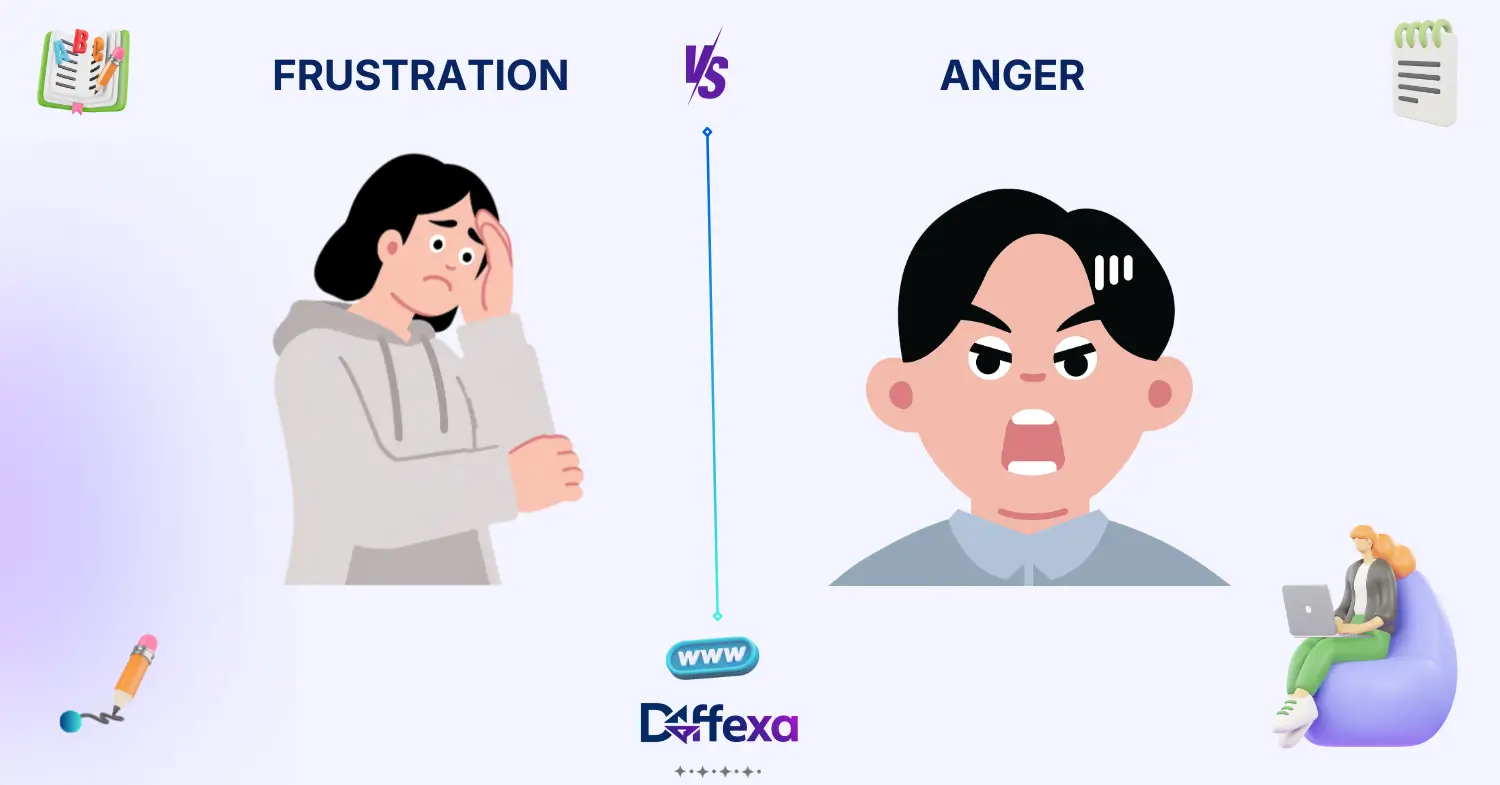
The main difference between frustration and anger lies in emotional intensity and reaction.
Frustration usually occurs when something prevents you from achieving a goal. It is often mild or moderate irritation. It can feel uncomfortable but usually remains controlled.
Anger, however, is a stronger emotional response. It often appears when someone feels wronged, threatened, or deeply annoyed.
In simple terms:
- Frustration = blocked goal or obstacle
- Anger = stronger emotional reaction
Frustration can sometimes lead to anger if the problem continues or becomes worse.
Why Is Their Difference Necessary to Know
Understanding emotional vocabulary helps students express feelings clearly. Many English learners confuse these two words when describing emotions.
Professionals such as psychologists, teachers, and managers also benefit from this distinction. Recognizing whether someone feels frustrated or angry helps them respond appropriately.
In society, clear emotional language improves communication. When people describe feelings accurately, they reduce misunderstandings and handle conflicts better.
Now that we know why this distinction matters, let’s explore how to pronounce these words correctly.
Pronunciation 🔊
Frustration
US: /frʌˈstreɪʃən/
UK: /frʌˈstreɪʃən/
Anger
US: /ˈæŋɡər/
UK: /ˈæŋɡə/
These pronunciations help learners speak about emotions more confidently. Now we can explore their definitions before comparing them in detail.
Core Definitions 📚
Frustration
Frustration is the feeling of annoyance or disappointment when something prevents you from reaching a goal. It usually develops gradually when obstacles appear.
The emotional tone is often mild to moderate irritation rather than intense rage.
Example:
Example: She felt frustration when the printer stopped working before the meeting.
Anger
Anger is a strong emotional reaction to perceived injustice, threat, or irritation. It often produces intense feelings and visible reactions.
The emotional tone is typically powerful and confrontational.
Example:
Example: He felt anger when someone blamed him unfairly.
10 Clear Differences Between Frustration and Anger
Emotional Intensity
Frustration usually involves moderate irritation. It often feels uncomfortable but controlled.
Anger is much stronger. It can lead to shouting, arguments, or visible reactions.
Example for Frustration:
Example: She felt frustration when the website kept crashing.
Example for Anger:
Example: He expressed anger after hearing the unfair accusation.
Duration
Frustration often develops gradually when problems repeat.
Anger can appear suddenly after a triggering event.
Example for Frustration:
Example: He felt frustration after several failed attempts.
Example for Anger:
Example: She felt anger immediately after the rude comment.
Focus
Frustration focuses on a problem or obstacle.
Anger usually focuses on a person or situation that seems unfair.
Example for Frustration:
Example: She felt frustration with the complicated instructions.
Example for Anger:
Example: He felt anger toward the person who lied.
Severity
Frustration is usually less severe and easier to control.
Anger can become intense and sometimes aggressive.
Example for Frustration:
Example: The slow internet caused frustration.
Example for Anger:
Example: The argument triggered anger.
Rationality
Frustration often remains logical and problem‑focused.
Anger can reduce rational thinking when emotions rise.
Example for Frustration:
Example: She calmly explained her frustration.
Example for Anger:
Example: His anger made him speak loudly.
Formality
Frustration appears often in professional or academic discussions.
Anger appears more frequently in emotional or personal contexts.
Example for Frustration:
Example: The manager mentioned employee frustration.
Example for Anger:
Example: The customer expressed anger during the complaint.
Context of Use
Frustration appears commonly in work, learning, and problem‑solving contexts.
Anger appears more often in conflict or emotional situations.
Example for Frustration:
Example: Students felt frustration during the difficult exam.
Example for Anger:
Example: The protest showed public anger.
Psychological Impact
Frustration usually motivates people to try again or find solutions.
Anger can cause confrontation or emotional reactions.
Example for Frustration:
Example: His frustration pushed him to improve.
Example for Anger:
Example: Her anger caused an argument.
Tone
Frustration carries a tone of irritation and disappointment.
Anger carries a tone of intense emotion and conflict.
Example for Frustration:
Example: She spoke about her frustration calmly.
Example for Anger:
Example: He expressed anger loudly.
Expression Style
Frustration often appears through sighing, complaining, or quiet irritation.
Anger often appears through raised voices or strong words.
Example for Frustration:
Example: He sighed in frustration.
Example for Anger:
Example: She shouted in anger.
Why Knowing the Difference Matters 🎯
Students benefit from understanding emotional vocabulary. Accurate words help them express feelings clearly in essays, discussions, and daily communication.
Professionals such as teachers, counselors, and managers also need this knowledge. Recognizing whether someone feels frustrated or angry helps them respond calmly and constructively.
In society, clear emotional language reduces conflicts. When people identify feelings correctly, they can solve problems more effectively.
Real‑world consequences of confusion
If someone mistakes frustration for anger, they may overreact or misunderstand the situation. Clear language helps people manage emotions more responsibly.
Why People Get Confused 🧠
Similar Emotional Context
Both words describe negative feelings, so learners often think they mean the same thing.
Semantic Overlap
Frustration sometimes leads to anger, which creates confusion.
Context‑Based Usage
People occasionally use the words loosely in conversation.
Influence of Informal Speech
In casual speech, people often say “I’m angry” even when they only feel frustrated.
Connotation & Emotional Tone 🎭
Connotation = emotional meaning attached to a word.
Frustration
Positive:
Frustration can motivate improvement.
Example:
His frustration pushed him to learn new skills.
Negative:
It may create stress.
Example:
Constant delays caused frustration.
Neutral:
It often describes a common everyday feeling.
Example:
She expressed frustration about the schedule.
Anger
Positive:
Anger can motivate people to defend fairness.
Example:
Public anger encouraged social change.
Negative:
It may lead to conflict.
Example:
His anger caused a heated argument.
Neutral:
In psychology, it simply describes an emotion.
Example:
The therapist discussed anger management.
Usage in Metaphors, Similes & Idioms 🗣
These emotions appear in many idioms.
Examples:
“He burned with anger.”
“She sighed in frustration.”
These expressions help describe emotional experiences vividly.
Comparison Table 📊
| Feature | Frustration | Anger |
|---|---|---|
| Meaning | Irritation caused by obstacles | Strong emotional reaction |
| Tone | Mild to moderate | Intense |
| Usage | Problem‑solving situations | Conflict situations |
| Context | Work, learning, goals | Personal disputes |
| Formality | Common in professional language | Often emotional speech |
Which Is Better in What Situation? ⚖️
When to Use Frustration
Use frustration when describing irritation caused by obstacles or delays. It works well in work, learning, or problem‑solving contexts.
When to Use Anger
Use anger when describing strong emotional reactions to unfair treatment or conflict.
Situational Clarity
Choose frustration when the feeling relates to blocked goals. Choose anger when emotions become intense or confrontational.
Contextual Correctness
Correct word choice helps listeners understand the situation clearly.
Literary or Cultural References 📖
Book:
Anger: Wisdom for Cooling the Flames (Psychology, Thich Nhat Hanh, 2001)
Movie:
Inside Out (USA, 2015)
The film shows emotions such as anger and frustration as characters, helping viewers understand emotional reactions.
FAQs ❓
Is frustration the same as anger?
No. Frustration usually refers to irritation caused by obstacles. Anger describes a stronger emotional reaction to perceived injustice or conflict.
Can frustration turn into anger?
Yes. When frustration continues for a long time or becomes intense, it can develop into anger.
Which emotion is stronger?
Anger is generally stronger than frustration because it involves deeper emotional reactions.
Can frustration be positive?
Sometimes frustration motivates people to improve or find better solutions.
Why do people confuse these emotions?
People confuse them because both describe negative feelings and often occur in similar situations.
Conclusion 🏁
Understanding the difference between frustration and anger helps people describe emotions accurately. Frustration usually appears when obstacles block goals, while anger reflects a stronger reaction to perceived unfairness.
Both emotions play natural roles in human experience. However, recognizing the distinction helps individuals manage reactions and communicate feelings more clearly.
Students, professionals, and everyday speakers benefit from using precise emotional language. Clear vocabulary improves conversations, relationships, and conflict resolution.
By learning these differences, readers gain stronger emotional awareness and better communication skills. The next time you describe a feeling, pause and ask yourself: is it frustration or anger? 🙂

Sajid Ali is an English language educator and content specialist with 7+ years of teaching experience. He holds master’s degrees in Information Technology and Education from the Virtual University of Pakistan and writes SEO-optimized, learner-friendly vocabulary content for diffexa.com.