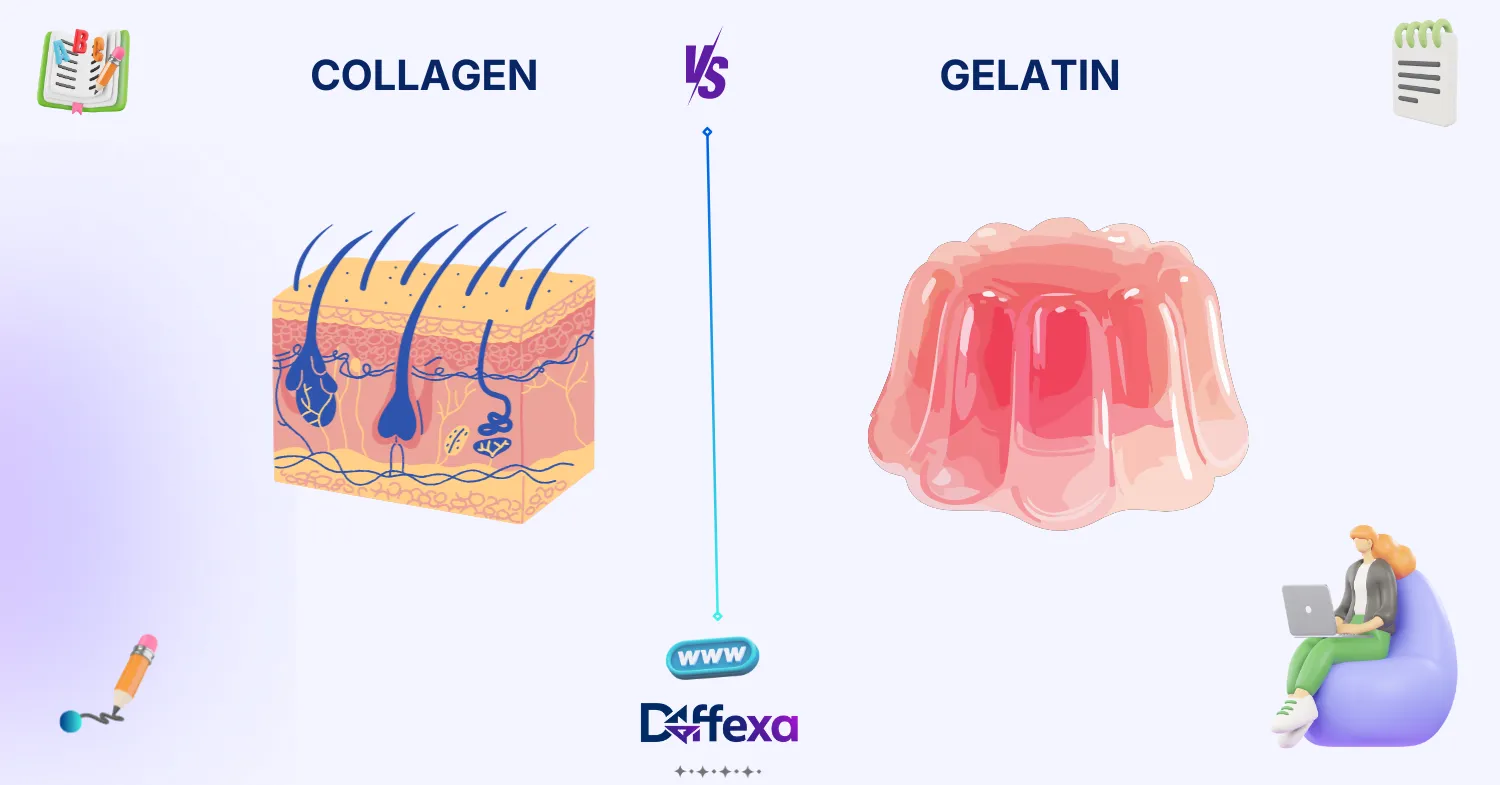
Difference between collagen and gelatin is a question many people ask when they read food labels or health articles. Imagine someone buying a protein supplement and noticing two options: collagen powder and gelatin powder. They look similar, yet the labels list different uses. This small moment often sparks curiosity.
The difference between collagen and gelatin mainly comes from how these proteins are processed and used. Collagen is a structural protein found in skin, bones, and connective tissue. Gelatin comes from collagen after it is heated and partially broken down.
Because they come from the same source, many people assume they are identical. However, the difference between collagen and gelatin affects how they behave in food, cooking, and nutrition.
Understanding these terms helps readers make sense of recipes, health discussions, and ingredient lists. Let’s begin by looking at their key differences.
Key Difference Between the Two
The main difference between collagen and gelatin lies in structure and functionality.
Collagen is a raw structural protein naturally present in animal connective tissues. It gives strength and elasticity to skin, tendons, and bones.
Gelatin forms when collagen is heated and partially broken down. This process changes the protein structure, allowing gelatin to dissolve in warm liquids and form gels when cooled.
In simple terms:
- Collagen = the original structural protein
- Gelatin = processed collagen used in cooking and food products
This transformation explains why gelatin works in desserts and jellies, while collagen appears in supplements or protein powders.
Why Is Their Difference Necessary to Know
Understanding the difference between collagen and gelatin is helpful for students, professionals, and everyday consumers.
For learners studying biology or nutrition, these terms explain how proteins function in the human body and in food science.
Professionals in culinary arts, nutrition, and food production must understand how collagen and gelatin behave during cooking and processing.
For society in general, clearer knowledge helps people read ingredient labels, understand recipes, and interpret health discussions more accurately.
Before exploring deeper comparisons, let’s learn how these words are pronounced.
🔊 Pronunciation
Collagen
US: /ˈkɑːlədʒən/
UK: /ˈkɒlədʒən/
Gelatin
US: /ˈdʒelətɪn/
UK: /ˈdʒelətɪn/
Now that we know how the words sound, we can move into clear definitions.
📚 Core Definitions
Collagen
Collagen is the most abundant protein in the human body. It forms connective tissues that support skin, bones, cartilage, and tendons.
Its tone in scientific discussion is neutral because it describes a natural biological component.
Example:
Biology Example: Scientists study collagen because it helps maintain skin strength and flexibility.
Gelatin
Gelatin is a processed protein derived from collagen through heating and hydrolysis. It dissolves in hot liquids and forms a soft gel when cooled.
Its tone is also neutral and often appears in culinary or food science discussions.
Example:
Cooking Example: The recipe uses gelatin to help the dessert set into a firm jelly.
📚 10 Clear Differences Between Collagen and Gelatin
1. Emotional Intensity
Collagen is usually discussed in scientific and health contexts.
Gelatin appears more often in food and cooking discussions.
Example for Collagen:
Example: Researchers studied collagen levels in skin tissue.
Example for Gelatin:
Example: The chef used gelatin to thicken the dessert.
2. Duration of Use
Collagen remains stable as a structural protein in living tissues.
Gelatin is used temporarily in food preparation and recipes.
Example for Collagen:
Example: Collagen supports joints and skin over a lifetime.
Example for Gelatin:
Example: Gelatin helps the pudding hold its shape.
3. Focus
Collagen focuses on biological structure and support.
Gelatin focuses on food texture and culinary use.
Example for Collagen:
Example: Doctors study collagen to understand tissue repair.
Example for Gelatin:
Example: Bakers use gelatin to stabilize cream fillings.
4. Severity
Collagen loss may relate to aging or tissue changes.
Gelatin does not usually relate to medical severity.
Example for Collagen:
Example: Aging reduces collagen in the skin.
Example for Gelatin:
Example: Gelatin simply forms a gel in cooking.
5. Rationality in Science
Collagen is studied in biological research and medicine.
Gelatin is studied mainly in food science and manufacturing.
Example for Collagen:
Example: Researchers examine collagen for wound healing.
Example for Gelatin:
Example: Food scientists test gelatin textures.
6. Formality
Collagen appears frequently in scientific and medical texts.
Gelatin appears in culinary and everyday contexts.
Example for Collagen:
Example: Medical textbooks explain collagen structure.
Example for Gelatin:
Example: A cookbook explains how gelatin sets desserts.
7. Context of Use
Collagen appears in biology, nutrition, and skincare discussions.
Gelatin appears in food preparation and recipes.
Example for Collagen:
Example: Nutrition articles discuss collagen protein.
Example for Gelatin:
Example: Candy manufacturers use gelatin in gummies.
8. Psychological Impact
Collagen discussions often relate to health and aging concerns.
Gelatin discussions usually focus on food enjoyment.
Example for Collagen:
Example: People worry about collagen loss with age.
Example for Gelatin:
Example: Gelatin desserts create a playful texture.
9. Tone
Collagen carries a scientific tone.
Gelatin carries a culinary tone.
Example for Collagen:
Example: A biology article describes collagen fibers.
Example for Gelatin:
Example: A recipe explains gelatin preparation.
10. Expression Style
Collagen appears in health and scientific language.
Gelatin appears in recipe instructions and food labels.
Example for Collagen:
Example: Supplements often list collagen peptides.
Example for Gelatin:
Example: A dessert mix contains gelatin powder.
🎯 Why Knowing the Difference Matters
Understanding the difference between collagen and gelatin helps students interpret biology and nutrition materials clearly. These terms often appear in science textbooks and health articles.
Professionals such as nutritionists, chefs, and food scientists rely on the correct terminology. Collagen and gelatin behave differently in cooking and research.
In everyday communication, knowing the difference helps consumers understand ingredient labels, recipes, and health discussions more accurately.
Real‑world consequences of confusion
If someone confuses collagen with gelatin, they might misunderstand how an ingredient works in a recipe or food product.
🧠 Why People Get Confused
Similar Names
The words collagen and gelatin sound similar and come from the same biological source.
Semantic Overlap
Both refer to proteins related to connective tissue, which creates conceptual overlap.
Context‑Based Usage
Health blogs and cooking websites often mention them together.
Informal Speech
In everyday conversation, people sometimes treat them as identical even though they behave differently.
🎭 Connotation & Emotional Tone
Connotation = emotional meaning attached to a word.
Connotation = the emotional meaning associated with a word.
Collagen
Positive: Often linked with healthy skin and tissue support.
Negative: Sometimes associated with aging concerns.
Neutral: Used scientifically in biology discussions.
Example: Researchers measured collagen levels in skin samples.
Gelatin
Positive: Often connected with enjoyable desserts and sweets.
Negative: Some people associate it with processed foods.
Neutral: Used neutrally in culinary science.
Example: The chef added gelatin to help the mousse set.
🗣 Usage in Metaphors, Similes & Idioms
These words rarely appear in traditional idioms, but they can appear in descriptive comparisons.
Example:
- The structure of the material was as strong as collagen fibers.
- The dessert texture became smooth like gelatin.
Such comparisons highlight texture and structural properties.
📊 Comparison Table
| Feature | Collagen | Gelatin |
|---|---|---|
| Meaning | Natural structural protein | Processed form of collagen |
| Tone | Scientific | Culinary |
| Usage | Biology, health discussions | Food preparation |
| Context | Body tissues and supplements | Desserts and food products |
| Formality | Scientific terminology | Everyday cooking term |
⚖️ Which Is Better in What Situation?
When to Use Collagen
Use collagen when discussing biological proteins in the body, health research, or nutritional supplements. The term fits scientific or medical discussions.
When to Use Gelatin
Use gelatin when talking about cooking, food preparation, or ingredients that help liquids form a gel.
Situational Clarity
Choosing the right word depends on context. Biology topics usually use collagen, while culinary topics prefer gelatin.
Contextual Correctness
For example, a recipe uses gelatin, while a health article may discuss collagen in skin or joints.
📖 Literary or Cultural References
Book:
On Food and Cooking (Food Science, Harold McGee, 1984)
Movie:
Julie & Julia (USA, 2009)
These works explore cooking science and culinary techniques that often involve gelatin.
❓ FAQs
1. Are collagen and gelatin the same protein?
Collagen and gelatin are closely related but not identical. Collagen is the original structural protein found in connective tissue. Gelatin forms when collagen is heated and partially broken down. This process changes its physical properties.
2. Why does gelatin form a gel but collagen does not?
Gelatin forms a gel because the heating process breaks collagen into smaller proteins. These proteins rearrange when cooled, creating a soft gel structure.
3. Can collagen turn into gelatin during cooking?
Yes. When collagen‑rich foods such as bones or skin cook slowly in liquid, the collagen converts into gelatin. This process gives soups and broths a thicker texture.
4. Why are both used in food products?
Collagen may appear in supplements or protein powders, while gelatin is useful for creating texture in foods such as gummies, marshmallows, and desserts.
5. Is gelatin always made from collagen?
Yes. Gelatin always originates from collagen, usually from animal connective tissues like bones or skin.
🏁 Conclusion
The difference between collagen and gelatin becomes clear once we understand their relationship. Collagen is a natural structural protein found in connective tissues such as skin, bones, and tendons. Gelatin forms when collagen is heated and partially broken down, changing its structure and allowing it to dissolve in warm liquids and form gels when cooled.
Although they come from the same source, their uses differ greatly. Collagen often appears in biological discussions and nutrition topics, while gelatin plays an important role in cooking and food production.
Learning the distinction helps readers understand recipes, ingredient labels, and scientific explanations more clearly. With this knowledge, anyone can confidently recognize how collagen and gelatin function in both science and everyday life. 📚

Sajid Ali is an English language educator and content specialist with 7+ years of teaching experience. He holds master’s degrees in Information Technology and Education from the Virtual University of Pakistan and writes SEO-optimized, learner-friendly vocabulary content for diffexa.com.