Difference between lonely and alone often becomes clear during quiet moments—like sitting in a room by yourself. Sometimes it feels peaceful. Other times, it feels empty.
Many people think these words mean the same thing. But the difference between lonely and alone is about emotions, not just situations.
You can be alone and feel happy. You can also be surrounded by people and still feel lonely. That is why the difference between lonely and alone matters in daily communication.
Understanding this difference helps learners, writers, and speakers express feelings more accurately. Now, let’s explore what truly sets them apart.
Key Difference Between the Two
The main difference is simple but important.
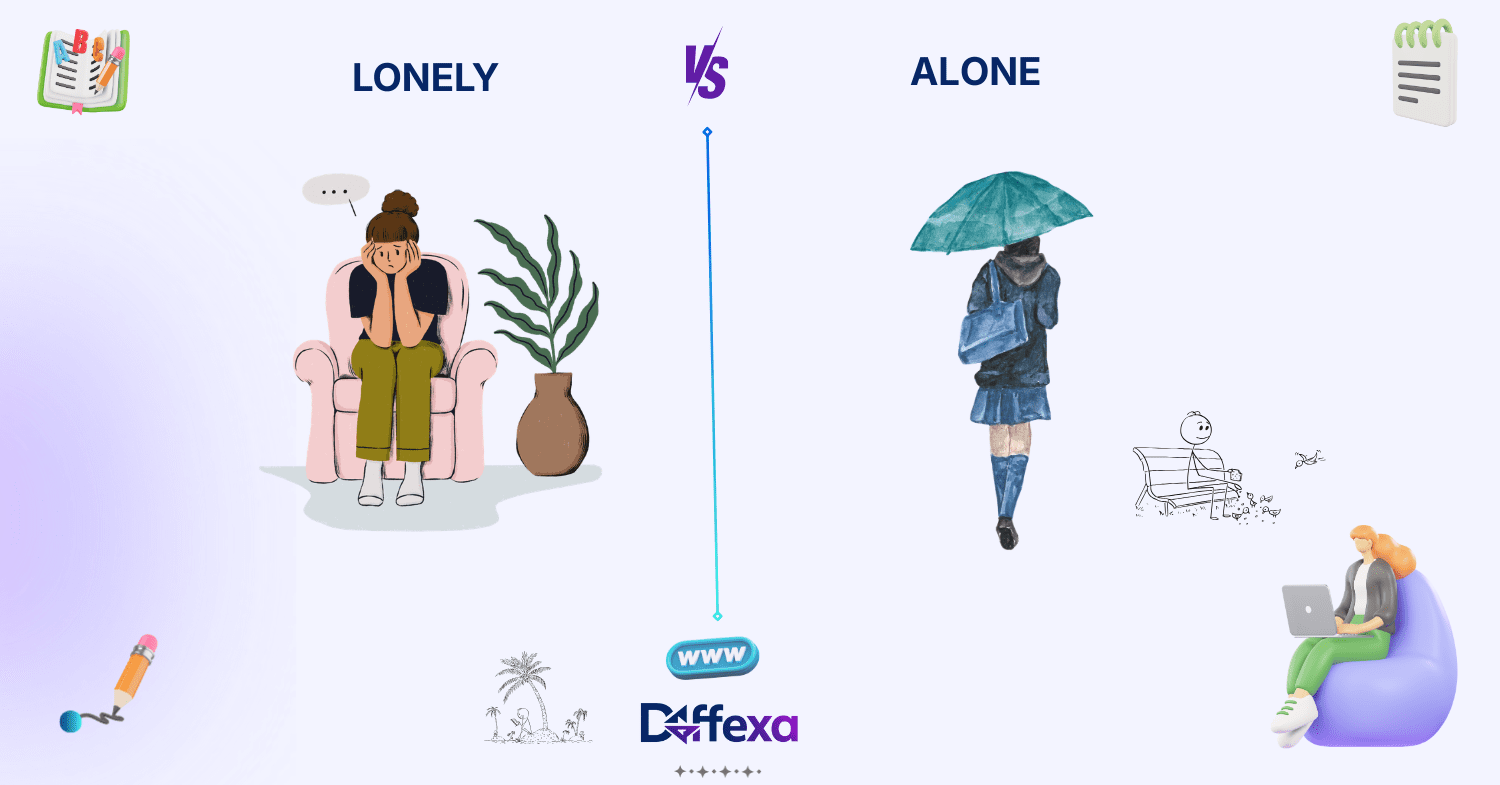
Alone describes a physical state. It means being by yourself.
Lonely describes an emotional state. It means feeling sad or isolated.
In short, alone = physical condition, lonely = emotional feeling.
Why Is Their Difference Necessary to Know
Knowing this difference helps students express emotions clearly. It avoids confusion in writing and speaking.
For professionals like writers, teachers, and counselors, the difference is essential. It helps them describe human feelings accurately.
In society, emotional awareness matters. Using the right word shows empathy and understanding.
Now, let’s move to pronunciation and build clarity step by step.
🔊 PRONUNCIATION
Alone
US: /əˈloʊn/
UK: /əˈləʊn/
Lonely
US: /ˈloʊnli/
UK: /ˈləʊnli/
These words sound similar, which often causes confusion. Now, let’s define them clearly.
📚 CORE DEFINITIONS
Alone
Alone means being physically by yourself, without other people around you. It does not always carry emotion.
Example:
Example: She enjoys being alone while reading.
Lonely
Lonely means feeling sad because you lack companionship or connection. It is emotional and often negative.
Example:
Example: He felt lonely even in a crowd.
📚 10 Clear Differences Between Lonely and Alone
1. Emotional Intensity
Lonely carries strong emotions. Alone may have no emotion at all.
Example for Alone:
She sat alone and felt calm.
Example for Lonely:
He sat lonely and felt sad.
2. Duration
Being alone can be temporary and chosen. Loneliness may last longer.
Example for Alone:
He stayed alone for an hour.
Example for Lonely:
She felt lonely for weeks.
3. Focus
Alone focuses on physical presence. Lonely focuses on feelings.
Example for Alone:
He is alone at home.
Example for Lonely:
She feels lonely without friends.
4. Severity
Loneliness can feel heavy and painful. Being alone is usually neutral.
Example for Alone:
She worked alone peacefully.
Example for Lonely:
He struggled with deep loneliness.
5. Rationality
Being alone is factual. Loneliness is emotional and subjective.
Example for Alone:
He is alone in the room.
Example for Lonely:
She feels lonely despite company.
6. Formality
Alone is used in both formal and informal contexts. Lonely appears more in emotional or personal contexts.
Example for Alone:
The child was left alone.
Example for Lonely:
The story shows a lonely character.
7. Context of Use
Alone fits physical descriptions. Lonely fits emotional descriptions.
Example for Alone:
He traveled alone.
Example for Lonely:
She felt lonely during the trip.
8. Psychological Impact
Loneliness affects mental health. Being alone may improve focus.
Example for Alone:
He studies better alone.
Example for Lonely:
She felt lonely and anxious.
9. Tone
Alone is neutral. Lonely often sounds sad.
Example for Alone:
She stayed alone by choice.
Example for Lonely:
He sounded lonely on the call.
10. Expression Style
Alone is simple and factual. Lonely is expressive and emotional.
Example for Alone:
He works alone.
Example for Lonely:
She wrote about feeling lonely.
🎯 Why Knowing the Difference Matters
Students need this distinction to write clearly and express emotions correctly. It improves both speaking and writing skills.
Professionals, especially writers and counselors, rely on emotional accuracy. Using the wrong word can change meaning completely.
In daily life, using “lonely” instead of “alone” may signal sadness. This can affect relationships and communication.
Real‑world consequences of confusion
If someone says “I feel alone,” they may just need space. But if they say “I feel lonely,” they may need emotional support.
🧠 Why People Get Confused
Similar Spelling and Sound
Both words share the root “lone,” which creates confusion.
Semantic Overlap
Both relate to being without others, but in different ways.
Context-Based Usage
People often use them interchangeably in casual speech.
Influence of Informal Speech
Movies and conversations sometimes blur the difference.
🎭 Connotation & Emotional Tone
Connotation (the emotional meaning associated with a word).
Alone
Positive:
Peaceful and independent
Example: She enjoys time alone.
Negative:
May suggest isolation
Example: He was left alone.
Neutral:
Simply means by oneself
Example: She stayed alone at home.
Lonely
Positive:
Rarely positive, but may inspire reflection
Example: He used lonely moments to write.
Negative:
Strong feeling of sadness
Example: She felt lonely after moving.
Neutral:
Used in description
Example: It was a lonely place.
🗣 Usage in Metaphors, Similes & Idioms
- “He stood alone like a tree in the field.”
- “She felt lonely like a cloud in the sky.”
These expressions highlight physical vs emotional meanings.
📊 Comparison Table
| Feature | Alone | Lonely |
|---|---|---|
| Meaning | Physically by oneself | Emotionally isolated |
| Tone | Neutral | Emotional, often sad |
| Usage | Physical state | Emotional feeling |
| Context | Daily actions | Personal experiences |
| Formality | Neutral | Semi-formal/emotional |
⚖️ Which Is Better in What Situation?
When to use Alone
Use “alone” when describing physical situations. For example, “I am alone at home.” It is factual and neutral.
When to use Lonely
Use “lonely” when expressing feelings. For example, “I feel lonely today.” It shows emotion clearly.
Situational clarity
Choose based on whether you describe a situation or a feeling. This keeps communication accurate.
Contextual correctness
Use “alone” for actions and “lonely” for emotions. This simple rule helps avoid confusion.
📖 Literary or Cultural References
- Book: Robinson Crusoe (Adventure, Daniel Defoe, 1719)
Shows being alone physically but not always lonely. - Movie: Cast Away (USA, 2000)
Explores both being alone and feeling lonely deeply.
❓ FAQs
1. Can you be alone without feeling lonely?
Yes, many people enjoy being alone. It can feel peaceful and relaxing. Loneliness only happens when you feel emotionally disconnected.
2. Can you feel lonely in a crowd?
Yes, loneliness is emotional, not physical. You can feel lonely even when surrounded by people if you lack connection.
3. Which word is more negative?
“Lonely” is more negative because it expresses sadness. “Alone” is neutral and depends on context.
4. Why do people confuse these words?
They sound similar and share the same root. Also, people use them loosely in everyday speech.
5. How can I remember the difference?
Think of “alone” as physical and “lonely” as emotional. This simple idea helps you use them correctly.
🏁 Conclusion
The difference between lonely and alone is simple but meaningful. Alone describes a physical state, while lonely expresses an emotional feeling.
Using these words correctly improves communication and emotional clarity. It helps you express your thoughts more accurately.
This distinction is important for students, writers, and everyday conversations. It builds understanding and empathy.
Keep practicing these words in real situations. The more you use them, the more natural your English will become 💬

Sajid Ali is an English language educator and content specialist with 7+ years of teaching experience. He holds master’s degrees in Information Technology and Education from the Virtual University of Pakistan and writes SEO-optimized, learner-friendly vocabulary content for diffexa.com.