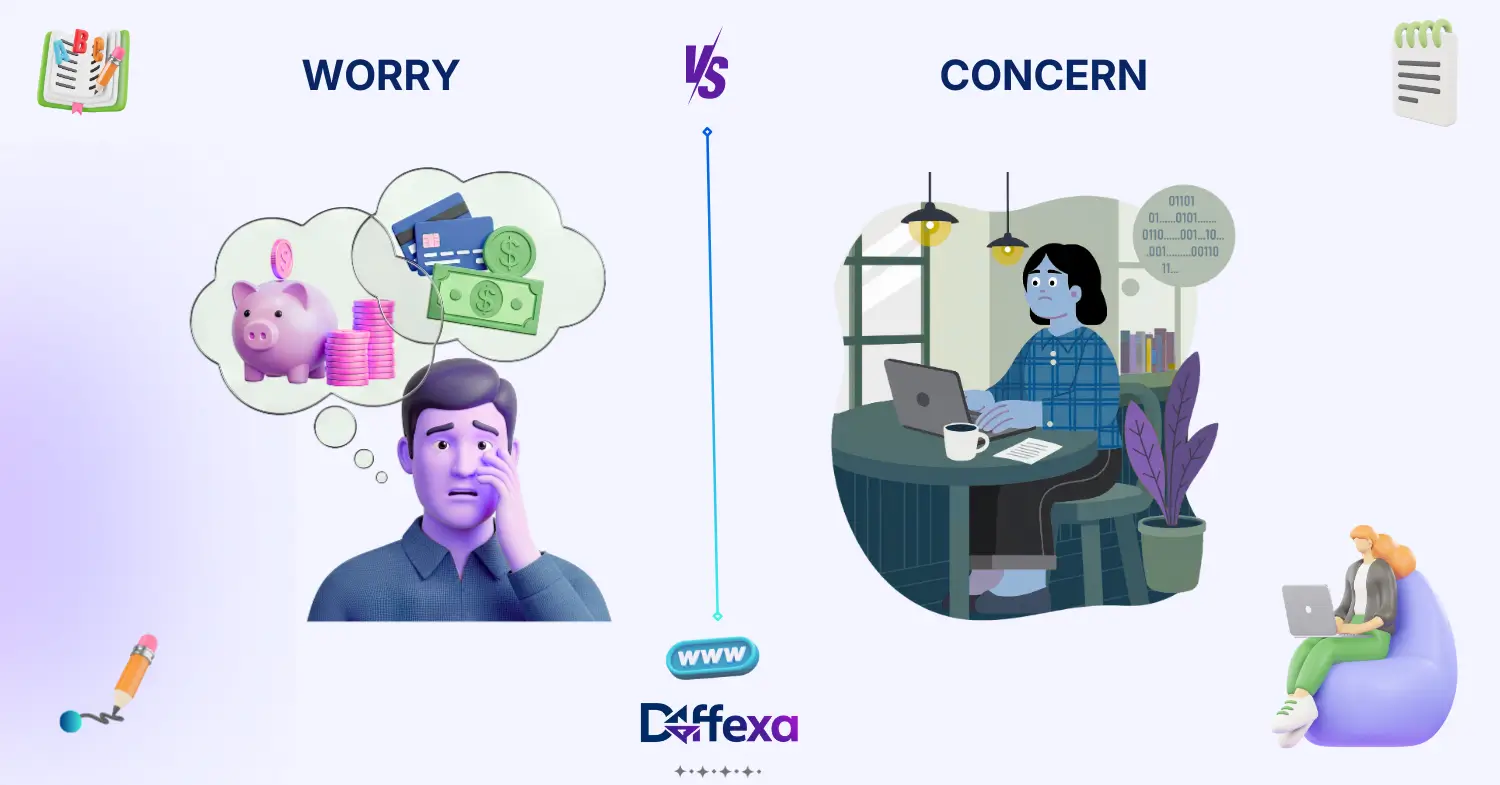
Difference between worry and concern becomes clear in everyday life. Imagine a parent waiting for their child to return home late at night. They may feel uneasy and keep checking the clock. That feeling could be worry or concern, but the two emotions are not exactly the same.
The difference between worry and concern lies mainly in emotional intensity and purpose. Worry often involves anxious thoughts about something that might go wrong. Concern, however, usually reflects thoughtful care about a situation or a person.
Many English learners confuse these words because they both relate to caring about problems. Yet understanding the difference between worry and concern helps people communicate feelings more accurately.
In this guide, we will explore how these two words differ in meaning, tone, and everyday use.
Key Difference Between the Two 🔍
The key difference between worry and concern lies in emotional control and intention.
Worry often involves repeated anxious thoughts about uncertain outcomes. It can feel stressful and sometimes overwhelming.
Concern, however, is usually calmer and more thoughtful. It shows care or attention toward a situation without excessive anxiety.
In simple terms:
- Worry focuses on fear about what might happen.
- Concern focuses on caring and responsibility.
Understanding this distinction helps learners choose the right word in different situations.
Why Is Their Difference Necessary to Know 🎯
Knowing the difference between worry and concern improves emotional expression. Students can describe their feelings more accurately in writing and speaking.
Professionals also benefit from this clarity. Teachers, psychologists, and leaders often discuss problems using careful language. Using the correct word helps avoid misunderstanding.
In society, language shapes how we respond to problems. Calling something a “concern” often invites discussion and solutions. Calling it a “worry” may emphasize personal anxiety.
Understanding this difference prepares us to explore the words more deeply.
🔊 Pronunciation
Worry
US: /ˈwɜːri/
UK: /ˈwʌri/
Concern
US: /kənˈsɜːrn/
UK: /kənˈsɜːn/
With pronunciation clear, we can now explore the core meanings of these two words.
Core Definitions 📚
Worry
Worry refers to a feeling of anxiety or nervous thoughts about possible problems. It often involves imagining negative outcomes repeatedly.
Example:
Example – Worry: She worried about failing her final exam.
Concern
Concern refers to a feeling of care or interest about something important. It usually includes a desire to understand or improve the situation.
Example:
Example – Concern: The teacher showed concern for the student’s health.
10 Clear Differences Between Worry and Concern 📚
1. Emotional Intensity
Worry often carries stronger emotional tension. People may feel restless or stressed.
Concern is calmer and more controlled.
Example for Worry:
Example: He worried all night about the interview.
Example for Concern:
Example: She expressed concern about the company’s safety policy.
2. Duration
Worry may last for a long time because people repeat the same thoughts.
Concern usually appears briefly and leads to action.
Example for Worry:
Example: She kept worrying about the future.
Example for Concern:
Example: The doctor showed concern about the patient’s symptoms.
3. Focus
Worry focuses on possible negative outcomes.
Concern focuses on understanding and improving the situation.
Example for Worry:
Example: He worried about losing his job.
Example for Concern:
Example: The manager expressed concern about team performance.
4. Severity
Worry can feel overwhelming and stressful.
Concern usually stays moderate and manageable.
Example for Worry:
Example: She worried constantly about her finances.
Example for Concern:
Example: Parents showed concern about school safety.
5. Rationality
Worry may become irrational when people imagine unlikely problems.
Concern often remains logical and realistic.
Example for Worry:
Example: He worried that the plane might crash.
Example for Concern:
Example: The engineer expressed concern about the bridge design.
6. Formality
Worry appears more in personal conversation.
Concern often appears in formal discussions or reports.
Example for Worry:
Example: I worry about my family.
Example for Concern:
Example: The report raised concern about climate change.
7. Context of Use
Worry usually describes personal emotions.
Concern can describe social, political, or professional issues.
Example for Worry:
Example: She worried about her exam results.
Example for Concern:
Example: Scientists raised concern about pollution.
8. Psychological Impact
Worry may increase stress and anxiety.
Concern often motivates problem-solving.
Example for Worry:
Example: His constant worry affected his sleep.
Example for Concern:
Example: Their concern led to a safety meeting.
9. Tone
Worry sounds emotional and anxious.
Concern sounds thoughtful and responsible.
Example for Worry:
Example: She worried about the storm.
Example for Concern:
Example: The community showed concern for the environment.
10. Expression Style
Worry expresses fear or stress.
Concern expresses care and awareness.
Example for Worry:
Example: He worries about small mistakes.
Example for Concern:
Example: She voiced concern about fairness.
Why Knowing the Difference Matters 🎯
Students benefit from understanding emotional vocabulary. Knowing when to use worry or concern helps them express feelings clearly in essays and conversations.
Professionals also rely on precise language. Leaders, teachers, and journalists often use “concern” to discuss problems responsibly. The word sounds balanced and solution‑focused.
Social communication improves when people choose the right word. Clear language prevents confusion and encourages productive discussions.
Real‑world consequences of confusion
Using “worry” instead of “concern” may make a situation sound more emotional than intended. On the other hand, replacing “worry” with “concern” might hide genuine anxiety. Choosing the correct word keeps communication honest and accurate.
Why People Get Confused 🧠
Similar Meaning
Both words relate to thinking about problems. This overlap makes them appear interchangeable.
Semantic Overlap
Sometimes a person feels both worry and concern at the same time. Because the emotions mix, people use the terms loosely.
Context‑Based Usage
In conversation, speakers may replace one word with the other without noticing the difference.
Influence of Informal Speech
Informal language often ignores subtle distinctions. As a result, learners may never notice the difference unless they study it carefully.
Connotation & Emotional Tone 🎭
Connotation (bold) = the emotional meaning associated with a word.
Worry
Positive: Sometimes shows deep care for someone.
Example: Her worry about her child showed strong love.
Negative: Often suggests stress or anxiety.
Example: His constant worry made him exhausted.
Neutral: Mild unease about a situation.
Example: She felt worry before the exam.
Concern
Positive: Shows responsible attention to a problem.
Example: The doctor’s concern reassured the patient.
Negative: May indicate a serious issue that needs attention.
Example: Officials expressed concern about rising crime.
Neutral: Calm awareness of a situation.
Example: Parents showed concern about school policies.
Usage in Metaphors, Similes & Idioms 🗣
English idioms often reflect emotional states.
Examples include:
- “Don’t worry your head.”
- “A matter of concern.”
Example sentence:
Her worry about the project grew like a storm cloud, while the manager spoke calmly about the issue as a professional concern.
Another example:
His worry spread through the team, but the leader addressed the problem as a shared concern.
Comparison Table 📊
| Feature | Worry | Concern |
|---|---|---|
| Meaning | Anxiety about possible problems | Care or interest about an issue |
| Tone | Emotional and anxious | Calm and thoughtful |
| Usage | Personal feelings | Professional or social discussion |
| Context | Fear of uncertainty | Responsible attention |
| Formality | Informal conversation | Neutral to formal |
Which Is Better in What Situation? ⚖️
When to Use Worry
Use worry when describing personal anxiety or fear about something uncertain. For example, someone may worry about exams, health, or financial problems.
When to Use Concern
Use concern when discussing issues calmly or professionally. Leaders, doctors, and teachers often express concern when they notice a problem.
Situational Clarity
Choosing the correct word improves communication. “Concern” often sounds constructive, while “worry” expresses emotional stress.
Contextual Correctness
In professional writing, concern usually works better. In personal conversation, worry feels more natural.
Literary or Cultural References 📖
Book: Harry Potter and the Sorcerer’s Stone (Fantasy, J.K. Rowling, 1997)
Characters often express worry about danger and uncertainty.
Book: To Kill a Mockingbird (Novel, Harper Lee, 1960)
Many characters show concern for justice and fairness.
Movie: Inside Out (USA, 2015)
The film explores emotional responses such as worry and thoughtful concern.
FAQs ❓
1. Is worry stronger than concern?
Yes, worry usually involves stronger emotional anxiety. People who worry may imagine negative outcomes repeatedly. Concern, however, is calmer and more balanced. It reflects awareness of a problem rather than fear.
2. Can concern turn into worry?
Yes, concern can become worry if the situation grows serious. For example, a parent may first feel concern about a child’s health. If symptoms worsen, that concern may turn into worry.
3. Is concern always positive?
Not always. Concern can signal that something serious needs attention. However, it usually encourages constructive action rather than stress.
4. Which word is more formal?
Concern is generally more formal. It often appears in professional reports, discussions, and official communication. Worry is more common in everyday conversation.
5. Can both words appear in the same sentence?
Yes. Sometimes people use both words to describe different emotions. For example: Her concern for the project was clear, but she still worried about the outcome.
Conclusion 🏁
Understanding the difference between worry and concern helps people express emotions clearly. Worry reflects anxious thoughts about uncertain problems. It often involves stress and repeated thinking about negative possibilities. Concern, on the other hand, shows thoughtful care and awareness of a situation.
Both words describe reactions to challenges, but their tone and purpose differ. Worry focuses on fear, while concern encourages attention and solutions.
When learners recognize this difference, they improve both spoken and written communication. Choosing the right word can make a message sound calmer, clearer, and more precise.
Keep noticing how these words appear in books, conversations, and media. With practice, using them correctly will become natural and confident.

Sajid Ali is an English language educator and content specialist with 7+ years of teaching experience. He holds master’s degrees in Information Technology and Education from the Virtual University of Pakistan and writes SEO-optimized, learner-friendly vocabulary content for diffexa.com.