Difference between simile and analogy often becomes clear only after you hear them used in everyday conversation. Imagine a teacher explaining a complex idea to students. She might say, “Learning grammar is like building a house.” That small comparison helps students understand something difficult using something familiar.
The difference between simile and analogy lies in how these comparisons work. A simile is a simple figure of speech that compares two things using words such as like or as. An analogy, however, goes deeper. It explains an idea by showing a relationship between two situations.
Because both techniques compare things, learners often mix them up. Yet the difference between simile and analogy is important in writing, teaching, and storytelling. Writers use them to make ideas clearer and more engaging.
In this guide, we will explore how these two language tools differ and why understanding them improves communication.
Key Difference Between the Two
A simile is a short and direct comparison between two things using words like as or like. It usually focuses on one shared quality.
An analogy, on the other hand, is more detailed. It compares relationships between two ideas to explain a concept or argument.
Think of it this way:
- A simile highlights similarity.
- An analogy explains understanding.
Both are powerful tools in language. However, they serve different purposes in communication and learning.
Why Is Their Difference Necessary to Know
Understanding the difference between simile and analogy helps learners express ideas clearly. When students know which device to use, their writing becomes more precise and engaging.
Professionals also rely on these tools. Teachers, journalists, and speakers often use analogies to explain difficult topics. Similes, meanwhile, add color and creativity to language.
In society, clear communication matters. Misusing these devices can confuse readers or listeners. Knowing when to use each one improves both written and spoken communication.
Now let’s start by learning how each word is pronounced.
🔊 Pronunciation
Simile
US: /ˈsɪməli/
UK: /ˈsɪmɪli/
Analogy
US: /əˈnælədʒi/
UK: /əˈnælədʒi/
With pronunciation clear, we can now look at the core definitions before comparing them in detail.
Core Definitions
Simile
A simile is a figure of speech that compares two different things using words like like or as. It highlights one shared characteristic in a vivid way. Similes often create imagery and emotional tone in writing.
Example:
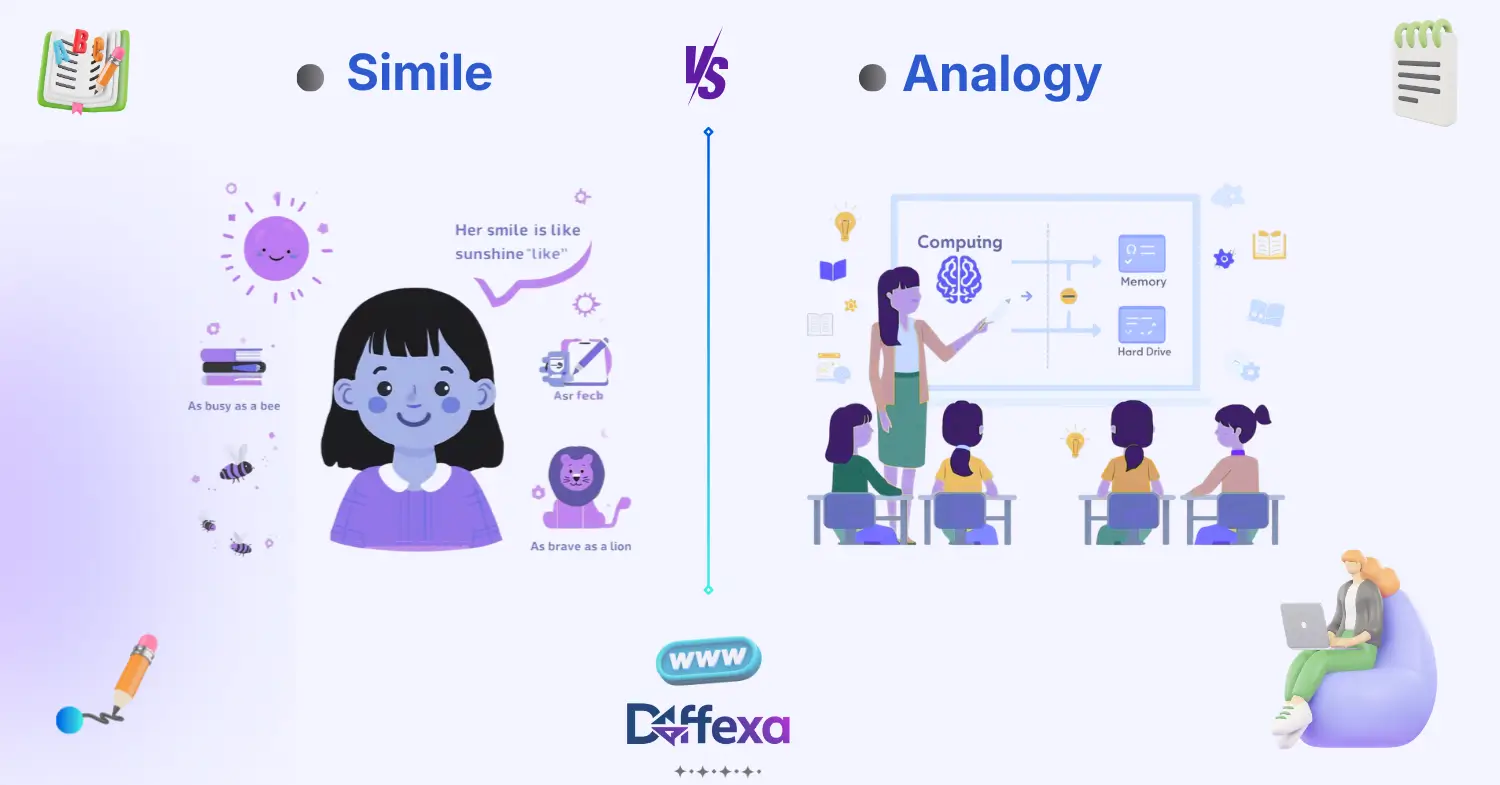
Example – Simile: Her smile was like sunshine on a cold morning.
Analogy
An analogy explains a concept by comparing it with something more familiar. It focuses on relationships between ideas rather than just a single similarity. Analogies are often logical and explanatory.
Example:
Example – Analogy: The brain is like a computer that processes and stores information.
10 Clear Differences Between Simile and Analogy
1. Emotional Intensity
Similes often carry emotional or poetic expression. They help writers paint vivid images.
Analogies focus more on logical understanding rather than emotion.
Example for Simile:
Example: His voice was like thunder.
Example for Analogy:
Example: Managing money is like maintaining a garden—it requires regular care.
2. Duration of Explanation
Similes are short and quick comparisons.
Analogies may include several sentences to fully explain an idea.
Example for Simile:
Example: She runs like the wind.
Example for Analogy:
Example: Running a business is like steering a ship through changing weather.
3. Focus of Comparison
Similes highlight one simple similarity.
Analogies focus on relationships or structures between two ideas.
Example for Simile:
Example: The baby slept like an angel.
Example for Analogy:
Example: A teacher is like a guide leading travelers through unknown territory.
4. Severity of Explanation
Similes are light and descriptive.
Analogies can explain serious or complex topics.
Example for Simile:
Example: The water was as cold as ice.
Example for Analogy:
Example: The immune system works like an army defending the body.
5. Rationality
Similes rely more on imagery.
Analogies rely on reasoning and explanation.
Example for Simile:
Example: His eyes were like stars.
Example for Analogy:
Example: Memory works like a library storing information.
6. Formality
Similes appear frequently in creative writing and poetry.
Analogies often appear in academic, scientific, or teaching contexts.
Example for Simile:
Example: The clouds were like cotton.
Example for Analogy:
Example: Electric circuits are like water flowing through pipes.
7. Context of Use
Similes are common in storytelling and literature.
Analogies are common in explanations and arguments.
Example for Simile:
Example: The child clung like a kitten.
Example for Analogy:
Example: Learning language is like training muscles through practice.
8. Psychological Impact
Similes create emotional imagery.
Analogies create understanding and clarity.
Example for Simile:
Example: The night was as dark as coal.
Example for Analogy:
Example: Data storage is like organizing files in cabinets.
9. Tone
Similes usually sound artistic or expressive.
Analogies sound logical and explanatory.
Example for Simile:
Example: Her laugh was like music.
Example for Analogy:
Example: The internet works like a network of roads connecting cities.
10. Expression Style
Similes are stylistic language tools.
Analogies are conceptual explanation tools.
Example for Simile:
Example: His hands were as cold as snow.
Example for Analogy:
Example: A computer virus spreads like a biological virus in a population.
Why Knowing the Difference Matters
Students benefit greatly from understanding these language tools. Similes help them develop creative writing skills. Analogies help them explain difficult ideas clearly.
Professionals such as teachers, marketers, and writers also rely on them. A strong analogy can simplify complex topics for audiences.
Clear communication affects everyday life as well. Using the right device improves storytelling, teaching, and persuasion.
Real‑world consequences of confusion
Confusing simile and analogy can weaken communication. A writer may fail to explain a concept properly if they use a simple simile instead of a detailed analogy. In education or business presentations, this can cause misunderstanding.
Why People Get Confused
Similar Structure
Both similes and analogies compare two things. This similarity causes many learners to mix them up.
Semantic Overlap
Sometimes an analogy includes a simile within it. This overlap makes the difference less obvious.
Context‑Based Usage
Writers often use both in the same paragraph. This makes it harder for learners to recognize their roles.
Influence of Informal Speech
In everyday conversation, people rarely distinguish between them. As a result, the terms are often used interchangeably.
Connotation & Emotional Tone
Connotation = the emotional meaning attached to a word.
Simile
Positive: Creates vivid and pleasant imagery.
Example: Her voice was like a melody.
Negative: Can emphasize harsh or unpleasant comparisons.
Example: The room smelled like rotten eggs.
Neutral: Simple descriptive comparison.
Example: The table was as hard as stone.
Analogy
Positive: Helps understanding and clarity.
Example: A mentor is like a compass guiding direction.
Negative: Can oversimplify complex ideas.
Example: Comparing the brain to a simple machine.
Neutral: Logical explanation without emotional tone.
Example: An ecosystem works like a balanced network.
Usage in Metaphors, Similes & Idioms
Similes and analogies often appear alongside metaphors and idioms in language.
Example Sentence:
Her courage was like a lion, and that comparison worked as an analogy for bravery.
Example Sentence:
The teacher used an analogy about roads and traffic to explain the internet, then added a simile: “Data moves like cars on highways.”
Idioms also use simile structures, such as:
- As brave as a lion
- As busy as a bee
These expressions show how similes shape everyday speech.
Comparison Table
| Feature | Simile | Analogy |
|---|---|---|
| Meaning | Direct comparison using “like” or “as” | Explanation using relational comparison |
| Tone | Descriptive and creative | Logical and explanatory |
| Usage | Poetry, stories, descriptions | Teaching, arguments, explanations |
| Context | Figurative language | Concept clarification |
| Formality | Informal to literary | Often academic or explanatory |
Which Is Better in What Situation?
When to Use Simile
Use a simile when you want to create vivid imagery or emotional expression. Writers often use similes in storytelling and poetry. For example, saying “The sky was like a painting” adds beauty and imagination.
When to Use Analogy
Use an analogy when explaining something complex. Teachers and speakers rely on analogies to simplify ideas. For instance, comparing the internet to a network of roads helps beginners understand it.
Situational Clarity
The best choice depends on your goal. Similes enhance description, while analogies enhance understanding.
Contextual Correctness
In academic writing, analogies often work better. In creative writing, similes are usually more effective.
Literary or Cultural References
Book: Animal Farm (Political Satire, George Orwell, 1945)
Orwell uses analogies between animals and political systems.
Book: Romeo and Juliet (Tragedy, William Shakespeare, 1597)
Shakespeare frequently uses similes such as romantic comparisons.
Movie: Inside Out (USA, 2015)
The film uses analogies to explain human emotions through characters.
FAQs
1. What is the main difference between simile and analogy?
A simile is a short comparison using “like” or “as.” An analogy explains a relationship between two ideas to clarify meaning. Similes focus on imagery, while analogies focus on understanding. Both compare things, but they serve different communication purposes.
2. Can a simile be part of an analogy?
Yes, sometimes an analogy contains a simile. For example, an analogy explaining learning may include the simile “like building a house.” The simile adds imagery, while the analogy explains the concept. This overlap is why people often confuse the two.
3. Are similes used more in literature?
Yes. Similes appear frequently in poetry, novels, and storytelling. Writers use them to create vivid pictures in the reader’s mind. They add emotion and creativity to language.
4. Why are analogies useful in teaching?
Analogies simplify complex ideas. Teachers compare unfamiliar concepts with familiar experiences. This makes learning easier and more memorable.
5. Do analogies always use “like” or “as”?
Not always. While some analogies include those words, many do not. The key feature of an analogy is explaining relationships between ideas.
Conclusion
Understanding the difference between simile and analogy helps learners communicate more clearly and effectively. A simile creates a quick and vivid comparison, often using words like as or like. It adds imagery and emotion to writing. An analogy, however, goes deeper by explaining relationships between ideas. It helps readers understand complex concepts through familiar examples.
Both tools play important roles in language. Writers use similes to make descriptions colorful and memorable. Teachers and speakers use analogies to clarify complicated topics.
When you recognize their differences, you can choose the right tool for each situation. Keep practicing by spotting similes and analogies in books, movies, and everyday speech. The more you notice them, the stronger your communication skills will become.

Sajid Ali is an English language educator and content specialist with 7+ years of teaching experience. He holds master’s degrees in Information Technology and Education from the Virtual University of Pakistan and writes SEO-optimized, learner-friendly vocabulary content for diffexa.com.