Difference between hypo and hyperglycemia becomes important when people learn about blood sugar and diabetes. Imagine someone feeling dizzy after skipping a meal, while another person feels extremely thirsty after eating too much sugar.
Both situations involve blood sugar levels, but they represent opposite medical conditions. Understanding the difference between hypo and hyperglycemia helps people recognize warning signs early.
Doctors, students, and health learners often search for the difference between hypo and hyperglycemia because both conditions appear frequently in discussions about diabetes.
Knowing the difference between hypo and hyperglycemia improves health awareness and helps people respond correctly when blood sugar levels change. Let’s begin with the main difference.
Key Difference Between the Two
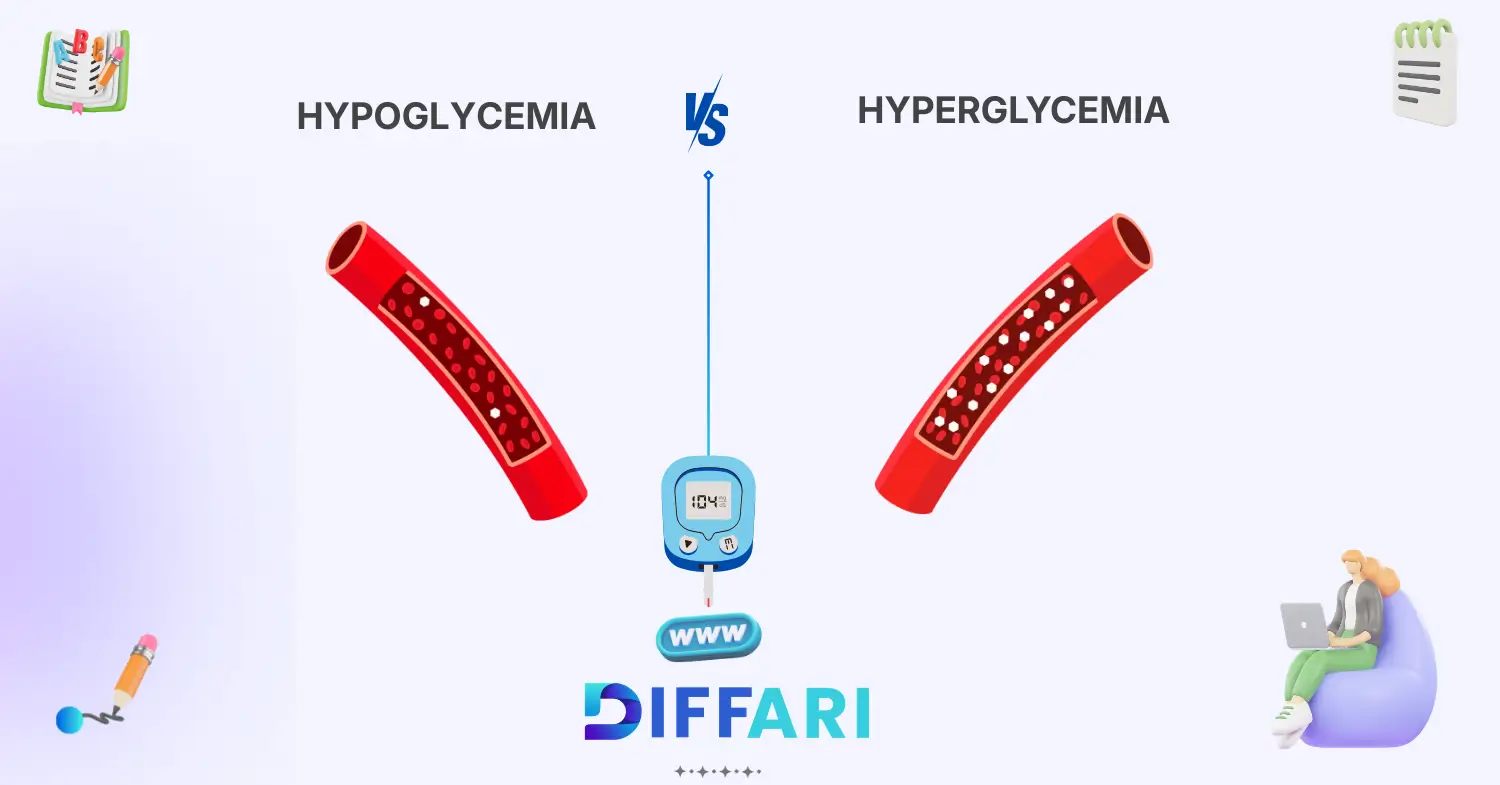
The main difference between hypo and hyperglycemia lies in blood sugar levels.
Hypoglycemia occurs when blood glucose levels drop too low.
Hyperglycemia occurs when blood glucose levels rise too high.
Both conditions affect people with diabetes, but they require different responses and treatments. Recognizing the symptoms quickly can prevent serious health complications.
Why Is Their Difference Necessary to Know
Understanding this difference helps individuals manage their health more safely. People with diabetes must know whether their blood sugar is too high or too low before taking action.
Students studying biology or medicine benefit from learning these terms clearly. It helps them understand metabolic processes and disease management.
In society, diabetes is one of the most common health conditions worldwide. Knowing the difference improves health communication between patients, doctors, and caregivers.
Before comparing them in detail, it helps to learn how these terms are pronounced.
Pronunciation
Hypoglycemia
US: /ˌhaɪpoʊɡlaɪˈsiːmiə/
UK: /ˌhaɪpəʊɡlaɪˈsiːmiə/
Hyperglycemia
US: /ˌhaɪpərɡlaɪˈsiːmiə/
UK: /ˌhaɪpəɡlaɪˈsiːmiə/
Both words sound similar, which often causes confusion. However, they describe opposite conditions in blood sugar regulation.
Core Definitions
Hypoglycemia
Hypoglycemia is a medical condition where blood sugar levels fall below normal. It often happens when someone skips meals, takes too much insulin, or exercises heavily without enough food.
The tone is clinical because doctors use the term in medical discussions.
Example:
Example: A diabetic patient experiences hypoglycemia after taking insulin without eating.
Hyperglycemia
Hyperglycemia occurs when blood sugar levels rise above normal levels. It usually happens when the body cannot produce enough insulin or when someone consumes excessive sugar.
This term also appears frequently in diabetes management.
Example:
Example: A person with diabetes develops hyperglycemia after eating high‑sugar foods without medication.
10 Clear Differences Between Hypo and Hyperglycemia
1. Blood Sugar Level
Hypoglycemia means low blood sugar.
Hyperglycemia means high blood sugar.
Example for Hypoglycemia:
Example: A person feels weak because their blood sugar dropped.
Example for Hyperglycemia:
Example: A patient’s blood sugar rises after a large sugary meal.
2. Immediate Cause
Hypoglycemia often results from skipping meals or excess insulin.
Hyperglycemia often results from insufficient insulin or overeating.
Example for Hypoglycemia:
Example: An athlete experiences hypoglycemia after intense exercise.
Example for Hyperglycemia:
Example: Blood sugar increases when medication is missed.
3. Physical Symptoms
Hypoglycemia causes shaking, sweating, and dizziness.
Hyperglycemia causes thirst, fatigue, and frequent urination.
Example for Hypoglycemia:
Example: A student feels shaky during class because their glucose is low.
Example for Hyperglycemia:
Example: A patient drinks large amounts of water due to high blood sugar.
4. Speed of Onset
Hypoglycemia usually develops quickly.
Hyperglycemia often develops gradually.
Example for Hypoglycemia:
Example: Blood sugar drops suddenly after intense activity.
Example for Hyperglycemia:
Example: Sugar levels increase slowly over several hours.
5. Severity Risks
Severe hypoglycemia can cause fainting or seizures.
Severe hyperglycemia can lead to long‑term complications.
Example for Hypoglycemia:
Example: Extremely low sugar causes confusion.
Example for Hyperglycemia:
Example: Persistent high sugar damages organs.
6. Treatment Response
Hypoglycemia requires immediate sugar intake.
Hyperglycemia often requires insulin or medical treatment.
Example for Hypoglycemia:
Example: A person drinks juice to raise blood sugar.
Example for Hyperglycemia:
Example: A patient takes insulin to lower sugar levels.
7. Emotional Experience
Hypoglycemia often causes sudden anxiety or confusion.
Hyperglycemia causes fatigue and discomfort.
Example for Hypoglycemia:
Example: A person feels nervous and shaky.
Example for Hyperglycemia:
Example: Someone feels extremely tired due to high glucose.
8. Duration
Hypoglycemia episodes usually resolve quickly with treatment.
Hyperglycemia may last longer if untreated.
Example for Hypoglycemia:
Example: Eating a snack restores blood sugar.
Example for Hyperglycemia:
Example: High sugar persists until medication works.
9. Context of Use
Hypoglycemia appears in emergency medical discussions.
Hyperglycemia appears in chronic disease management.
Example for Hypoglycemia:
Example: Doctors treat sudden low blood sugar episodes.
Example for Hyperglycemia:
Example: Doctors monitor long‑term high glucose levels.
10. Expression Style
Hypoglycemia is often shortened to “hypo.”
Hyperglycemia may be called “high blood sugar.”
Example for Hypoglycemia:
Example: A nurse says, “The patient is having a hypo.”
Example for Hyperglycemia:
Example: A doctor says, “Your blood sugar is high.”
Why Knowing the Difference Matters
Students studying biology and health sciences must understand these terms clearly. It helps them learn how the body regulates glucose levels.
Healthcare professionals rely on this distinction when diagnosing and treating patients.
In daily life, people with diabetes must quickly recognize whether their blood sugar is too high or too low.
Real‑world consequences of confusion
Confusing these conditions can lead to dangerous decisions. For example, giving insulin during hypoglycemia could worsen the situation.
Correct understanding can save lives.
Why People Get Confused
Similar Pronunciation
Both terms begin with “hypo” or “hyper,” which sound very similar.
Semantic Overlap
Both conditions involve blood sugar levels.
Context‑Based Usage
Doctors often discuss them together in diabetes education.
Informal Speech
Patients sometimes shorten both terms, increasing confusion.
Connotation & Emotional Tone
Connotation = the emotional meaning attached to a word.
Hypoglycemia
Positive:
Early recognition can help prevent complications.
Example: Doctors encourage patients to monitor hypoglycemia symptoms.
Negative:
The condition can cause sudden medical emergencies.
Neutral:
Most medical discussions use the term neutrally.
Hyperglycemia
Positive:
Proper treatment can stabilize high blood sugar.
Example: Patients learn to manage hyperglycemia through diet and medication.
Negative:
Persistent high sugar may cause serious health problems.
Neutral:
Healthcare professionals use the term clinically.
Usage in Metaphors, Similes & Idioms
Medical terms rarely appear in idioms. However, they sometimes appear metaphorically.
Example:
“His energy dropped suddenly like someone experiencing hypoglycemia.”
Example:
“Stress levels rose like hyperglycemia in the body.”
These comparisons illustrate sudden decreases or increases.
Comparison Table
| Feature | Hypoglycemia | Hyperglycemia |
|---|---|---|
| Meaning | Low blood sugar | High blood sugar |
| Tone | Medical emergency context | Chronic medical context |
| Usage | Diabetes management | Diabetes monitoring |
| Context | Sudden episodes | Long‑term control |
| Formality | Medical terminology | Medical terminology |
Which Is Better in What Situation?
When to Use Hypoglycemia
Use hypoglycemia when describing dangerously low blood sugar levels. It appears in emergency medical discussions.
When to Use Hyperglycemia
Use hyperglycemia when referring to high blood sugar levels, especially in diabetes management.
Situational Clarity
Both words describe different medical states. Accurate usage helps doctors and patients communicate effectively.
Contextual Correctness
Correct terminology improves diagnosis, treatment, and health education.
Literary or Cultural References
Book: Think Like a Pancreas (Medical Guide, Gary Scheiner, 2011)
The book explains blood sugar management for people with diabetes.
Movie: Steel Magnolias (USA, 1989)
The film includes scenes showing diabetes management and blood sugar challenges.
These works highlight the real‑life importance of understanding blood sugar conditions.
FAQs
1. What is the main difference between hypo and hyperglycemia?
Hypoglycemia means blood sugar levels drop below normal, while hyperglycemia means blood sugar levels rise above normal. Both conditions affect people with diabetes but require different treatments.
2. Which condition is more dangerous?
Both can be dangerous. Hypoglycemia can cause immediate emergencies, while hyperglycemia can lead to long‑term complications if untreated.
3. How can someone prevent hypoglycemia?
Eating regular meals, monitoring insulin dosage, and checking blood sugar levels help prevent hypoglycemia.
4. What are common symptoms of hyperglycemia?
Common symptoms include excessive thirst, frequent urination, fatigue, and blurred vision.
5. Can someone experience both conditions?
Yes. People with diabetes may experience both hypoglycemia and hyperglycemia at different times.
Conclusion
The difference between hypo and hyperglycemia mainly relates to blood sugar levels. Hypoglycemia occurs when glucose levels drop too low, while hyperglycemia occurs when they rise too high.
Both conditions require careful monitoring, especially for people living with diabetes. Recognizing symptoms early helps prevent serious complications.
Understanding these terms improves health awareness for students, patients, and caregivers alike.
Learning accurate medical vocabulary also strengthens communication between patients and healthcare professionals. Stay informed, monitor health regularly, and continue exploring medical knowledge to support better well‑being. 🩺

Sajid Ali is an English language educator and content specialist with 7+ years of teaching experience. He holds master’s degrees in Information Technology and Education from the Virtual University of Pakistan and writes SEO-optimized, learner-friendly vocabulary content for diffexa.com.