Difference between chevron and herringbone often appears when people choose flooring, fabric patterns, or interior designs. Imagine visiting a furniture showroom and seeing two beautiful zigzag floor styles.
Both chevron and herringbone patterns create elegant zigzag designs. Yet they are not identical. Many homeowners and designers struggle to tell them apart.
The difference between chevron and herringbone mainly involves the angle and layout of the pieces. While both look stylish, their structure and installation methods differ.
In this guide, you will clearly understand the difference between chevron and herringbone and learn when each pattern works best in design. Let’s start with the key distinction.
Key Difference Between the Two
The main difference between chevron and herringbone lies in the way the pieces meet.
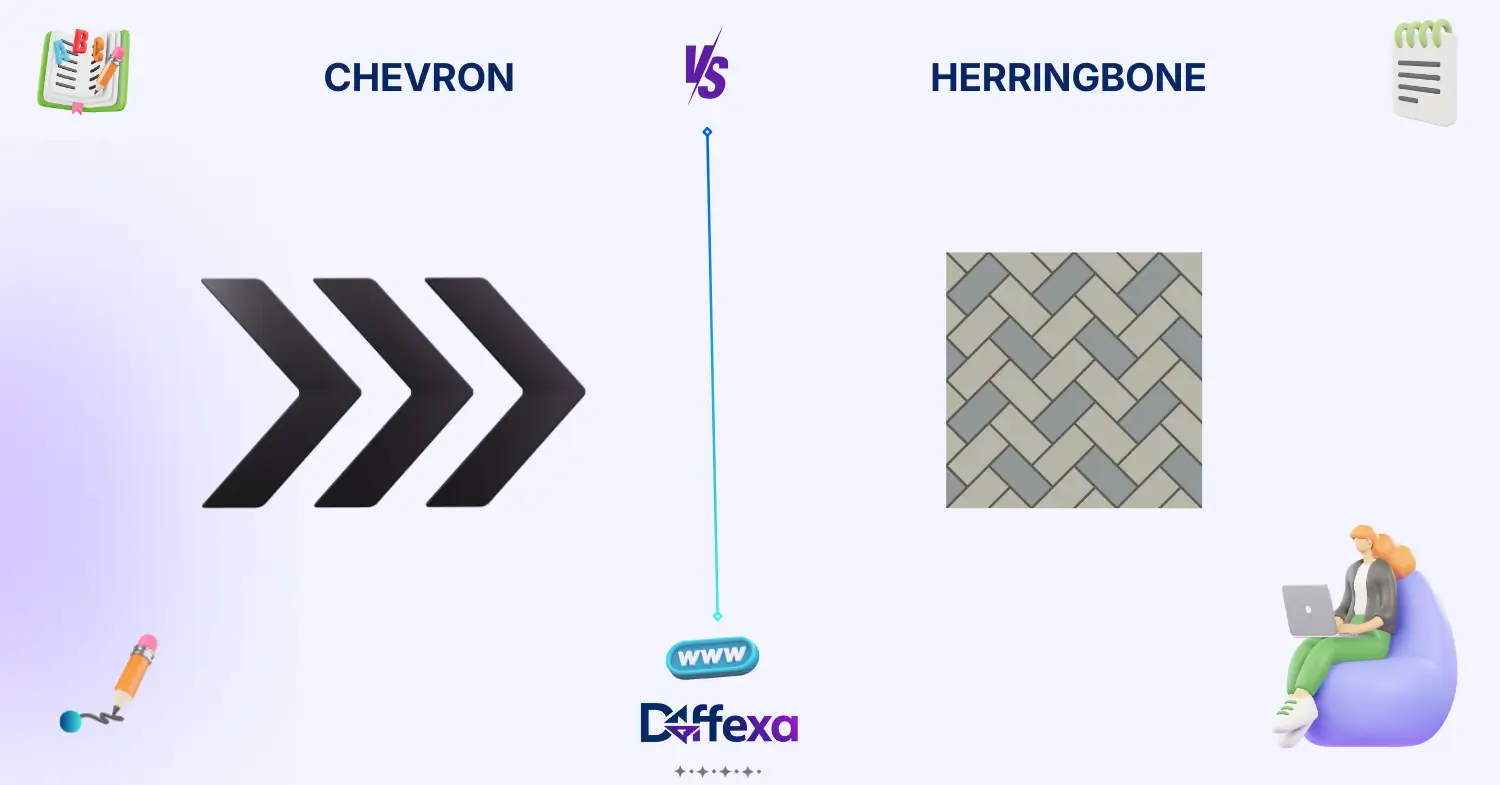
In a chevron pattern, the ends of the pieces are cut at an angle. When placed together, they create a sharp “V” shape.
In a herringbone pattern, the pieces are rectangular and meet at right angles. Instead of a sharp “V,” they form a broken zigzag pattern.
So the structure differs:
- Chevron → angled cuts forming a continuous “V”
- Herringbone → rectangular pieces arranged in a staggered zigzag
This difference changes both the visual effect and installation process.
Why Is Their Difference Necessary to Know
Understanding the difference helps homeowners choose the right design style.
Interior designers must also explain these patterns clearly to clients. A misunderstanding can lead to the wrong flooring layout during construction.
Students studying design, architecture, or fashion often encounter these patterns in textbooks and design projects.
Knowing the difference improves communication between designers, builders, and clients. Now let’s learn how to pronounce the words correctly.
Pronunciation
Chevron
US: /ˈʃɛvrən/
UK: /ˈʃɛvrɒn/
Herringbone
US: /ˈhɛrɪŋˌboʊn/
UK: /ˈhɛrɪŋbəʊn/
Although both words describe zigzag patterns, their pronunciation and structure differ. Next, we will define each pattern clearly.
Core Definitions
Chevron
Chevron is a design pattern where pieces are cut at an angle and meet to form a sharp “V” shape. The pattern creates a continuous and symmetrical zigzag line.
The word often carries a stylish and modern tone in design discussions.
Example:
Example: A living room floor features a chevron wood pattern that creates a sleek V‑shaped design.
Herringbone
Herringbone is a pattern made from rectangular pieces arranged in a staggered zigzag layout. The pieces meet at right angles, creating a broken zigzag shape.
The tone often feels classic and traditional in design.
Example:
Example: A hallway uses herringbone brick flooring that gives the space a timeless look.
10 Clear Differences Between Chevron and Herringbone
1. Pattern Structure
Chevron forms a sharp “V” pattern.
Herringbone creates a staggered zigzag pattern.
Example for Chevron:
Example: A chevron floor forms perfect V‑shaped lines.
Example for Herringbone:
Example: Herringbone tiles form a broken zigzag layout.
2. Angle of Pieces
Chevron pieces are cut at an angle.
Herringbone pieces remain rectangular.
Example for Chevron:
Example: The installer cuts planks at 45 degrees.
Example for Herringbone:
Example: Rectangular bricks form the herringbone pattern.
3. Visual Flow
Chevron patterns appear continuous and smooth.
Herringbone patterns appear staggered and textured.
Example for Chevron:
Example: The chevron floor guides the eye across the room.
Example for Herringbone:
Example: The herringbone design adds texture to the hallway.
4. Installation Method
Chevron flooring requires precise angled cuts.
Herringbone installation uses standard rectangular pieces.
Example for Chevron:
Example: Workers carefully align angled planks.
Example for Herringbone:
Example: Rectangular boards fit in a repeating layout.
5. Design Style
Chevron often appears modern and bold.
Herringbone feels classic and traditional.
Example for Chevron:
Example: A modern apartment features chevron flooring.
Example for Herringbone:
Example: A historic building uses herringbone brickwork.
6. Flooring Usage
Chevron floors often appear in luxury homes.
Herringbone floors appear in both traditional and modern spaces.
Example for Chevron:
Example: Designers install chevron oak flooring in living rooms.
Example for Herringbone:
Example: A restaurant uses herringbone tile flooring.
7. Visual Complexity
Chevron patterns look sharp and geometric.
Herringbone patterns look detailed and textured.
Example for Chevron:
Example: The chevron pattern creates strong visual lines.
Example for Herringbone:
Example: Herringbone adds layered visual depth.
8. Historical Use
Chevron patterns appear in modern architecture and fashion.
Herringbone patterns date back to ancient Roman roads.
Example for Chevron:
Example: Designers use chevron patterns in contemporary interiors.
Example for Herringbone:
Example: Roman engineers used herringbone brick layouts.
9. Design Impact
Chevron creates a bold visual statement.
Herringbone creates a subtle, elegant texture.
Example for Chevron:
Example: The chevron floor becomes the room’s centerpiece.
Example for Herringbone:
Example: Herringbone adds quiet elegance to the space.
10. Expression Style
Chevron feels sleek and dramatic.
Herringbone feels balanced and refined.
Example for Chevron:
Example: A fashion scarf features a chevron stripe pattern.
Example for Herringbone:
Example: A coat uses classic herringbone fabric.
Why Knowing the Difference Matters
Students studying interior design or architecture must understand these patterns clearly. Accurate terminology helps them describe layouts in projects and presentations.
Professionals such as architects, designers, and contractors also need this knowledge. Miscommunication can affect flooring installation or design planning.
Clear understanding also improves conversations between homeowners and designers when choosing decorative styles.
Real‑World Consequences of Confusion
If someone orders chevron flooring but expects a herringbone layout, the final design may look different than planned.
Such confusion can lead to costly corrections during construction.
Why People Get Confused
Similar Appearance
Both patterns create zigzag shapes, which makes them look similar at first glance.
Similar Design Context
Designers use both patterns in flooring, tiles, fabrics, and wallpapers.
Context‑Based Usage
In casual conversation, people sometimes use the terms interchangeably.
Influence of Informal Speech
Home décor blogs or advertisements may simplify pattern names, creating confusion.
Connotation & Emotional Tone
Connotation = emotional meaning attached to a word.
Chevron
Positive:
Chevron often feels bold and modern in design.
Example: “The chevron wall pattern adds a stylish touch.”
Negative:
Some people feel the pattern looks too dramatic.
Example: “The chevron design feels too busy for this room.”
Neutral:
Design discussions often describe chevron patterns objectively.
Example: “The flooring uses a chevron layout.”
Herringbone
Positive:
Herringbone feels elegant and timeless.
Example: “The herringbone floor gives the room a classic charm.”
Negative:
Some people think it looks traditional or old‑fashioned.
Example: “The herringbone style feels too classic.”
Neutral:
Design textbooks discuss the pattern without emotional tone.
Example: “The hallway features herringbone tiles.”
Usage in Metaphors, Similes & Idioms
These design terms rarely appear in idioms. However, people sometimes use them metaphorically.
Example:
“The streets formed a herringbone pattern from above.”
This sentence compares a city layout to the pattern’s zigzag structure.
Comparison Table
| Feature | Chevron | Herringbone |
|---|---|---|
| Meaning | V‑shaped zigzag pattern | Staggered zigzag pattern |
| Tone | Modern and bold | Classic and elegant |
| Usage | Flooring, textiles, décor | Flooring, brickwork, fabrics |
| Context | Modern interiors | Traditional and mixed styles |
| Formality | Design terminology | Design terminology |
Which Is Better in What Situation?
When to Use Chevron
Chevron works well in modern interiors. It creates strong visual lines and dramatic floor patterns. Designers often use it in contemporary homes.
When to Use Herringbone
Herringbone suits traditional spaces and classic designs. It adds texture and elegance without looking overly bold.
Situational Clarity
Choosing between these patterns depends on the style of the room and the overall design theme.
Contextual Correctness
If a designer wants sharp V‑shaped lines, chevron is the correct choice. If they want a textured zigzag pattern, herringbone works better.
Literary or Cultural References
Although these patterns mainly appear in design, they also appear in architecture and fashion literature.
Book:
Interior Design Illustrated (Design, Francis D.K. Ching, 2012)
Movie:
The Great Gatsby (USA, 2013) – features art‑deco interiors where geometric patterns similar to chevron appear.
FAQs
1. Is chevron the same as herringbone?
No. Chevron forms a sharp V‑shaped pattern, while herringbone forms a staggered zigzag pattern using rectangular pieces.
2. Which pattern is older?
Herringbone is older. Ancient Roman builders used it in road construction because it provided structural strength.
3. Which pattern is easier to install?
Herringbone is usually easier because it uses rectangular pieces. Chevron requires precise angled cuts.
4. Are both patterns used in fashion?
Yes. Both patterns appear in clothing fabrics, scarves, coats, and accessories.
5. Which pattern looks more modern?
Chevron often appears more modern because of its clean V‑shaped lines, while herringbone usually feels classic.
Conclusion
The difference between chevron and herringbone lies mainly in structure and visual effect. Chevron patterns use angled cuts to create a sharp V‑shape. Herringbone patterns use rectangular pieces arranged in a staggered zigzag.
Both patterns bring beauty and character to floors, fabrics, and architecture. However, their style and installation differ.
Understanding these differences helps students, designers, and homeowners communicate clearly during design projects. It also prevents costly mistakes during construction or decoration.
With this knowledge, you can confidently identify each pattern and choose the one that best matches your design vision.

Sajid Ali is an English language educator and content specialist with 7+ years of teaching experience. He holds master’s degrees in Information Technology and Education from the Virtual University of Pakistan and writes SEO-optimized, learner-friendly vocabulary content for diffexa.com.