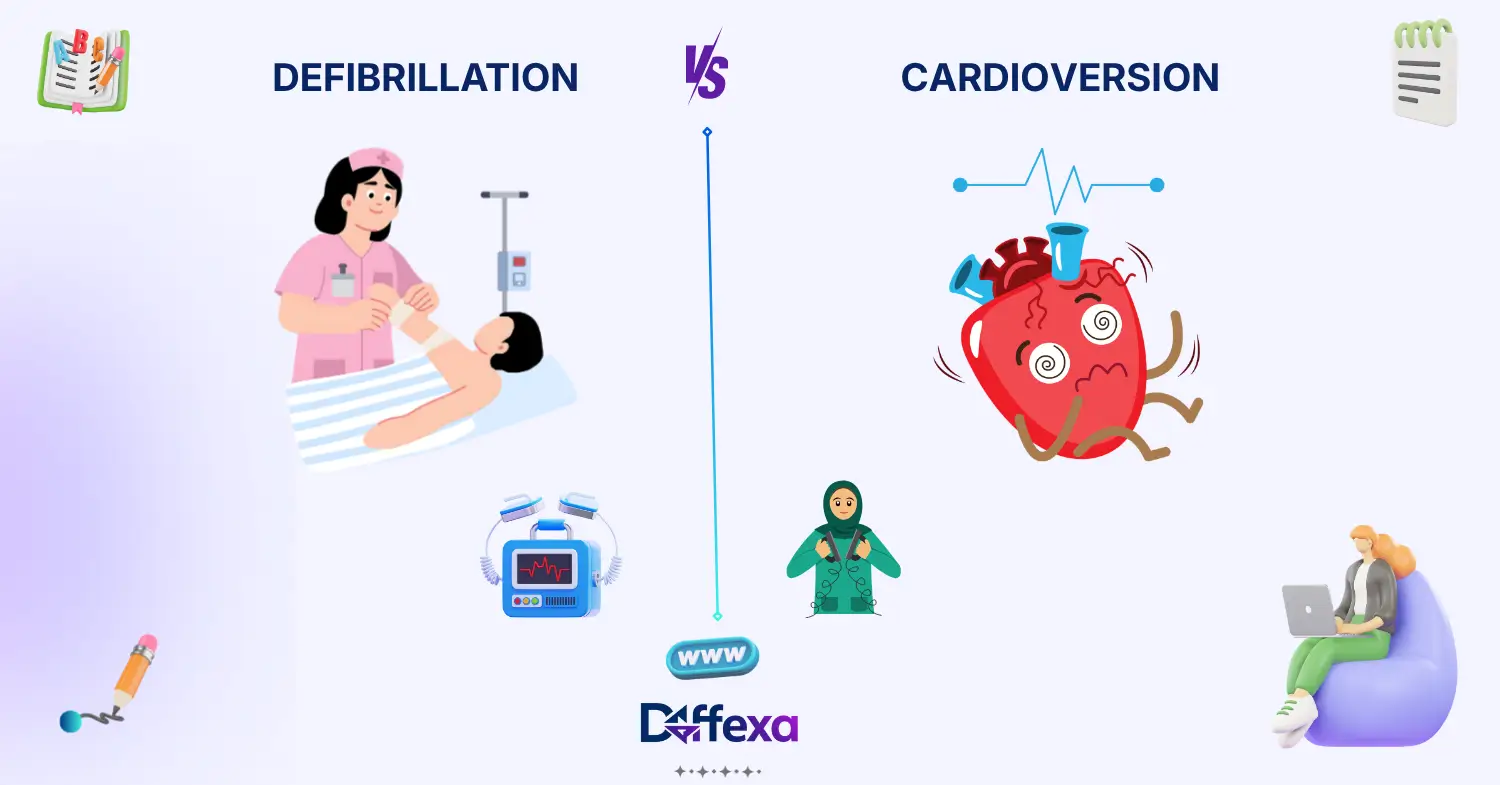
Difference between defibrillation and cardioversion becomes critical in real life. Imagine someone suddenly collapses, and doctors rush with a machine. What they do next matters.
Difference between defibrillation and cardioversion often confuses learners and even some beginners in healthcare. Both involve electric shocks, but they serve different purposes.
Difference between defibrillation and cardioversion is about timing, control, and urgency. One is used in emergencies, while the other is planned.
Understanding this clearly helps students, medical learners, and even general readers. Now, let’s break down the key differences step by step.
Key Difference Between the Two
Defibrillation is an emergency treatment. It delivers an immediate electric shock to restore heart rhythm.
Cardioversion is usually planned and controlled. Doctors give a timed shock to correct abnormal rhythms.
The biggest difference lies in urgency and synchronization. Defibrillation is unsynchronized, while cardioversion is synchronized with the heart’s rhythm.
Why Is Their Difference Necessary to Know
Knowing the difference saves lives. In emergencies, the wrong method can delay treatment and cause harm.
For learners, it builds strong medical understanding. For professionals, it ensures correct decisions in critical moments.
Society benefits too. Awareness helps people respond better in emergencies and trust medical care.
Now, let’s understand how to pronounce these terms correctly.
🔊 Pronunciation
Defibrillation
US: /diːˌfɪbrɪˈleɪʃən/
UK: /diːˌfɪbrɪˈleɪʃən/
Cardioversion
US: /ˌkɑːrdioʊˈvɜːrʒən/
UK: /ˌkɑːdiəʊˈvɜːʃən/
Now that pronunciation is clear, let’s define each term simply.
📚 Core Definitions
Defibrillation
Defibrillation is a life-saving procedure. It sends a strong electric shock to stop a dangerous heart rhythm.
It is used in emergencies like cardiac arrest. The tone is urgent and critical.
Example:
- Doctors used defibrillation to revive the patient.
Cardioversion
Cardioversion is a controlled medical procedure. It restores normal heart rhythm using a timed shock or medication.
It is often planned and done under supervision. The tone is calm and controlled.
Example:
- The patient underwent cardioversion for irregular heartbeat.
📚 10 Clear Differences Between Defibrillation and Cardioversion
1. Urgency
Defibrillation is used in emergencies. Cardioversion is often planned.
Example for Defibrillation:
- The team used defibrillation during cardiac arrest.
Example for Cardioversion:
- The doctor scheduled cardioversion next week.
2. Synchronization
Defibrillation is unsynchronized. Cardioversion is synchronized with heart rhythm.
Example for Defibrillation:
- The shock was delivered immediately.
Example for Cardioversion:
- The shock matched the heart cycle.
3. Severity
Defibrillation treats severe conditions. Cardioversion treats less critical arrhythmias.
Example for Defibrillation:
- It treated ventricular fibrillation.
Example for Cardioversion:
- It corrected atrial fibrillation.
4. Control
Defibrillation is automatic or rapid. Cardioversion is controlled and precise.
Example for Defibrillation:
- The AED delivered a shock.
Example for Cardioversion:
- The doctor carefully timed the shock.
5. Consciousness
Patients are unconscious during defibrillation. Cardioversion patients may be sedated.
Example for Defibrillation:
- The patient was unresponsive.
Example for Cardioversion:
- The patient was lightly sedated.
6. Equipment Use
Defibrillation often uses AEDs. Cardioversion uses advanced hospital equipment.
Example for Defibrillation:
- A public AED was used.
Example for Cardioversion:
- The procedure happened in a clinic.
7. Energy Level
Defibrillation uses higher energy. Cardioversion uses lower, controlled energy.
Example for Defibrillation:
- High voltage shock saved him.
Example for Cardioversion:
- Lower energy corrected rhythm.
8. Context
Defibrillation happens suddenly. Cardioversion happens in planned settings.
Example for Defibrillation:
- It happened during an emergency.
Example for Cardioversion:
- It was scheduled in advance.
9. Psychological Impact
Defibrillation creates urgency and fear. Cardioversion feels safer and controlled.
Example for Defibrillation:
- People panicked during the event.
Example for Cardioversion:
- The patient felt calm before the procedure.
10. Expression Style
Defibrillation is used in emergency language. Cardioversion appears in clinical discussions.
Example for Defibrillation:
- “Use the defibrillator now!”
Example for Cardioversion:
- “We recommend cardioversion.”
🎯 Why Knowing the Difference Matters
Students need clarity. It helps them understand medical texts and exams.
Professionals rely on accuracy. It ensures proper treatment decisions.
Clear communication prevents confusion. It improves patient safety and trust.
Real-world consequences of confusion
Confusing these terms can delay treatment. In emergencies, seconds matter. Using the wrong method can risk lives.
🧠 Why People Get Confused
Similarity
Both involve electric shocks, so they seem alike.
Overlap
Both treat heart rhythm problems.
Context
People hear them in similar medical situations.
Informal speech
Non-experts often use them interchangeably.
🎭 Connotation & Emotional Tone
Connotation = the emotional meaning associated with a word.
Defibrillation
Positive: Life-saving action
Negative: Emergency, danger
Neutral: Medical procedure
Example: Doctors used defibrillation to save him.
Cardioversion
Positive: Controlled treatment
Negative: Medical concern
Neutral: Routine procedure
Example: Cardioversion restored her rhythm.
🗣 Usage in Metaphors, Similes & Idioms
Medical terms rarely appear in idioms. However, metaphorically:
- “That speech was like defibrillation, it shocked everyone awake.”
- “The meeting acted as cardioversion, restoring balance to the team.”
📊 Comparison Table
| Feature | Defibrillation | Cardioversion |
|---|---|---|
| Meaning | Emergency shock | Controlled shock |
| Tone | Urgent | Calm |
| Usage | Cardiac arrest | Irregular rhythm |
| Context | Emergency | Planned |
| Formality | Clinical | Clinical |
⚖️ Which Is Better in What Situation?
When to use Defibrillation
Use it in emergencies. It is critical for cardiac arrest cases.
When to use Cardioversion
Use it for controlled rhythm correction. It is planned and safer.
Situational clarity
Emergency = defibrillation. Planned care = cardioversion.
Contextual correctness
Always match the situation. Medical accuracy is essential.
📖 Literary or Cultural References
- Book: The Survival Medicine Handbook (Medical, Joseph Alton, 2015)
- Movie: Flatliners (USA, 2017)
These works show emergency heart treatments in action.
❓ FAQs
1. Is defibrillation painful?
Defibrillation is not felt by the patient because they are unconscious. It happens in emergencies. The goal is to restart the heart.
2. Is cardioversion safe?
Yes, cardioversion is generally safe. Doctors monitor the patient closely. It is planned and controlled.
3. Can both be used together?
No, they serve different purposes. Doctors choose based on the condition. Each method fits specific situations.
4. Which one is more dangerous?
Defibrillation is used in more dangerous situations. Cardioversion is safer and controlled. However, both are medically supervised.
5. Why is timing important in cardioversion?
Timing prevents complications. The shock must match the heart rhythm. This ensures safety and effectiveness.
🏁 Conclusion
The difference between defibrillation and cardioversion is clear when you focus on timing and urgency. One is an emergency action, while the other is planned care.
Understanding this difference improves medical knowledge and communication. It helps both learners and professionals make better decisions.
When you know when to use each method, you support safer outcomes. Keep practicing these concepts and stay curious about medical learning.

Sajid Ali is an English language educator and content specialist with 7+ years of teaching experience. He holds master’s degrees in Information Technology and Education from the Virtual University of Pakistan and writes SEO-optimized, learner-friendly vocabulary content for diffexa.com.