Difference between spade and shovel often becomes confusing when people start gardening, landscaping, or working on construction projects. Imagine a gardener asking for a spade, but a worker brings a shovel instead. The work slows down because the tool is not suitable for the task.
In simple terms, a spade is mainly used for digging and cutting soil, while a shovel is used for scooping and moving loose materials like sand, gravel, or snow. Understanding the difference between spade and shovel helps learners and workers use tools correctly and complete tasks efficiently.
Many English learners search for the difference between spade and shovel because both tools look similar and are often used interchangeably in everyday speech. However, their shapes, functions, and purposes are quite different in real-life situations.
This guide explains the difference between spade and shovel in a clear and friendly way so students, professionals, and general readers can easily understand how and when to use each tool correctly.
Key difference between the Two
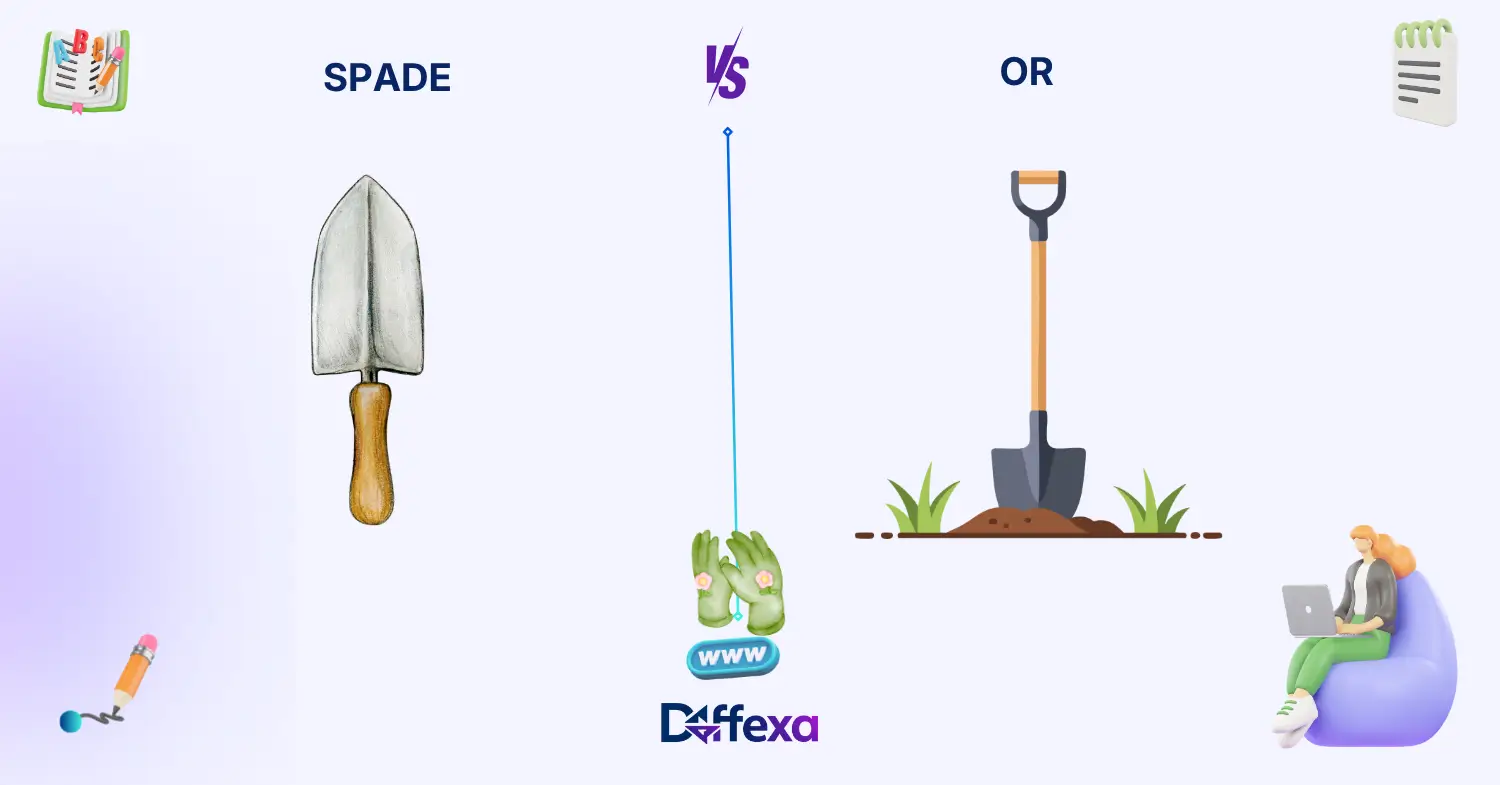
The key difference between a spade and a shovel lies in their blade shape and primary function.
A spade has a flat and straight blade that helps in digging, cutting soil, and shaping garden beds. It provides precision and control during soil work.
A shovel has a curved or rounded blade designed for scooping and lifting materials like sand, gravel, soil, or snow. It focuses on moving materials quickly and efficiently.
In simple words, a spade digs and cuts, while a shovel scoops and moves.
Why is their difference necessary to know
Understanding the difference between spade and shovel is important for learners because it improves vocabulary and practical knowledge. When students learn the correct terms, they communicate more clearly and avoid confusion in real-life situations.
For professionals such as gardeners, farmers, construction workers, and landscapers, this difference is essential. Using the right tool saves time, reduces physical effort, and improves the quality of work. It also helps in maintaining safety and efficiency on job sites.
In society, correct tool identification supports better communication and teamwork. When people understand the difference, they can work faster and avoid mistakes in gardening, farming, and construction environments.
Now, let’s look at how these words are pronounced in English.
🔊 PRONUNCIATION
H3: Spade
US: /speɪd/
UK: /speɪd/
H3: Shovel
US: /ˈʃʌvəl/
UK: /ˈʃʌvəl/
Clear pronunciation helps learners use these words confidently in conversations and workplace communication. Now, let’s understand their meanings in detail before moving to the comparison.
📚 CORE DEFINITIONS
H3: Spade
A spade is a digging tool with a flat and straight blade used for cutting soil, digging holes, and shaping garden beds. It is commonly used in gardening and farming tasks that require precision and control. The emotional tone is practical and technical.
Example:
Example: The gardener used a spade to dig a neat planting hole.
Shovel
A shovel is a tool with a curved blade used for scooping and moving loose materials such as soil, sand, gravel, or snow. It is designed for lifting and transferring materials quickly and efficiently. The emotional tone is practical and work-oriented.
Example:
Example: The worker used a shovel to move sand into the truck.
📚 10 Clear Differences Between Spade and Shovel
1. Emotional Intensity
A spade suggests careful and controlled work. A shovel suggests heavy and energetic work.
Example for Spade:
Example: The spade helped create clean planting lines.
Example for Shovel:
Example: The shovel moved large piles of soil.
2. Duration of Use
Spade is used for detailed and steady digging tasks. Shovel is used for quick and repetitive lifting tasks.
Example for Spade:
Example: The farmer used a spade to prepare the soil.
Example for Shovel:
Example: The worker used a shovel to load gravel.
3. Focus
Spade focuses on cutting and digging soil. Shovel focuses on moving materials.
Example for Spade:
Example: The spade cut through hard ground.
Example for Shovel:
Example: The shovel carried sand easily.
4. Severity
Spade handles precise and controlled work. Shovel handles heavy and rough work.
Example for Spade:
Example: The spade shaped the garden edge.
Example for Shovel:
Example: The shovel cleared construction debris.
5. Rationality
Spade is designed for accuracy and neat digging. Shovel is designed for strength and speed.
Example for Spade:
Example: The spade created straight trenches.
Example for Shovel:
Example: The shovel moved snow quickly.
6. Formality
Spade is common in gardening and landscaping language. Shovel is common in general labor and construction language.
Example for Spade:
Example: Gardeners prefer spades for planting.
Example for Shovel:
Example: Workers prefer shovels for loading soil.
7. Context of Use
Spade is used in gardens and farms. Shovel is used in construction and road work.
Example for Spade:
Example: The spade prepared the flower bed.
Example for Shovel:
Example: The shovel removed gravel from the road.
8. Psychological Impact
Spade suggests careful and planned work. Shovel suggests fast and strong work.
Example for Spade:
Example: The spade gives a clean result.
Example for Shovel:
Example: The shovel speeds up heavy work.
9. Tone
Spade sounds precise and professional. Shovel sounds practical and general.
Example for Spade:
Example: The spade is ideal for planting.
Example for Shovel:
Example: The shovel is useful for lifting soil.
10. Expression Style
Spade appears in gardening descriptions. Shovel appears in labor and construction descriptions.
Example for Spade:
Example: The spade shaped the soil neatly.
Example for Shovel:
Example: The shovel carried sand efficiently.
🎯 Why Knowing the Difference Matters
Students must understand the difference between spade and shovel to improve vocabulary and practical knowledge. It helps them describe tools accurately and communicate clearly in real-life situations.
Professionals benefit from this knowledge because correct tool usage improves efficiency and reduces effort. Gardeners, farmers, and builders rely on proper tools to complete tasks safely and quickly.
In society, correct terminology supports better teamwork and communication. When workers understand the difference, they avoid mistakes and complete tasks more efficiently.
H3: Real‑world consequences of confusion
Using a shovel instead of a spade for digging may damage soil structure and slow down work. Similarly, using a spade to move sand can increase effort and reduce efficiency. Clear understanding prevents these problems and improves productivity.
🧠 Why People Get Confused
Similar spelling or pronunciation
Spade and shovel are common tool words and appear in similar contexts, which creates confusion among learners.
Semantic overlap
Both tools are used in soil and digging work, so people often think they are the same.
Context-based usage
In daily speech, many people use shovel as a general term for digging tools.
Influence of informal speech
Informal language often ignores technical differences, which increases confusion.
🎭 Connotation & Emotional Tone
Connotation = emotional meaning attached to a word.
Connotation (bold) = the emotional meaning associated with a word.
For Spade
Positive: Suggests precision and neat work
Negative: May seem slow for heavy labor
Neutral: Common in gardening vocabulary
Example: The spade created clean and straight soil edges.
For Shovel
Positive: Suggests strength and efficiency
Negative: May seem rough or heavy
Neutral: Common in construction vocabulary
Example: The shovel moved large amounts of sand quickly.
🗣 Usage in Metaphors, Similes & Idioms
Some idioms use these words in English.
- Call a spade a spade – speak honestly and directly
- Put your shoulder to the shovel – work hard and seriously
Example sentence:
He decided to call a spade a spade and put his shoulder to the shovel to finish the project.
These expressions show how both words appear in figurative language.
📊 Comparison Table
| Feature | Spade | Shovel |
|---|---|---|
| Meaning | Tool for digging and cutting soil | Tool for scooping and moving materials |
| Tone | Precise and technical | Strong and practical |
| Usage | Gardening and farming | Construction and labor |
| Context | Soil shaping and digging | Material movement |
| Formality | More technical | More general |
⚖️ Which Is Better in What Situation?
When to use Spade
Use a spade when digging holes, cutting soil, or preparing garden beds. It works best in gardening and farming tasks where accuracy and neat results are important.
When to use Shovel
Use a shovel when moving sand, soil, snow, or gravel. It is suitable for construction work and heavy material movement.
Situational clarity
Choose a spade for digging and a shovel for lifting materials to complete tasks efficiently and safely.
Contextual correctness
Using the right tool improves communication and work quality. For example, gardeners need spades, while construction workers need shovels.
📖 Literary or Cultural References
Book: The Complete Gardener (Gardening, Monty Don, 2003)
This book explains the importance of tools like spades and shovels in gardening.
Movie: The Martian (USA, 2015)
The film shows practical use of digging tools in farming and survival situations.
These references highlight the importance of tools in real-life and cultural contexts.
❓ FAQs
1. What is the main difference between spade and shovel?
The main difference between spade and shovel is their function and blade shape. A spade has a flat blade for digging and cutting soil, while a shovel has a curved blade for scooping and moving materials. Spades are common in gardening, and shovels are common in construction. Each tool serves a specific purpose. Using the correct one improves efficiency and comfort.
2. Can a shovel be used for digging?
Yes, a shovel can dig soil, but it is not ideal for precise digging. Its curved blade makes it better for lifting and moving loose materials. A spade performs digging tasks more accurately and efficiently. Therefore, professionals prefer spades for detailed soil work. Shovels work better for heavy lifting.
3. Why do gardeners prefer spades?
Gardeners prefer spades because they provide clean and precise cuts in soil. They help create neat planting areas and trenches. Spades also reduce effort during detailed gardening work. Shovels are less accurate for such tasks. That is why spades are common in gardens.
4. Is a shovel stronger than a spade?
A shovel is generally stronger for heavy material movement. It can lift sand, gravel, and snow easily. A spade focuses more on precision than strength. Both tools are strong in their specific roles. The choice depends on the task.
5. Are spade and shovel interchangeable?
No, spade and shovel are not completely interchangeable. They have different designs and functions. Using the wrong tool can slow down work and increase effort. Professionals use each tool for its specific purpose. Understanding the difference helps avoid mistakes.
🏁 Conclusion
The difference between spade and shovel is simple but important in both language and real-life work. A spade is designed for digging and cutting soil with precision, while a shovel is designed for scooping and moving materials efficiently. This clear distinction helps learners, gardeners, and professionals choose the right tool for the right task.
Understanding these tools improves vocabulary, communication, and productivity in practical environments. Students gain better knowledge, professionals work more efficiently, and teamwork becomes smoother. When you use the correct term and tool, tasks become easier and faster.
Keep learning small but meaningful word differences like this, and your English and practical knowledge will continue to grow step by step 🌱📘

Michael Turner is a business and technology analyst with over 8 years of experience in digital content and market research. He specializes in business, finance, and technology comparisons, helping readers understand key differences between concepts, tools, and systems. At Diffexa, Michael focuses on delivering clear, structured, and research-based comparison articles.
Expertise:
- Business & Finance
- Technology
- Market Research
- Digital Systems