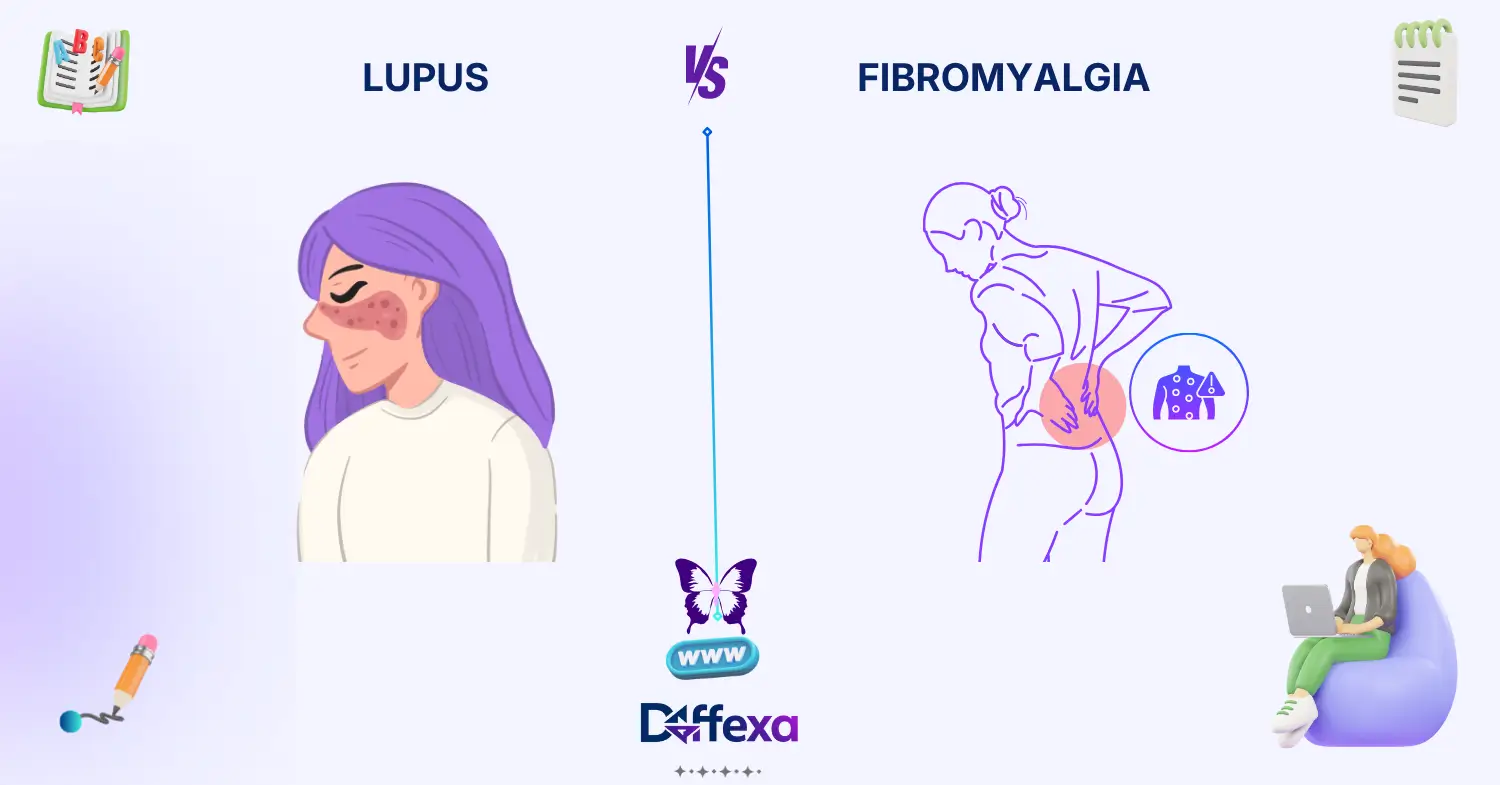
Difference between lupus and fibromyalgia often becomes important when someone experiences long‑lasting pain and fatigue without a clear diagnosis. Many patients feel confused after hearing both terms from doctors.
Imagine a young woman visiting a clinic because of joint pain, tiredness, and body aches. One doctor suspects Lupus, while another mentions Fibromyalgia. The symptoms look similar, but the conditions are very different.
The difference between lupus and fibromyalgia mainly lies in their causes, severity, and medical impact. Lupus is an autoimmune disease that attacks body tissues, while fibromyalgia is a chronic pain condition linked to nerve sensitivity.
Understanding the difference between lupus and fibromyalgia helps patients, students, and healthcare learners make better decisions and communicate clearly with doctors. Now, let’s explore their key differences in detail.
Key Difference Between the Two
The main difference between lupus and fibromyalgia is their nature and medical cause.
Lupus is an autoimmune disease. The immune system attacks healthy tissues, causing inflammation in organs like the skin, kidneys, and joints. It can damage vital organs if untreated.
Fibromyalgia is a pain processing disorder. The nervous system becomes highly sensitive and causes widespread pain, fatigue, and sleep problems. It does not damage organs.
In simple words, lupus is an immune system disease, while fibromyalgia is a pain sensitivity disorder. This basic distinction helps us understand their medical importance and treatment approach.
Why Is Their Difference Necessary to Know
Understanding the difference between lupus and fibromyalgia is important for both learners and healthcare professionals.
Students and medical learners must know this difference to avoid confusion in diagnosis and study. These conditions share symptoms like fatigue and pain, but their treatments are very different.
Healthcare professionals need this knowledge to provide accurate diagnosis and proper treatment. Misdiagnosis can lead to wrong medications and delayed recovery.
In society, awareness helps patients seek the right medical support early. When people understand the difference, they communicate better with doctors and reduce fear or misunderstanding.
This leads us to understanding how these terms are pronounced and used in medical communication.
🔊 Pronunciation
Lupus
US: /ˈluːpəs/
UK: /ˈluːpəs/
Fibromyalgia
US: /ˌfaɪbroʊmaɪˈældʒə/
UK: /ˌfaɪbrəʊmaɪˈældʒə/
Clear pronunciation helps in medical discussions and academic presentations. Now let’s define both terms clearly.
📚 Core Definitions
Lupus
Lupus is a chronic autoimmune disease in which the immune system attacks healthy body tissues and organs. It causes inflammation, pain, and organ damage over time.
Example:
A patient with lupus develops joint pain and kidney inflammation due to immune system attacks.
Fibromyalgia
Fibromyalgia is a long‑term condition that causes widespread body pain, fatigue, and sleep disturbances due to abnormal pain signals in the nervous system.
Example:
A person with fibromyalgia feels constant muscle pain and extreme tiredness without visible inflammation.
📚 10 Clear Differences Between Lupus and Fibromyalgia
1. Nature of Disease
Lupus is an autoimmune disease that attacks body organs and tissues. Fibromyalgia is a pain disorder linked to nerve sensitivity.
Example for Lupus: The immune system damages joints and kidneys.
Example for Fibromyalgia: The patient feels pain without tissue damage.
2. Cause
Lupus occurs due to immune system malfunction. Fibromyalgia develops due to nervous system sensitivity and stress factors.
Example for Lupus: Autoimmune antibodies attack body cells.
Example for Fibromyalgia: Stress and trauma trigger chronic pain.
3. Organ Damage
Lupus can damage organs like kidneys and heart. Fibromyalgia does not damage organs.
Example for Lupus: Kidney inflammation develops.
Example for Fibromyalgia: Pain occurs without organ damage.
4. Severity
Lupus can become life‑threatening in severe cases. Fibromyalgia is not life‑threatening but affects quality of life.
Example for Lupus: Severe flare leads to hospitalization.
Example for Fibromyalgia: Pain limits daily activities.
5. Symptoms
Lupus causes inflammation, rash, fever, and joint swelling. Fibromyalgia causes fatigue, muscle pain, and sleep problems.
Example for Lupus: Butterfly rash appears on the face.
Example for Fibromyalgia: The patient feels constant body aches.
6. Diagnosis
Lupus is diagnosed through blood tests and medical imaging. Fibromyalgia is diagnosed through symptom evaluation.
Example for Lupus: ANA blood test confirms disease.
Example for Fibromyalgia: Tender point examination supports diagnosis.
7. Treatment
Lupus requires immune‑suppressing medication. Fibromyalgia requires pain management and lifestyle therapy.
Example for Lupus: Steroids reduce inflammation.
Example for Fibromyalgia: Exercise and therapy improve symptoms.
8. Disease Progression
Lupus progresses with flare‑ups and remission. Fibromyalgia remains stable but chronic.
Example for Lupus: Symptoms worsen during flare‑ups.
Example for Fibromyalgia: Pain remains consistent.
9. Medical Monitoring
Lupus requires regular organ monitoring. Fibromyalgia requires symptom management.
Example for Lupus: Doctors monitor kidney function.
Example for Fibromyalgia: Doctors track pain and sleep patterns.
10. Psychological Impact
Lupus creates fear due to organ damage risk. Fibromyalgia causes emotional stress due to chronic pain.
Example for Lupus: Patient worries about long‑term health.
Example for Fibromyalgia: Patient struggles with fatigue and anxiety.
🎯 Why Knowing the Difference Matters
Students must understand this difference to build strong medical and vocabulary knowledge. It improves academic clarity and prevents misunderstanding in health topics.
Professionals benefit from clear understanding because accurate diagnosis leads to proper treatment. This reduces medical errors and improves patient care.
In society, awareness reduces fear and confusion about chronic illnesses. People can seek medical help early and manage symptoms effectively.
Real‑world consequences of confusion
Confusing lupus with fibromyalgia can delay proper treatment. A lupus patient may miss urgent medication, while a fibromyalgia patient may receive unnecessary immune drugs. This can affect health and recovery.
🧠 Why People Get Confused
Similar Spelling or Pronunciation
Both terms sound medical and complex. Many learners mix them due to unfamiliar pronunciation.
Semantic Overlap
Both diseases involve pain and fatigue, which creates confusion.
Context-Based Usage
Doctors sometimes mention both during diagnosis, which increases misunderstanding.
Influence of Informal Speech
People often use general terms like “chronic illness,” making the distinction unclear.
🎭 Connotation & Emotional Tone
Connotation = emotional meaning attached to a word.
Lupus
Positive: Medical awareness and early diagnosis bring hope.
Example: Early lupus detection improves treatment success.
Negative: The disease sounds serious and life‑threatening.
Example: Lupus diagnosis worries many patients.
Neutral: Medical discussions use it in clinical tone.
Example: Lupus requires regular monitoring.
Fibromyalgia
Positive: Manageable with therapy and lifestyle changes.
Example: Fibromyalgia patients can live normal lives.
Negative: Chronic pain creates emotional stress.
Example: Fibromyalgia causes long‑term fatigue.
Neutral: Used in healthcare discussions.
Example: Fibromyalgia affects pain signals.
🗣 Usage in Metaphors, Similes & Idioms
Medical terms rarely appear in idioms, but they appear in metaphorical language.
Example:
“Her pain felt like fibromyalgia spreading through her body.”
“The immune system attacked like lupus in a storm.”
These expressions highlight severity and emotional impact.
📊 Comparison Table
| Feature | Lupus | Fibromyalgia |
|---|---|---|
| Meaning | Autoimmune disease | Chronic pain disorder |
| Tone | Serious medical condition | Chronic health condition |
| Usage | Medical diagnosis | Pain management context |
| Context | Organ damage and inflammation | Nerve sensitivity and fatigue |
| Formality | Highly clinical | Medical and general |
⚖️ Which Is Better in What Situation
When to Use Lupus
Use lupus when discussing autoimmune diseases and organ inflammation. It fits medical and clinical contexts.
When to Use Fibromyalgia
Use fibromyalgia when discussing chronic pain and fatigue conditions. It suits healthcare and wellness discussions.
Situational Clarity
Choose lupus for immune system conditions. Choose fibromyalgia for nerve‑related pain.
Contextual Correctness
Correct usage improves medical communication and avoids confusion in diagnosis.
📖 Literary or Cultural References
Book: The Lupus Encyclopedia (Medical Guide, Donald E. Thomas Jr., 2014) – Explains lupus in simple language.
Movie: Unrest (USA, 2017) – Shows chronic illness struggles similar to fibromyalgia conditions.
These references highlight awareness and patient experiences.
❓ FAQs
1. Is lupus more serious than fibromyalgia?
Yes, lupus is generally more serious because it can damage organs like kidneys and heart. Fibromyalgia mainly affects pain and fatigue. Lupus may become life‑threatening if untreated. Fibromyalgia affects quality of life but rarely causes organ damage.
2. Can a person have both lupus and fibromyalgia?
Yes, some patients can have both conditions. Doctors sometimes diagnose fibromyalgia in lupus patients due to chronic pain. Proper medical evaluation helps identify both diseases. Treatment plans differ for each condition.
3. Is fibromyalgia an autoimmune disease like lupus?
No, fibromyalgia is not an autoimmune disease. Lupus involves immune system attacks on body tissues. Fibromyalgia involves abnormal pain signals in the nervous system. Their causes and treatments are different.
4. Are symptoms of lupus and fibromyalgia similar?
Yes, both cause fatigue, pain, and weakness. However, lupus also causes inflammation, rash, and organ damage. Fibromyalgia mainly causes widespread muscle pain and sleep problems. Medical tests help differentiate them.
5. Can lupus or fibromyalgia be cured?
Currently, neither lupus nor fibromyalgia has a permanent cure. Doctors manage lupus with medication and monitoring. Fibromyalgia improves with therapy, exercise, and lifestyle changes. Early diagnosis helps control symptoms effectively.
🏁 Conclusion
The difference between lupus and fibromyalgia mainly lies in their cause, severity, and medical impact. Lupus is an autoimmune disease that can damage organs, while fibromyalgia is a chronic pain condition linked to nerve sensitivity.
Understanding this distinction helps students, patients, and professionals communicate clearly and make informed health decisions. It reduces confusion and supports accurate diagnosis.
Awareness also improves patient confidence and encourages early medical consultation. Knowledge leads to better treatment and better quality of life.
Keep learning medical vocabulary and health concepts with curiosity and care. Clear understanding always leads to better communication and smarter decisions in everyday life 🩺

Sajid Ali is an English language educator and content specialist with 7+ years of teaching experience. He holds master’s degrees in Information Technology and Education from the Virtual University of Pakistan and writes SEO-optimized, learner-friendly vocabulary content for diffexa.com.