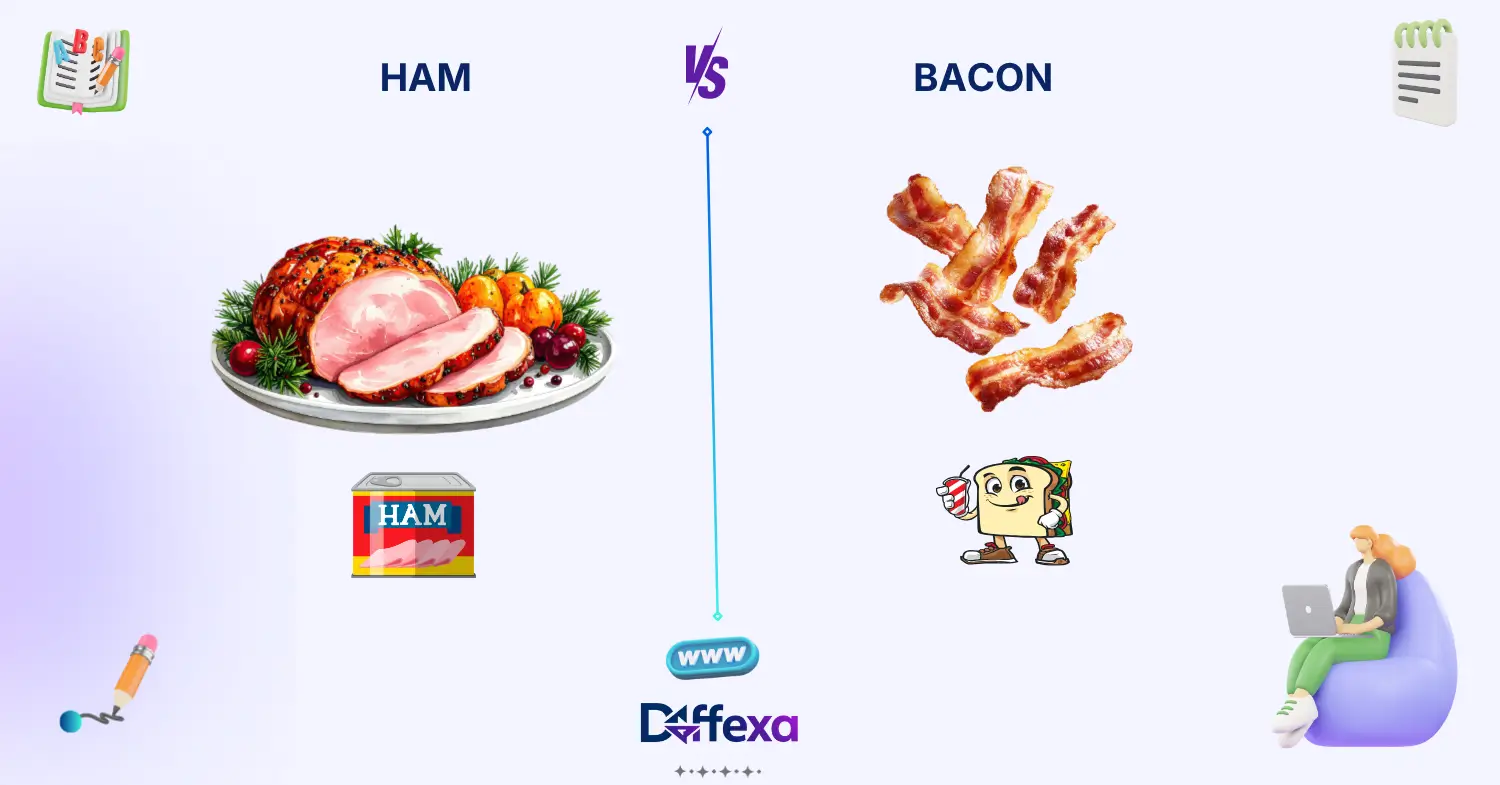
Difference between ham and bacon often becomes confusing when you are ordering breakfast or shopping for meat. You see both on menus, but are they the same?
The difference between ham and bacon lies in the part of the pig, the curing process, and the taste. Both come from pork, yet they offer very different flavors and textures.
Understanding the difference between ham and bacon helps you choose the right option for cooking, diet, and taste preferences.
Let’s explore these two popular foods step by step to make everything clear.
🥓 Key Difference Between the Two
The main difference is simple. Ham comes from the pig’s hind leg, while bacon comes from the belly or back.
Ham is usually leaner and thicker. Bacon is fattier and comes in thin strips.
Also, ham often tastes mild and slightly sweet. Bacon has a strong, smoky, and salty flavor.
Now, let’s understand why knowing this difference matters.
🎯 Why Is Their Difference Necessary to Know
Knowing the difference helps learners and everyday users describe food correctly. It improves communication in English, especially in real-life situations like ordering food.
For professionals like chefs, nutritionists, and food bloggers, the difference is very important. It affects recipes, cooking methods, and health advice.
In society, food choices connect to culture and health. Using the correct term avoids confusion and shows clarity in communication.
Next, let’s learn how to pronounce these words correctly.
🔊 PRONUNCIATION
🥩 Ham
US: /hæm/
UK: /hæm/
🥓 Bacon
US: /ˈbeɪkən/
UK: /ˈbeɪkən/
Now that pronunciation is clear, let’s define both terms before comparing them deeply.
📚 CORE DEFINITIONS
🥩 Ham
Ham is meat from the pig’s hind leg. It is often cured or cooked and has a mild, slightly sweet taste. It feels more solid and less fatty.
Example:
Ham Example: I ate a ham sandwich for lunch.
🥓 Bacon
Bacon is meat from the pig’s belly or back. It is usually cured, smoked, and sliced thin. It has a salty, crispy, and smoky flavor.
Example:
Bacon Example: I cooked crispy bacon for breakfast.
📚 10 Clear Differences Between Ham and Bacon
1. Cut of Meat
Ham comes from the leg. Bacon comes from the belly or back.
Example for Ham:
Ham is cut from the pig’s leg.
Example for Bacon:
Bacon comes from the fatty belly.
2. Fat Content
Ham is leaner. Bacon has more fat.
Example for Ham:
Ham slices look firm and low in fat.
Example for Bacon:
Bacon strips show visible fat layers.
3. Taste Profile
Ham tastes mild and slightly sweet. Bacon tastes smoky and salty.
Example for Ham:
Ham tastes gentle in sandwiches.
Example for Bacon:
Bacon gives a strong smoky flavor.
4. Texture
Ham is thick and soft. Bacon becomes crispy when cooked.
Example for Ham:
Ham feels tender when sliced.
Example for Bacon:
Bacon becomes crunchy in a pan.
5. Cooking Method
Ham is often pre-cooked. Bacon needs frying or baking.
Example for Ham:
Ham is ready to eat in many cases.
Example for Bacon:
Bacon must be cooked before eating.
6. Usage Context
Ham is used in meals like sandwiches or dinners. Bacon is popular in breakfast foods.
Example for Ham:
Ham works well in lunch meals.
Example for Bacon:
Bacon is common in breakfast plates.
7. Flavor Intensity
Ham has a lighter flavor. Bacon has a bold flavor.
Example for Ham:
Ham does not overpower dishes.
Example for Bacon:
Bacon adds a strong taste.
8. Preservation Style
Ham is cured or smoked lightly. Bacon is heavily cured and smoked.
Example for Ham:
Ham may taste slightly smoky.
Example for Bacon:
Bacon has a deep smoky taste.
9. Nutritional Impact
Ham usually has less fat. Bacon has higher fat content.
Example for Ham:
Ham can be a lean protein option.
Example for Bacon:
Bacon contains more fat and calories.
10. Presentation Style
Ham comes in thick slices or whole cuts. Bacon comes in thin strips.
Example for Ham:
Ham is served in slices or chunks.
Example for Bacon:
Bacon appears as thin crispy strips.
🎯 Why Knowing the Difference Matters
Students must know the difference to describe food correctly in English. It improves vocabulary and avoids mistakes.
Professionals like chefs and food writers rely on accurate terms. It ensures correct recipes and proper communication.
In daily life, using the wrong word can confuse others. Clear language helps better understanding.
Real-world consequences of confusion
If you order ham but expect bacon, you may get a completely different taste and texture. This can affect your experience.
🧠 Why People Get Confused
Similar context
Both are pork products. This makes them seem similar.
Semantic overlap
They are often used in breakfast meals together.
Informal speech
People sometimes use them loosely without thinking.
Pronunciation
Though different, quick speech may confuse learners.
🎭 Connotation & Emotional Tone
(Connotation = the emotional meaning attached to a word.)
Ham
Positive:
Associated with hearty meals and comfort.
Example: Ham reminds me of family dinners.
Negative:
Sometimes linked with processed food.
Example: Some avoid ham for health reasons.
Neutral:
A common everyday meat.
Example: Ham is widely available.
Bacon
Positive:
Seen as tasty and enjoyable.
Example: Bacon makes breakfast exciting.
Negative:
Linked to high fat and unhealthy eating.
Example: Too much bacon is not healthy.
Neutral:
A standard breakfast item.
Example: Bacon is common in menus.
🗣 Usage in Metaphors, Similes & Idioms
While rare, bacon appears in idioms:
- “Bring home the bacon” = earn money
Example Sentence:
He works hard to bring home the bacon, not just ham.
Ham appears less in idioms but may refer to acting (overacting).
📊 Comparison Table
| Feature | Ham | Bacon |
|---|---|---|
| Meaning | Meat from leg | Meat from belly |
| Tone | Mild | Strong |
| Usage | Meals, sandwiches | Breakfast foods |
| Context | Formal & casual | Mostly casual |
| Formality | Neutral | Informal tone |
⚖️ Which Is Better in What Situation?
When to use Ham
Use ham when you want a leaner and milder option. It works well in sandwiches and formal meals.
When to use Bacon
Use bacon when you want a strong, smoky flavor. It is perfect for breakfast and crispy dishes.
Situational clarity
Choose based on taste, fat level, and cooking style.
Contextual correctness
In formal dining, ham fits better. In casual meals, bacon is more popular.
📖 Literary or Cultural References
- Book: The Jungle (Upton Sinclair, 1906) – discusses meat production
- Movie: Charlotte’s Web (USA, 2006) – highlights farm animals and food awareness
These works show how pork products are part of culture and society.
❓ FAQs
1. Is ham healthier than bacon?
Ham is usually leaner and has less fat than bacon. Bacon contains more fat and salt. However, both should be eaten in moderation. The health factor depends on portion size and preparation. Fresh or low-sodium options are better.
2. Can ham be used instead of bacon?
Yes, but the taste will differ. Ham is milder, while bacon is smoky. Recipes may lose flavor if you replace bacon with ham. However, it works in some dishes like sandwiches. Always adjust seasoning.
3. Why is bacon more popular for breakfast?
Bacon cooks quickly and becomes crispy. Its strong flavor pairs well with eggs. People enjoy its texture and smell. That’s why it is a breakfast favorite.
4. Is bacon always smoked?
Most bacon is smoked, but not all. Some types are just cured. Smoking gives bacon its unique flavor. Without it, the taste is lighter.
5. What type of ham is most common?
Cooked or cured ham is most common. It is easy to slice and eat. People use it in sandwiches and meals. Smoked ham is also popular.
🏁 Conclusion
The difference between ham and bacon mainly comes from the cut of meat, fat content, and flavor. Ham is lean and mild, while bacon is fatty and smoky.
Understanding this difference helps you choose the right food for your needs. It also improves your English when talking about food clearly.
Both have their own place in meals. The key is knowing when and how to use each one correctly.
Keep learning small differences like this. They make your language stronger and your choices smarter

Sajid Ali is an English language educator and content specialist with 7+ years of teaching experience. He holds master’s degrees in Information Technology and Education from the Virtual University of Pakistan and writes SEO-optimized, learner-friendly vocabulary content for diffexa.com.