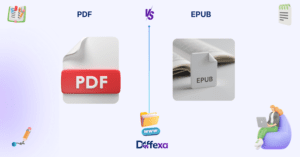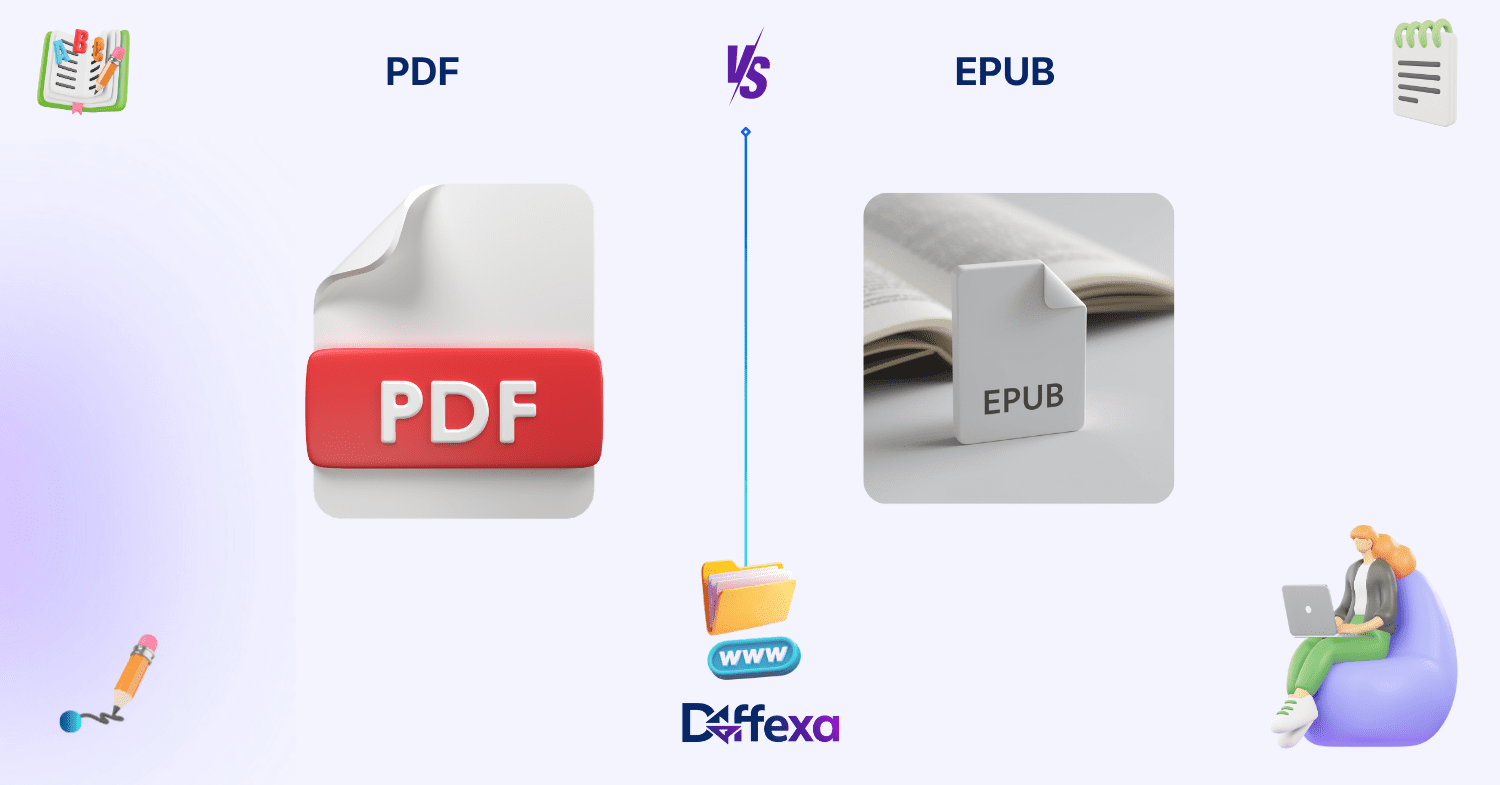
Difference between pdf and epub becomes clear when you download an eBook and open it on your phone. The text in one file fits perfectly on the screen, while the other requires zooming and scrolling. This simple experience shows how digital file formats affect reading and usability.
In basic terms, the difference between pdf and epub is about how digital documents display and adjust on different devices. PDF keeps the layout fixed and structured, while EPUB adapts text and images to screen size. Both formats are widely used in education, publishing, and digital communication.
Understanding the difference between pdf and epub helps students, readers, and professionals choose the right file format for their needs. PDF works well for official documents and printing, while EPUB provides a smooth reading experience on mobile devices and e-readers.
When you clearly understand the difference between these formats, you can read more comfortably, share documents efficiently, and avoid technical problems. Now, let’s explore their key differences in detail.
Key Difference Between the Two
The main difference between PDF and EPUB lies in layout flexibility and reading experience.
PDF is a fixed-layout file format that preserves the original design, fonts, and structure of a document. It looks the same on every device and is commonly used for reports, academic papers, and official files.
EPUB is a flexible digital format designed for electronic reading. It automatically adjusts text, images, and layout according to screen size, making reading easier on smartphones, tablets, and e-readers.
In simple terms, PDF focuses on structure and consistency, while EPUB focuses on flexibility and readability. This distinction forms the foundation of their comparison.
Why Is Their Difference Necessary to Know
Understanding the difference between pdf and epub helps students select the right format for studying and reading digital books. EPUB allows comfortable reading on small screens, while PDF ensures structured academic content. This knowledge improves learning efficiency and reduces frustration.
Professionals such as publishers, designers, and educators must understand this difference to create high-quality digital materials. Choosing the correct format improves accessibility, presentation, and user experience. It also supports effective communication in digital environments.
In modern society, digital documents are used in education, business, and publishing every day. Knowing the difference between these formats helps people adapt to technology and make smarter decisions when sharing or reading files.
Now, let’s learn how to pronounce these terms correctly.
Pronunciation
US: /ˌpiː.diːˈɛf/
UK: /ˌpiː.diːˈɛf/
EPUB
US: /ˈiː.pʌb/ or /ˈiː.pʊb/
UK: /ˈiː.pʌb/
Correct pronunciation helps in professional and academic discussions. Now, let’s move to their core definitions.
Core Definitions
PDF (Portable Document Format) is a digital file format that preserves the layout, fonts, and structure of a document. It ensures the document looks the same on all devices and platforms. It is commonly used in academic, business, and official communication.
Example:
The teacher shared the assignment in PDF format.
EPUB
EPUB (Electronic Publication) is a digital book format designed for flexible reading on electronic devices. It automatically adjusts content to fit different screen sizes and improves readability. It is widely used for eBooks and digital publishing.
Example:
She downloaded the novel in EPUB format for her tablet.
10 Clear Differences Between PDF and EPUB
1. Layout Flexibility
PDF keeps a fixed layout and does not adjust to screen size. EPUB adapts text and layout automatically.
Example for PDF: The document looked the same on every device.
Example for EPUB: The text adjusted perfectly on the phone.
2. Reading Experience
PDF may require zooming on small screens. EPUB provides smooth and comfortable reading.
Example for PDF: The PDF required scrolling and zooming.
Example for EPUB: The EPUB displayed clear text automatically.
3. Device Compatibility
PDF works on almost all devices and browsers. EPUB mainly works in reading apps and e-readers.
Example for PDF: The file opened in the browser.
Example for EPUB: The file opened in an eBook app.
4. Editing and Formatting
PDF is difficult to edit due to locked formatting. EPUB is easier to modify and update.
Example for PDF: Editing required special software.
Example for EPUB: The publisher updated the text easily.
5. Purpose and Use
PDF is used for official and printable documents. EPUB is used for digital books and reading.
Example for PDF: The company shared the report in PDF.
Example for EPUB: The author published the book in EPUB.
6. File Size
PDF files are often larger due to embedded elements. EPUB files are smaller and compressed.
Example for PDF: The PDF took more storage space.
Example for EPUB: The EPUB downloaded quickly.
7. Printing Support
PDF is ideal for printing and maintains layout. EPUB is not suitable for printing.
Example for PDF: The report printed perfectly.
Example for EPUB: The EPUB layout changed during printing.
8. Interactivity
PDF supports limited interactivity. EPUB supports adjustable fonts and bookmarks.
Example for PDF: The PDF had clickable links.
Example for EPUB: The EPUB allowed font resizing.
9. Accessibility
PDF may require accessibility adjustments. EPUB supports screen readers better.
Example for PDF: The PDF needed tagging for accessibility.
Example for EPUB: The EPUB worked smoothly with reading tools.
10. Publishing Use
PDF is used for final documents and reports. EPUB is used for digital publishing.
Example for PDF: The manual was released in PDF.
Example for EPUB: The novel was published in EPUB.
Why Knowing the Difference Matters
Students need to understand the difference between pdf and epub to improve digital reading and academic work. Choosing the right format helps them study more effectively and avoid technical issues.
Professionals benefit from this knowledge because it improves document presentation and digital publishing. Using the correct format ensures better communication and user experience.
In everyday digital life, people share files frequently. Knowing the difference helps avoid formatting problems and ensures smooth information sharing.
Real‑world consequences of confusion
Using EPUB for official documents may create formatting problems, while using PDF for eBooks may reduce readability. Clear understanding prevents these issues and improves efficiency.
Why People Get Confused
Similar Technical Nature
Both PDF and EPUB are digital file formats, which makes them appear similar to beginners.
Shared Function
Both store text and images, creating confusion in usage.
Context-Based Usage
Many websites offer both formats for download, and users choose without understanding.
Informal Speech
People often call all digital files PDFs, which increases misunderstanding.
Connotation & Emotional Tone
Connotation = emotional meaning attached to a word. 🎭
Connotation = the emotional meaning associated with a word.
Positive: Professional and reliable
Example: The PDF report looked official.
Negative: Rigid and less flexible
Example: The PDF was hard to read on mobile.
Neutral: Standard document format
Example: The file was saved as PDF.
EPUB
Positive: Flexible and reader-friendly
Example: The EPUB was easy to read.
Negative: Less formal for official use
Example: EPUB was not suitable for reports.
Neutral: Digital book format
Example: The novel was available in EPUB.
Usage in Metaphors, Similes & Idioms
PDF and EPUB rarely appear in traditional idioms, but modern comparisons exist.
The report was as fixed as a PDF document.
The eBook flowed like an EPUB on a tablet.
These examples explain the difference in flexibility and structure.
Comparison Table
| Feature | EPUB | |
|---|---|---|
| Meaning | Fixed digital document | Flexible digital book |
| Tone | Professional | Reader-friendly |
| Usage | Reports and documents | eBooks and reading |
| Context | Academic and business | Publishing and reading |
| Formality | Formal | Semi-formal |
Which Is Better in What Situation
When to Use PDF
Use PDF for official documents, reports, and printable materials. It keeps formatting consistent and professional.
When to Use EPUB
Use EPUB for digital reading and eBooks. It improves comfort and adjusts to screen size.
Situational Clarity
PDF suits structured content, while EPUB suits flexible reading environments.
Contextual Correctness
Choose PDF for formal communication and EPUB for digital reading platforms.
Literary or Cultural References
Book: Digital Publishing Guide (Technology, 2010)
Explains digital formats and modern publishing.
Documentary: PressPausePlay (2011)
Shows the rise of digital media and publishing technologies.
FAQs
1. Which is better for reading, PDF or EPUB?
EPUB is generally better for reading because it adjusts to screen size and improves comfort. PDF works well on large screens but may require zooming on smaller devices. Readers usually prefer EPUB for eBooks. PDF is better for structured documents. The choice depends on the purpose.
2. Can PDF be converted to EPUB?
Yes, many tools allow PDF to EPUB conversion. However, formatting may change during the process. Complex layouts may not convert perfectly. Simple text converts more easily. Always review the file after conversion.
3. Why do eBook readers prefer EPUB?
EPUB provides flexible reading and adjustable text size. It improves readability and user experience. It also supports accessibility features. This makes it ideal for digital reading. Many e-readers support EPUB.
4. Is PDF still useful today?
Yes, PDF remains widely used for official documents and reports. It ensures consistent formatting and professional presentation. Many organizations rely on PDF. It is still an essential digital format. EPUB does not replace it completely.
5. Can EPUB open without software?
Usually, EPUB requires a reading app or e-reader. Some devices support it by default, but many need special apps. PDF opens easily in most browsers. This makes PDF more universally accessible. EPUB still requires proper tools.
Conclusion
The difference between pdf and epub mainly lies in layout flexibility, usability, and purpose. PDF provides a fixed and professional structure, while EPUB offers flexible and comfortable digital reading. Both formats serve important roles in modern digital communication.
Understanding this difference helps students read better, professionals share documents effectively, and publishers deliver high-quality content. Choosing the right format improves efficiency and reduces technical problems.
As digital technology continues to grow, knowing when to use PDF or EPUB becomes an essential skill. Keep learning about digital formats and tools to improve your reading, publishing, and communication in the digital world 📚

Sajid Ali is an English language educator and content specialist with 7+ years of teaching experience. He holds master’s degrees in Information Technology and Education from the Virtual University of Pakistan and writes SEO-optimized, learner-friendly vocabulary content for diffexa.com.