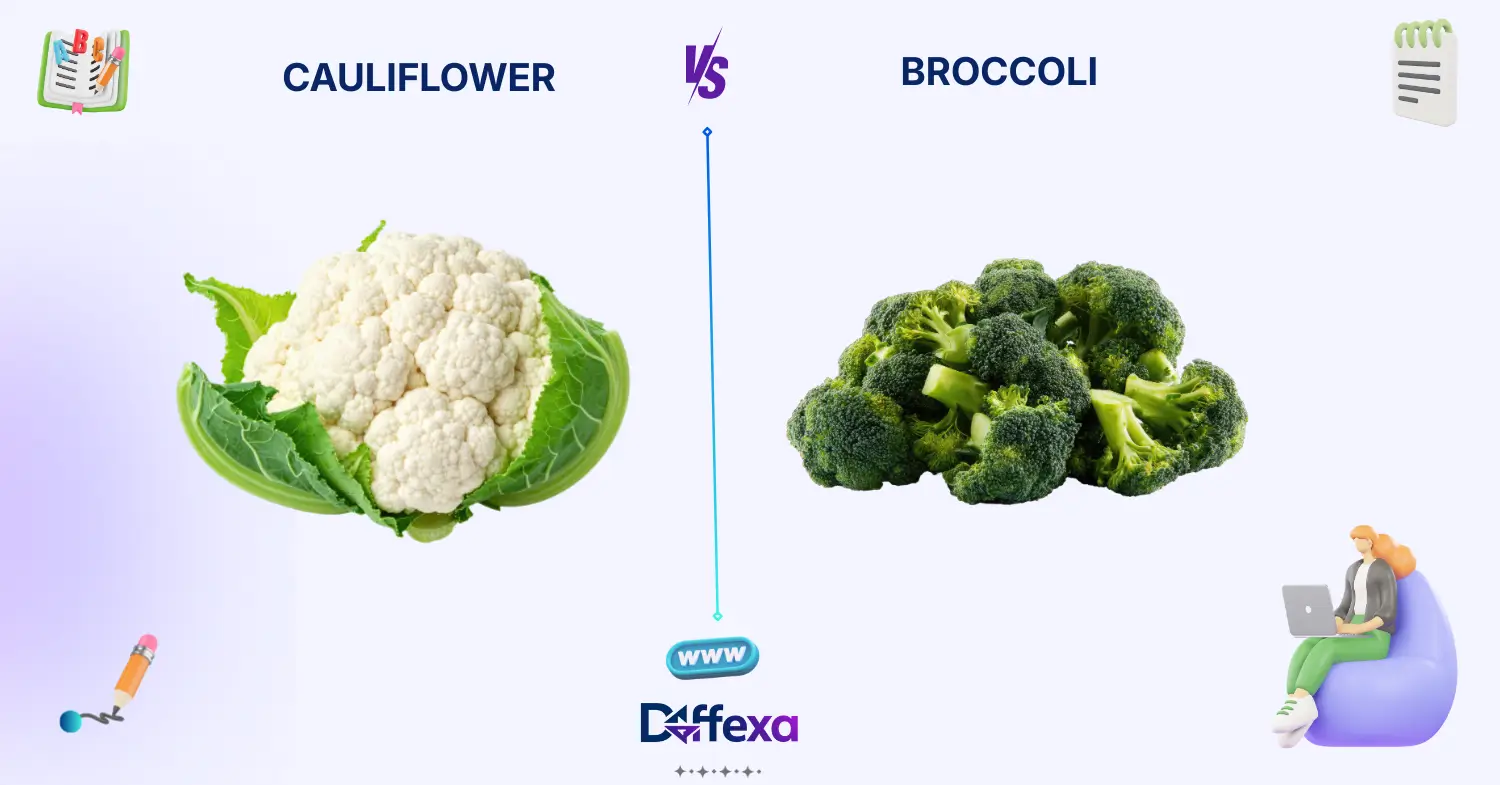
Difference between cauliflower and broccoli often comes up in everyday cooking. Imagine standing in a grocery store and looking at two vegetables that seem very similar. One is white and the other is green, yet both look like small trees.
Many people wonder about the difference between cauliflower and broccoli because they belong to the same plant family and are often used in similar recipes. Both vegetables appear in soups, salads, stir‑fries, and healthy diets.
However, the difference between cauliflower and broccoli involves more than color. Their taste, nutrition, texture, and cooking uses also vary.
Understanding the difference between cauliflower and broccoli helps students, home cooks, and health‑conscious people choose the right vegetable for their meals. Let’s begin with the main difference.
Key Difference Between the Two
The main difference between cauliflower and broccoli lies in appearance, taste, and nutritional composition.
Cauliflower has a white compact head made of tightly packed flower buds. Its flavor is mild and slightly nutty.
Broccoli has green branching florets that grow like small trees. It has a stronger and slightly bitter taste compared to cauliflower.
Although they look similar and belong to the same vegetable family, their flavor, texture, and nutrients differ.
Why Is Their Difference Necessary to Know
Knowing the difference between cauliflower and broccoli helps people make better food choices.
Students and learners benefit because nutrition education often includes understanding vegetables and their health benefits.
Professionals such as chefs and nutritionists also rely on these differences when designing recipes or healthy meal plans.
In modern society, healthy eating plays an important role in well‑being. Understanding vegetables like cauliflower and broccoli helps people create balanced diets.
Pronunciation
Cauliflower
US: /ˈkɑːlɪˌflaʊər/
UK: /ˈkɒlɪˌflaʊə/
Broccoli
US: /ˈbrɑːkəli/
UK: /ˈbrɒkəli/
Both words are common in everyday conversation. Now let’s look at their core meanings.
Core Definitions
Cauliflower
Cauliflower is a vegetable with a dense white head called a “curd.” It belongs to the cabbage family and grows as a cluster of undeveloped flower buds.
Its taste is mild and slightly nutty, which makes it versatile in cooking.
Example:
Cooking Example: A cook roasts cauliflower with spices for a healthy side dish.
Broccoli
Broccoli is a green vegetable with branching florets and thick edible stems. It also belongs to the cabbage family and contains many nutrients.
Its flavor is stronger and slightly earthy compared to cauliflower.
Example:
Cooking Example: A chef steams broccoli and serves it with grilled chicken.
10 Clear Differences Between Cauliflower and Broccoli
1. Appearance
Cauliflower has a large white head made of tightly packed buds.
Broccoli has green branching florets that look like miniature trees.
Example for Cauliflower:
Example: A white cauliflower head sits in the vegetable basket.
Example for Broccoli:
Example: Green broccoli florets appear in a stir‑fry dish.
2. Color
Cauliflower is usually white, though some varieties appear purple or orange.
Broccoli is typically dark green.
Example for Cauliflower:
Example: A recipe calls for white cauliflower pieces.
Example for Broccoli:
Example: Green broccoli adds color to a vegetable plate.
3. Taste
Cauliflower has a mild and slightly nutty flavor.
Broccoli has a stronger and slightly bitter taste.
Example for Cauliflower:
Example: Cauliflower blends easily into creamy soups.
Example for Broccoli:
Example: Broccoli adds a bold vegetable flavor to pasta dishes.
4. Texture
Cauliflower becomes soft and creamy when cooked.
Broccoli usually keeps a firmer texture after cooking.
Example for Cauliflower:
Example: Mashed cauliflower feels smooth.
Example for Broccoli:
Example: Steamed broccoli stays slightly crunchy.
5. Nutritional Profile
Cauliflower contains vitamin C, fiber, and antioxidants.
Broccoli contains higher levels of vitamin K and vitamin C.
Example for Cauliflower:
Example: Cauliflower rice provides a low‑carb alternative.
Example for Broccoli:
Example: Broccoli adds vitamins to a healthy meal.
6. Cooking Uses
Cauliflower often replaces rice or mashed potatoes in recipes.
Broccoli is commonly steamed, roasted, or stir‑fried.
Example for Cauliflower:
Example: A chef prepares cauliflower pizza crust.
Example for Broccoli:
Example: Broccoli appears in vegetable stir‑fry.
7. Culinary Popularity
Cauliflower became popular in modern low‑carb diets.
Broccoli has long been a staple vegetable in many cuisines.
Example for Cauliflower:
Example: Cauliflower rice appears in diet recipes.
Example for Broccoli:
Example: Broccoli soup appears in traditional menus.
8. Psychological Impact
Cauliflower often feels neutral because of its mild taste.
Broccoli sometimes divides opinions because of its strong flavor.
Example for Cauliflower:
Example: Many children accept cauliflower in creamy dishes.
Example for Broccoli:
Example: Some people dislike broccoli’s bitterness.
9. Cooking Smell
Cauliflower releases a mild vegetable smell when cooked.
Broccoli produces a stronger smell due to sulfur compounds.
Example for Cauliflower:
Example: Roasted cauliflower smells mild and nutty.
Example for Broccoli:
Example: Boiled broccoli creates a stronger aroma.
10. Expression Style in Cooking
Cauliflower often works as a substitute ingredient.
Broccoli usually appears as a main vegetable side dish.
Example for Cauliflower:
Example: Cauliflower replaces rice in healthy meals.
Example for Broccoli:
Example: Broccoli serves as a green side vegetable.
Why Knowing the Difference Matters
Understanding the difference between cauliflower and broccoli helps students learn about nutrition and plant families.
Professionals such as chefs and dietitians also rely on these differences when creating healthy meals.
Food choices affect health, taste, and cooking methods.
Real‑world Consequences of Confusion
A cook may substitute broccoli for cauliflower in a recipe and change the flavor completely. Knowing the difference prevents such mistakes.
Why People Get Confused
Similar Appearance
Both vegetables belong to the same plant family and have similar shapes.
Overlapping Uses
Many recipes use either vegetable interchangeably.
Context‑Based Usage
Both vegetables appear in salads, soups, and healthy diets.
Informal Speech
People sometimes refer to them simply as “green or white vegetables,” which creates confusion.
Connotation & Emotional Tone
Connotation = emotional meaning attached to a word.
Connotation = the emotional meaning associated with a word.
Cauliflower
Positive:
Often linked with healthy diets and low‑carb cooking.
Example: Many people enjoy cauliflower rice.
Negative:
Sometimes considered bland when not seasoned well.
Example: Plain boiled cauliflower may taste dull.
Neutral:
Used simply as a vegetable ingredient.
Example: A recipe includes chopped cauliflower.
Broccoli
Positive:
Associated with strong nutrition and healthy eating.
Example: Parents encourage children to eat broccoli.
Negative:
Some people dislike its slightly bitter taste.
Example: A child refuses broccoli at dinner.
Neutral:
Used as a standard vegetable in many dishes.
Example: A chef adds broccoli to pasta.
Usage in Metaphors, Similes & Idioms
Vegetables sometimes appear in humorous comparisons.
“The dish looked like a forest of broccoli.”
Meaning: Many green florets filled the plate.
“The cauliflower pieces were as soft as clouds.”
Meaning: The vegetable became very tender.
These comparisons help describe food texture and appearance.
Comparison Table
| Feature | Cauliflower | Broccoli |
|---|---|---|
| Meaning | White flowering vegetable | Green flowering vegetable |
| Tone | Mild and neutral | Strong and earthy |
| Usage | Substitute for grains or mashed foods | Common vegetable side dish |
| Context | Diet recipes and soups | Stir‑fries and healthy meals |
| Formality | Neutral food ingredient | Neutral food ingredient |
Which Is Better in What Situation?
When to Use Cauliflower
Cauliflower works well in recipes that require a mild flavor. It can replace rice, potatoes, or flour in low‑carb meals.
When to Use Broccoli
Broccoli works best when you want a stronger vegetable flavor and extra nutrients. It is perfect for steaming, roasting, or stir‑frying.
Situational Clarity
Many cooks use cauliflower for substitutes and broccoli as a main vegetable side dish.
Contextual Correctness
Choosing the right vegetable depends on taste preference and the type of recipe.
Literary or Cultural References
Book:
“On Food and Cooking” (Food Science, Harold McGee, 2004)
Book:
“The Complete Mediterranean Cookbook” (Cooking, America’s Test Kitchen, 2016)
Movie:
“Ratatouille” (USA, 2007) — a story that celebrates vegetables and cooking.
FAQs
1. Is broccoli healthier than cauliflower?
Both vegetables are highly nutritious. Broccoli contains more vitamin K and vitamin C, while cauliflower offers fiber and antioxidants. Including both in a diet provides balanced nutrition.
2. Can cauliflower replace broccoli in recipes?
Sometimes it can. Cauliflower works well in soups, roasted dishes, or vegetable mixes. However, the flavor and texture may change slightly.
3. Why do broccoli and cauliflower belong to the same family?
Both vegetables belong to the cabbage family known as Brassica vegetables. They share similar plant origins and growth patterns.
4. Which vegetable is better for dieting?
Cauliflower often appears in low‑carb diets because it can replace rice or mashed potatoes. Broccoli is also healthy and low in calories.
5. Why do some people dislike broccoli?
Broccoli contains natural compounds that create a slightly bitter flavor. Some people are more sensitive to this taste.
Conclusion
The difference between cauliflower and broccoli mainly involves their appearance, taste, and nutritional characteristics. Cauliflower has a white, compact head with a mild flavor, while broccoli features green florets with a stronger taste.
Both vegetables belong to the same plant family and provide valuable nutrients. Yet they serve different purposes in cooking and nutrition.
Understanding these differences helps people choose the right vegetable for their meals, whether they want a mild ingredient like cauliflower or a flavorful option like broccoli.
Learning about foods like these also builds healthy eating habits. Exploring vegetables and their benefits can make cooking more enjoyable and nutritious for everyone 🥦.

Sajid Ali is an English language educator and content specialist with 7+ years of teaching experience. He holds master’s degrees in Information Technology and Education from the Virtual University of Pakistan and writes SEO-optimized, learner-friendly vocabulary content for diffexa.com.