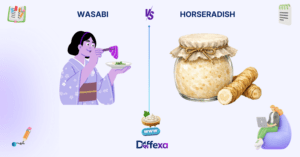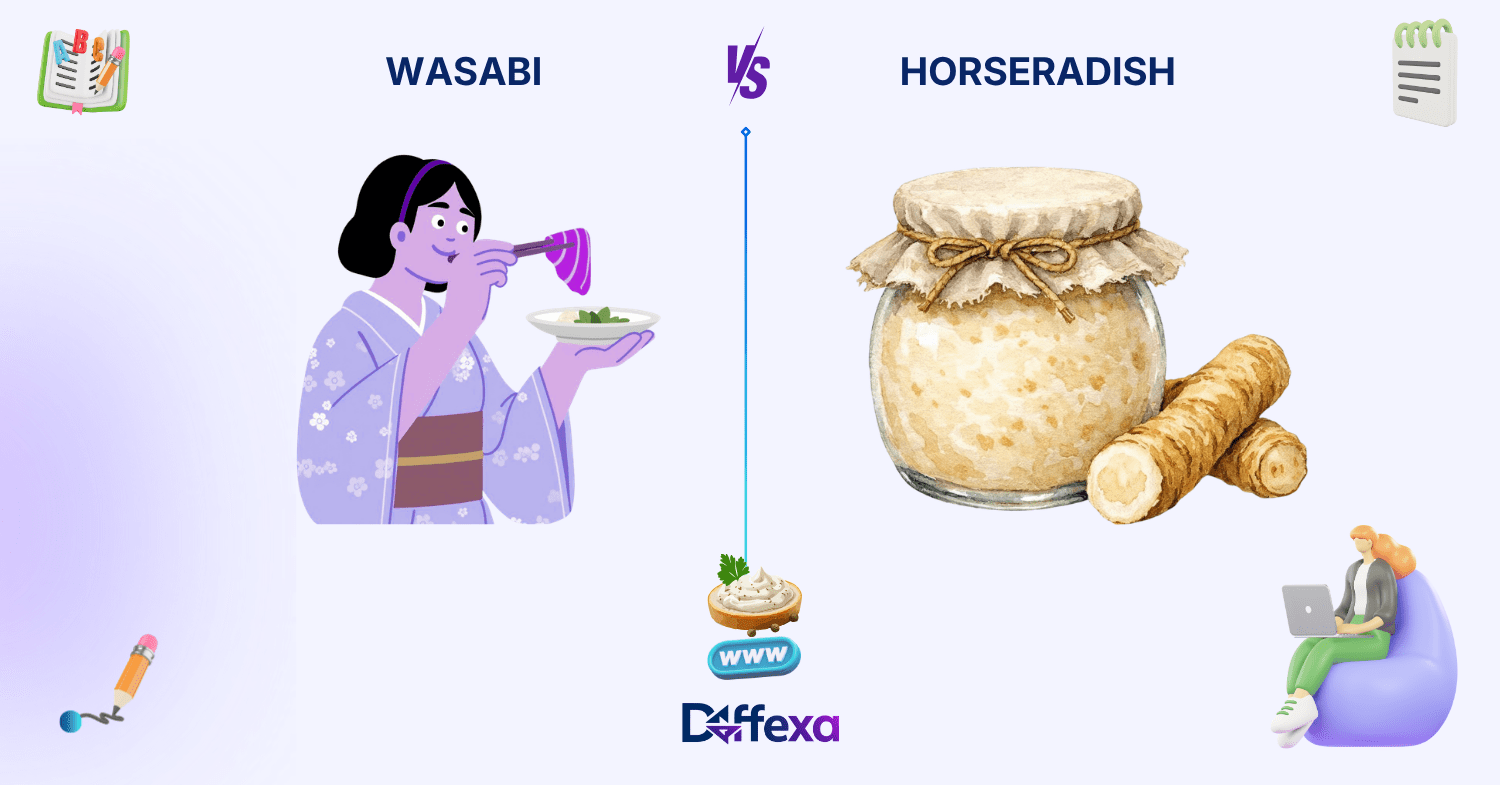
Difference between wasabi and horseradish often becomes confusing when people eat sushi or Japanese food for the first time. Many diners assume the green paste served with sushi is real wasabi, but in reality, it is often horseradish mixed with coloring and flavoring.
Imagine sitting in a sushi restaurant and tasting the sharp green paste next to your roll. Your eyes water, your nose tingles, and you wonder whether this strong flavor comes from wasabi or horseradish. This common experience makes people curious about the difference between wasabi and horseradish.
Understanding the difference between wasabi and horseradish helps food lovers, students, and chefs recognize authentic ingredients and make better culinary choices. It also improves cultural and culinary knowledge in global food traditions.
In this guide, you will clearly learn the difference between wasabi and horseradish, their meanings, taste, origin, and practical uses before moving into a deeper comparison of both condiments.
📊 Key Difference Between the Two
The main difference between wasabi and horseradish lies in origin, flavor intensity, and authenticity.
Wasabi is a Japanese plant known for its fresh, mild, and aromatic heat, commonly served with sushi and sashimi. Horseradish is a European root with a stronger, sharper, and longer‑lasting spicy flavor.
In simple terms, wasabi offers a cleaner and smoother heat, while horseradish delivers a stronger and more aggressive spice.
This key difference explains why many restaurants use horseradish as a cheaper substitute for real wasabi.
🎯 Why Is Their Difference Necessary to Know
Knowing the difference between wasabi and horseradish helps learners understand global food culture and ingredient authenticity. It builds awareness of how traditional foods are prepared and served in different countries.
Chefs, culinary students, and food professionals must understand this difference to maintain food quality and authenticity. Using real wasabi or horseradish correctly improves flavor balance and professional credibility.
In society, food knowledge shapes dining habits, cultural respect, and health awareness. Understanding these ingredients helps people make informed food choices and appreciate international cuisine 🌏
Now, let’s look at how these two terms are pronounced before moving to their definitions.
🔊 Pronunciation
Wasabi
US: /wəˈsɑːbi/
UK: /wəˈsɑːbi/
Horseradish
US: /ˈhɔːrsˌrædɪʃ/
UK: /ˈhɔːsˌrædɪʃ/
Both words are easy to pronounce once broken into syllables. Clear pronunciation helps in restaurant communication, culinary studies, and food discussions.
Now, let’s define both ingredients clearly before moving into a detailed comparison.
📚 Core Definitions
Wasabi
Wasabi is a green Japanese plant root used as a spicy condiment, mainly served with sushi and seafood. It provides a mild but sharp heat that fades quickly and adds freshness to dishes.
The tone of this word is culinary and cultural because it represents traditional Japanese cuisine.
Example:
Example: The chef served fresh wasabi with sushi.
Horseradish
Horseradish is a white root vegetable used as a spicy condiment in European and Western cuisine. It has a strong and long‑lasting heat and is often used in sauces and spreads.
The tone of this word is culinary and practical because it is widely used in everyday cooking.
Example:
Example: He added horseradish sauce to his roast beef sandwich.
📚 10 Clear Differences Between Wasabi and Horseradish
1. Origin
Wasabi comes from Japan and grows in cool mountain streams. Horseradish comes from Europe and grows in soil like a root vegetable.
Example for Wasabi:
Example: The sushi chef used fresh wasabi from Japan.
Example for Horseradish:
Example: The restaurant served horseradish sauce with steak.
2. Plant Type
Wasabi is an aquatic plant that needs water and shade to grow. Horseradish is a hardy root vegetable that grows easily in many climates.
Example for Wasabi:
Example: Wasabi plants grow near clean water streams.
Example for Horseradish:
Example: Farmers grow horseradish in fields.
3. Flavor Intensity
Wasabi has a mild and smooth heat that fades quickly. Horseradish has a strong and sharp heat that lasts longer.
Example for Wasabi:
Example: Wasabi adds gentle spice to sushi.
Example for Horseradish:
Example: Horseradish creates a strong burning sensation.
4. Duration of Heat
Wasabi heat disappears within a few seconds. Horseradish heat stays longer in the mouth and nose.
Example for Wasabi:
Example: The wasabi heat faded quickly after eating sushi.
Example for Horseradish:
Example: The horseradish heat stayed for several minutes.
5. Color
Wasabi is naturally green in color. Horseradish is naturally white but is often dyed green in sushi restaurants.
Example for Wasabi:
Example: Fresh wasabi has a natural green shade.
Example for Horseradish:
Example: Green sushi paste is often colored horseradish.
6. Price
Wasabi is expensive because it is difficult to grow and harvest. Horseradish is cheaper because it grows easily and quickly.
Example for Wasabi:
Example: Real wasabi costs more in restaurants.
Example for Horseradish:
Example: Horseradish is affordable and common.
7. Culinary Use
Wasabi is mainly used in Japanese cuisine with sushi and seafood. Horseradish is used in Western dishes like sauces, meats, and sandwiches.
Example for Wasabi:
Example: Wasabi is served with sashimi.
Example for Horseradish:
Example: Horseradish is used with roast beef.
8. Aroma
Wasabi has a fresh and herbal aroma. Horseradish has a strong and pungent smell.
Example for Wasabi:
Example: Fresh wasabi smells light and green.
Example for Horseradish:
Example: Horseradish has a sharp smell.
9. Availability
Wasabi is rare and mostly found in high-end restaurants. Horseradish is widely available in grocery stores.
Example for Wasabi:
Example: Authentic wasabi is hard to find.
Example for Horseradish:
Example: Horseradish is easy to buy.
10. Authenticity in Sushi
Wasabi is the traditional sushi condiment. Horseradish is often used as a substitute in modern restaurants.
Example for Wasabi:
Example: Traditional sushi uses real wasabi.
Example for Horseradish:
Example: Many sushi bars use horseradish instead.
🎯 Why Knowing the Difference Matters
Understanding the difference between wasabi and horseradish helps students and food learners build strong culinary knowledge. It improves awareness of global ingredients and food authenticity. This knowledge also supports better learning in food science and cultural studies.
Professionals such as chefs, restaurant owners, and culinary experts must know this difference to maintain quality and authenticity in their dishes. Using the correct ingredient improves taste, customer trust, and professional reputation.
In society, food knowledge promotes cultural respect and informed eating habits. Knowing what you eat helps you make healthier and smarter dining decisions 🌿
Real‑world consequences of confusion
Confusing wasabi and horseradish can lead to wrong expectations in taste and quality. Customers may believe they are eating real wasabi when it is actually horseradish.
In professional settings, this confusion may affect restaurant credibility and customer satisfaction. Clear knowledge prevents misunderstanding and supports honest food labeling.
🧠 Why People Get Confused
Similar Appearance
Wasabi and horseradish often look the same in sushi paste form. Green coloring makes horseradish look like real wasabi, which creates confusion.
Semantic Overlap
Both ingredients serve as spicy condiments and produce a similar nasal heat. This similarity makes people think they are identical.
Context-Based Usage
Restaurants sometimes label horseradish as wasabi. This practice increases misunderstanding among customers.
Influence of Informal Speech
People commonly call any green sushi paste “wasabi.” Informal language spreads confusion and hides the real difference.
🎭 Connotation & Emotional Tone
Connotation = emotional meaning attached to a word.
Wasabi
Positive:
Wasabi suggests authenticity and premium Japanese cuisine.
Example: Real wasabi gives a luxury dining experience.
Negative:
It may feel expensive and rare for everyday use.
Example: Fresh wasabi is costly for regular meals.
Neutral:
It refers to a traditional sushi condiment.
Example: The dish included wasabi.
Horseradish
Positive:
Horseradish suggests strong flavor and practical cooking use.
Example: Horseradish adds bold taste to meat dishes.
Negative:
It may feel too strong for sensitive eaters.
Example: Horseradish can burn the nose.
Neutral:
It refers to a common spicy root condiment.
Example: The sauce contained horseradish.
Connotation (bold) = the emotional meaning associated with a word.
🗣 Usage in Metaphors, Similes & Idioms
Wasabi and horseradish are food items, so they rarely appear in traditional idioms. However, writers and speakers sometimes use them metaphorically to describe intensity, sharpness, or mildness in behavior or situations.
Wasabi in Figurative Use
Wasabi often represents quick but mild intensity that fades fast.
Example:
Example: His reaction was like wasabi, sharp at first but gone in seconds.
Example:
Example: The criticism hit like wasabi, surprising but not lasting.
This figurative use shows quick emotional or situational impact.
Horseradish in Figurative Use
Horseradish usually represents strong and lasting intensity.
Example:
Example: Her words were like horseradish, strong and hard to ignore.
Example:
Example: The debate felt like horseradish, intense and long‑lasting.
This metaphor highlights strength and persistence.
📊 Comparison Table
| Feature | Wasabi | Horseradish |
|---|---|---|
| Meaning | Japanese spicy plant root | European spicy root vegetable |
| Tone | Fresh and mild heat | Strong and sharp heat |
| Usage | Sushi and seafood | Meat, sauces, sandwiches |
| Context | Japanese cuisine | Western cuisine |
| Formality | Traditional culinary ingredient | Common everyday condiment |
This table gives a quick summary of the difference between wasabi and horseradish for easy understanding.
⚖️ Which Is Better in What Situation?
When to Use Wasabi
Use wasabi when preparing sushi, sashimi, or Japanese seafood dishes. It provides a clean and mild heat that enhances delicate flavors. Chefs prefer real wasabi for authentic presentation and balanced taste.
When to Use Horseradish
Use horseradish in roast beef, sandwiches, sauces, and Western dishes. It adds strong spice and bold flavor. It works well in heavy meals that need a powerful kick.
Situational Clarity
Wasabi fits light and fresh meals, while horseradish suits strong and rich foods. Choosing the right condiment improves the overall taste experience.
Contextual Correctness
Using wasabi in Japanese cuisine and horseradish in Western cuisine ensures authenticity and cultural accuracy.
📖 Literary or Cultural References
Book Reference
The Story of Sushi (Food History, Trevor Corson, 2007)
This book explores sushi culture and mentions traditional wasabi use in Japanese cuisine.
Book Reference
On Food and Cooking (Food Science, Harold McGee, 2004)
This book explains plant roots, spices, and flavor chemistry, including horseradish and wasabi.
Movie Reference
Jiro Dreams of Sushi (Japan, 2011)
This documentary highlights authentic sushi preparation and the importance of real wasabi in traditional Japanese dining.
These references show how both ingredients appear in food culture and culinary education.
❓ FAQs
1. Is the wasabi served in restaurants real wasabi?
Most restaurants do not serve real wasabi. They usually serve horseradish mixed with mustard and green coloring. Real wasabi is expensive and difficult to grow. High-end sushi restaurants may use fresh wasabi root. Always ask if you want authentic wasabi.
2. Why is real wasabi so expensive?
Real wasabi grows in cool mountain streams and requires special conditions. Farmers need clean water, shade, and careful harvesting. The plant also grows slowly and is hard to transport. These factors increase its cost. That is why many restaurants use horseradish instead.
3. Do wasabi and horseradish taste the same?
They taste similar but not identical. Wasabi has a smooth and fresh heat that fades quickly. Horseradish has a stronger and longer-lasting burn. Wasabi feels cleaner and lighter in flavor. Horseradish feels sharper and more intense.
4. Can horseradish replace wasabi?
Yes, horseradish can replace wasabi in many dishes. Many sushi restaurants already use it as a substitute. However, the taste will be stronger and less fresh. Real wasabi provides a more balanced flavor. So replacement works but is not identical.
5. Wasabi healthier than horseradish?
Both wasabi and horseradish have health benefits. They contain antioxidants and antibacterial properties. Wasabi may help digestion and reduce inflammation. Horseradish supports immune health and respiratory function. Both are healthy when used in small amounts.
🏁 Conclusion
The difference between wasabi and horseradish mainly comes down to origin, flavor, price, and culinary use. Wasabi is a traditional Japanese plant with mild and fresh heat, while horseradish is a European root with strong and lasting spice.
Understanding this difference helps food lovers, students, and chefs choose the right ingredient and appreciate authentic cuisine. It also promotes cultural awareness and informed dining choices.
In everyday meals, horseradish works well for bold flavors, while real wasabi enhances delicate sushi and seafood dishes. Keep exploring food ingredients and culinary traditions to build deeper knowledge and enjoy global cuisine with confidence 🌿

Dr. Olivia Bennett is a science and medical content specialist with a strong academic background in biology and health sciences. She has extensive experience explaining complex scientific and medical concepts in simple language for general readers. At Diffexa, Olivia writes and reviews science and health comparison articles to ensure clarity, accuracy, and factual reliability.
Expertise:
- Medical & Health Topics
- Biology & Science
- Research Writing
- Educational Content