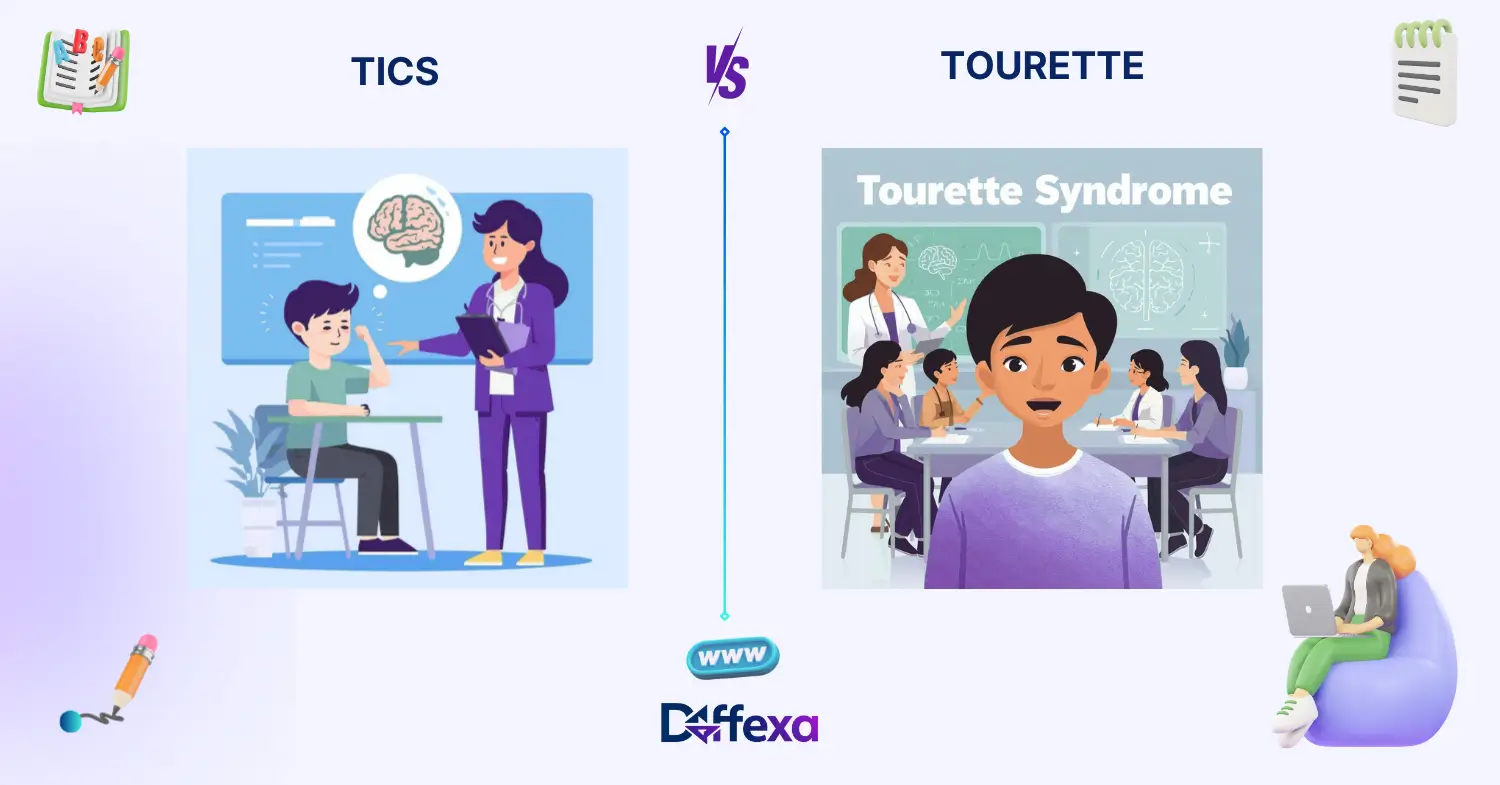
Difference between tics and tourettes often confuses students, parents, and even teachers when they hear these terms in medical or educational discussions. Imagine a child in a classroom who keeps blinking or making small sounds repeatedly. Some people may call it a tic, while others may think it is Tourette’s syndrome.
In simple words, tics are sudden and repeated movements or sounds that a person cannot fully control. Tourettes (Tourette syndrome) is a neurological condition that includes multiple tics over a long period of time. Understanding the difference between tics and tourettes helps people avoid misunderstanding and treat individuals with kindness and awareness.
Many people think both terms mean the same thing, but they are different. The difference between tics and tourettes lies in severity, duration, and medical diagnosis. Tics can happen alone, while Tourette’s is a diagnosed condition that includes several types of tics.
This beginner-friendly guide explains the difference between tics and tourettes in clear ESL language so learners can understand the topic with confidence. Let’s begin with the key difference between the two.
Key Difference Between the Two 📊
The main difference between tics and tourettes is medical scope and duration.
- Tics are sudden movements or sounds that happen occasionally or temporarily.
- Tourettes is a neurological disorder that includes multiple motor and vocal tics lasting for more than one year.
Simple explanation:
- Tics = Single or temporary symptoms
- Tourettes = Long-term condition with multiple tics
Tics are symptoms, while Tourette’s is a diagnosed syndrome that includes many tics together.
Why Is Their Difference Necessary to Know 🌍
Understanding the difference between tics and tourettes is important for students because it builds awareness and empathy. It helps learners understand that not every tic means a person has Tourette’s syndrome.
For professionals such as teachers, psychologists, and healthcare workers, this knowledge helps in proper identification and support. They can guide students and families with accurate information and avoid incorrect labeling.
Society benefits when people understand neurological conditions correctly. Awareness reduces stigma and promotes respectful communication and inclusion in schools and workplaces.
Now, let’s learn how to pronounce these terms correctly.
Pronunciation 🔊
Tics
US: /tɪks/
UK: /tɪks/
Tourettes
US: /tʊˈrɛts/ or /tɔːˈrɛts/
UK: /tʊˈrɛts/
Correct pronunciation helps learners speak confidently in academic and medical discussions. Now let’s understand their core meanings.
Core Definitions 📚
Tics
Tics are sudden, repeated movements or sounds that happen without full control. They can be mild and temporary, and many children experience them for a short time.
Example:
A student repeatedly blinks or clears their throat during class.
Tourettes
Tourettes (Tourette syndrome) is a neurological condition where a person has multiple motor and vocal tics for more than one year. It usually begins in childhood and requires medical diagnosis.
Example:
A child shows repeated movements and sounds over many months and is diagnosed with Tourette syndrome.
10 Clear Differences Between Tics and Tourettes 📊
1. Medical Scope
Tics are individual symptoms.
Tourettes is a medical condition that includes many tics.
Example for Tics:
A child blinks repeatedly for a few weeks.
Example for Tourettes:
A child shows blinking, shoulder movement, and vocal sounds for a year.
2. Duration
Tics can be temporary.
Tourettes is long-term.
Example for Tics:
Throat clearing stops after a few months.
Example for Tourettes:
Multiple tics continue for over a year.
3. Severity
Tics are usually mild.
Tourettes can be more complex.
Example for Tics:
Eye blinking only.
Example for Tourettes:
Eye blinking and repeated sounds.
4. Medical Diagnosis
Tics may not need diagnosis.
Tourettes requires medical diagnosis.
Example for Tics:
Doctor observes temporary tic.
Example for Tourettes:
Doctor confirms Tourette syndrome.
5. Type of Symptoms
Tics may be motor or vocal.
Tourettes includes both.
Example for Tics:
Only blinking.
Example for Tourettes:
Blinking and vocal sounds.
6. Frequency
Tics may appear occasionally.
Tourettes occurs regularly.
Example for Tics:
Blinking sometimes.
Example for Tourettes:
Blinking daily.
7. Complexity
Tics are simple.
Tourettes may include complex tics.
Example for Tics:
Shoulder movement.
Example for Tourettes:
Multiple movements and sounds.
8. Treatment Need
Tics may not need treatment.
Tourettes may need therapy.
Example for Tics:
No medical care required.
Example for Tourettes:
Behavioral therapy needed.
9. Psychological Impact
Tics may cause mild concern.
Tourettes may affect social life.
Example for Tics:
Child feels slightly embarrassed.
Example for Tourettes:
Child faces social challenges.
10. Medical Classification
Tics are symptoms.
Tourettes is a neurological disorder.
Example for Tics:
Temporary condition.
Example for Tourettes:
Diagnosed syndrome.
Why Knowing the Difference Matters 🎯
Students must understand the difference between tics and tourettes to build awareness and empathy. It helps them treat classmates and friends with respect and kindness.
Professionals such as teachers and healthcare workers need this knowledge to support individuals properly. Accurate understanding leads to better communication and care.
Society benefits because awareness reduces stigma and promotes acceptance of neurological conditions.
Real‑world consequences of confusion
Confusing tics with Tourette’s syndrome can lead to wrong assumptions and labeling. It may cause unnecessary fear or misunderstanding in schools and communities.
Why People Get Confused 🧠
Similar Terminology
Both terms relate to repeated movements and sounds, which creates confusion.
Semantic Overlap
Tourettes includes tics, so people assume they are the same.
Context-Based Usage
Medical discussions often use both terms together.
Informal Speech Influence
People sometimes use Tourette’s incorrectly for any tic behavior.
Connotation & Emotional Tone 🎭
Connotation = the emotional meaning attached to a word.
Tics
Positive:
Seen as temporary and manageable.
Example:
Tics often disappear with time.
Negative:
May cause embarrassment.
Example:
Child feels shy due to tics.
Neutral:
Medical symptom description.
Example:
Doctor observes motor tic.
Tourettes
Positive:
Encourages awareness and support.
Example:
Community supports Tourette patients.
Negative:
Sometimes misunderstood.
Example:
People wrongly judge Tourette syndrome.
Neutral:
Medical condition term.
Example:
Doctor diagnoses Tourette syndrome.
Usage in Metaphors, Similes & Idioms 🗣
Medical topics rarely use idioms, but simple comparisons help understanding.
Tics are like small signals, while Tourette’s is like a system of signals working together.
Tics are individual signs, while Tourette’s is a complete condition.
These comparisons help ESL learners understand easily.
Comparison Table 📊
| Feature | Tics | Tourettes |
|---|---|---|
| Meaning | Repeated movements or sounds | Neurological disorder with multiple tics |
| Tone | Medical symptom | Medical condition |
| Usage | General medical discussion | Clinical diagnosis |
| Context | Temporary or mild | Long-term condition |
| Formality | Informal and formal | Formal medical term |
Which Is Better in What Situation ⚖️
When to Use Tics
Use tics when describing small repeated movements or sounds. It is suitable for general discussion and early symptoms.
When to Use Tourettes
Use Tourette’s when referring to a diagnosed neurological condition with multiple tics.
Situational Clarity
Use tics for symptoms and Tourette’s for the medical disorder.
Contextual Correctness
Choosing the correct term ensures respectful and accurate communication in medical and social settings.
Literary or Cultural References 📖
Book
Front of the Class (Biography, Brad Cohen, 2005)
A real-life story of a teacher living with Tourette syndrome.
Movie
Front of the Class (USA, 2008)
Shows challenges and success of a teacher with Tourette syndrome.
FAQs ❓
1. Are all tics part of Tourette syndrome?
No, not all tics are part of Tourette syndrome. Many children and adults experience temporary tics that disappear over time. Tourette syndrome requires multiple motor and vocal tics lasting for more than one year. A doctor must diagnose it. Therefore, having a tic does not mean a person has Tourette’s.
2. Can tics go away on their own?
Yes, many tics disappear naturally, especially in children. Stress, anxiety, or tiredness can cause temporary tics. With time and relaxation, they often reduce or stop. Medical treatment is not always necessary. However, persistent tics should be checked by a doctor.
3. Is Tourette syndrome dangerous?
Tourette syndrome is not usually dangerous. It is a neurological condition that affects movement and sounds. Most people with Tourette’s live normal and successful lives. Support, therapy, and understanding help them manage symptoms. Awareness is important.
4. At what age does Tourette syndrome start?
Tourette syndrome usually starts in childhood, often between ages 5 and 10. Early signs include blinking, throat clearing, or small movements. Symptoms may increase during teenage years and improve in adulthood. Early support helps manage the condition. Doctors monitor symptoms over time.
5. Can stress increase tics and Tourette symptoms?
Yes, stress and anxiety can increase both tics and Tourette symptoms. Emotional pressure, lack of sleep, or nervousness can make symptoms stronger. Relaxation and support help reduce them. Therapy and healthy routines improve control. Managing stress is very helpful.
Conclusion 🏁
The difference between tics and tourettes mainly lies in medical scope and duration. Tics are individual repeated movements or sounds that may be temporary, while Tourette’s is a neurological condition that includes multiple tics over a long period. This clear distinction helps learners understand symptoms and medical diagnosis correctly.
Knowing this difference improves awareness, reduces stigma, and encourages respectful communication in schools, workplaces, and society. It also helps students, teachers, and families support individuals in a positive and informed way.
With simple understanding and empathy, we can create a more supportive environment for people experiencing tics or Tourette’s syndrome. Keep learning and spreading awareness—knowledge always leads to understanding and kindness 🧠🌍

Sajid Ali is an English language educator and content specialist with 7+ years of teaching experience. He holds master’s degrees in Information Technology and Education from the Virtual University of Pakistan and writes SEO-optimized, learner-friendly vocabulary content for diffexa.com.