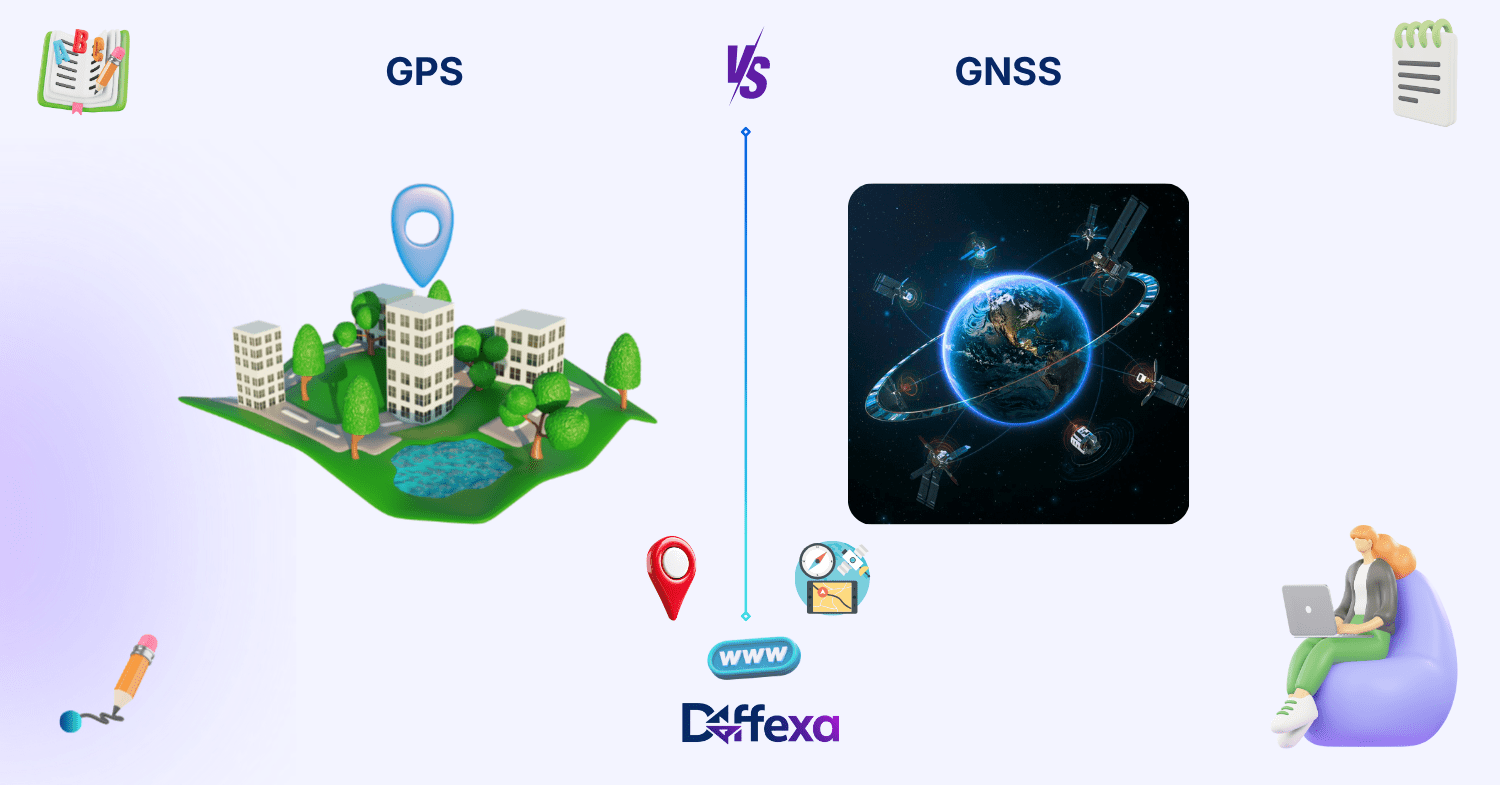
Difference between gps and gnss often becomes confusing when people use maps, smartphones, or navigation devices in daily life. Many users think both terms mean the same thing.
Imagine using Google Maps while driving and seeing your location update in real time. You may believe GPS is doing all the work, but in reality, GNSS systems may also support it behind the scenes.
Understanding the difference between gps and gnss helps students, engineers, and technology users learn how satellite navigation works in the modern world. It also builds awareness of global positioning systems.
In this guide, you will clearly understand the difference between gps and gnss, their meanings, and how they operate in real-life navigation systems before exploring detailed comparisons.
📡 Key Difference Between the Two
The main difference between gps and gnss lies in their scope and coverage.
GPS is a specific satellite navigation system developed by the United States. GNSS is a global term that includes multiple satellite systems like GPS and others.
In simple words, GPS is a type of GNSS, while GNSS is the broader category of global navigation systems.
This basic difference explains why GNSS offers wider coverage and higher accuracy in many modern devices.
🎯 Why Is Their Difference Necessary to Know
Knowing the difference between gps and gnss helps learners understand how modern navigation technology works in smartphones, aircraft, and vehicles. It improves technical awareness and digital literacy.
For professionals such as engineers, pilots, and researchers, this knowledge supports accurate communication and system design. Using the wrong term may create confusion in technical discussions.
In society, navigation systems guide transportation, emergency services, and logistics. Understanding these systems helps people appreciate modern technology and its role in safety and efficiency 🌍
Now, let’s look at how GPS and GNSS are pronounced before exploring their definitions.
🔊 Pronunciation
GPS
US: /ˌdʒiː.piːˈes/
UK: /ˌdʒiː.piːˈes/
GNSS
US: /ˌdʒiː.en.esˈes/
UK: /ˌdʒiː.en.esˈes/
Both terms are pronounced as letter abbreviations. Clear pronunciation helps in academic, aviation, and technical communication.
Now, let’s define GPS and GNSS clearly before moving into deeper comparison.
📚 Core Definitions
GPS
GPS stands for Global Positioning System and refers to a satellite navigation system developed by the United States. It provides location, speed, and time information to users worldwide.
The tone of this term is technical and widely recognized because it appears in everyday technology.
Example:
Example: My phone uses GPS to find the fastest route.
GNSS
GNSS stands for Global Navigation Satellite System and refers to a global network of satellite systems that provide positioning and navigation services. It includes GPS and other international satellite systems.
The tone of this term is scientific and professional because it is used in engineering and research.
Example:
Example: Modern aircraft rely on GNSS for accurate navigation.
📚 10 Clear Differences Between GPS and GNSS
1. Scope of System
GPS refers to one specific satellite navigation system developed by the United States. GNSS refers to a global system that includes GPS and other satellite networks.
Example for GPS:
Example: The car navigation system uses GPS signals.
Example for GNSS:
Example: The aircraft uses GNSS for global positioning.
2. Coverage Area
GPS provides worldwide coverage through its satellite network. GNSS offers broader coverage by combining multiple satellite systems.
Example for GPS:
Example: GPS works in most parts of the world.
Example for GNSS:
Example: GNSS improves coverage in remote regions.
3. System Composition
GPS consists of U.S. satellites and ground stations only. GNSS includes multiple systems like GPS, GLONASS, Galileo, and BeiDou.
Example for GPS:
Example: GPS satellites send signals to receivers.
Example for GNSS:
Example: GNSS combines signals from different satellite systems.
4. Accuracy Level
GPS provides accurate positioning in most situations. GNSS often gives higher accuracy because it uses multiple satellite signals.
Example for GPS:
Example: GPS shows the nearest road.
Example for GNSS:
Example: GNSS provides precise aircraft positioning.
5. Dependency
GPS depends on U.S. satellite infrastructure. GNSS depends on multiple international satellite systems.
Example for GPS:
Example: GPS relies on U.S. satellite control.
Example for GNSS:
Example: GNSS uses global satellite cooperation.
6. Technical Complexity
GPS is simpler because it involves a single satellite system. GNSS is more complex due to multiple integrated systems.
Example for GPS:
Example: GPS receivers are common in smartphones.
Example for GNSS:
Example: GNSS receivers support multiple satellites.
7. Usage Context
GPS is commonly used in daily navigation and mobile devices. GNSS is widely used in aviation, research, and engineering.
Example for GPS:
Example: Drivers use GPS for directions.
Example for GNSS:
Example: Scientists use GNSS for mapping.
8. Professional vs General Term
GPS is a popular and general term used by the public. GNSS is a professional and scientific term used in technical fields.
Example for GPS:
Example: People say GPS when using maps.
Example for GNSS:
Example: Engineers use GNSS in technical reports.
9. Signal Sources
GPS uses signals from one satellite system. GNSS uses signals from multiple satellite constellations.
Example for GPS:
Example: GPS signals guide vehicles.
Example for GNSS:
Example: GNSS signals improve positioning accuracy.
10. Global Collaboration
GPS is operated by one country. GNSS represents international satellite collaboration.
Example for GPS:
Example: GPS belongs to the U.S. system.
Example for GNSS:
Example: GNSS includes global satellite networks.
🎯 Why Knowing the Difference Matters
Students benefit from understanding the difference between gps and gnss because it improves their knowledge of modern technology and satellite communication. It also strengthens academic learning in geography and engineering.
Professionals such as engineers, pilots, and navigation experts must know this difference to communicate accurately in technical environments. Using the correct term ensures clarity in research and system design.
In society, navigation systems guide transportation, emergency services, logistics, and communication networks. Understanding these systems helps people trust and use modern navigation tools safely 📡
Real‑world consequences of confusion
If someone assumes GPS and GNSS are identical, they may misunderstand how navigation accuracy works in aviation or engineering.
For example, using GPS-only devices in high-precision environments may reduce positioning accuracy, while GNSS-enabled systems provide better performance.
Clear understanding prevents technical errors and improves communication.
🧠 Why People Get Confused
Similar Abbreviations
GPS and GNSS look similar because both are capital-letter abbreviations. This similarity makes them easy to mix up.
Semantic Overlap
Both terms relate to satellite navigation and positioning systems. This shared meaning creates confusion among beginners.
Context-Based Usage
Many devices label navigation simply as GPS, even when they use GNSS. This marketing and labeling practice increases misunderstanding.
Influence of Informal Speech
People use GPS as a general word for navigation systems in daily conversation. This informal usage hides the broader meaning of GNSS.
🎭 Connotation & Emotional Tone
Connotation = emotional meaning attached to a word.
GPS
Positive:
It suggests reliability and everyday convenience.
Example: GPS helps drivers reach destinations easily.
Negative:
It may suggest limited system scope in technical discussions.
Example: GPS alone may not provide enough accuracy.
Neutral:
It describes a specific satellite navigation system.
Example: GPS provides location data.
GNSS
Positive:
It suggests advanced technology and global accuracy.
Example: GNSS improves navigation systems.
Negative:
It may sound complex or technical to beginners.
Example: GNSS terminology can confuse new learners.
Neutral:
It refers to global satellite navigation systems.
Example: GNSS includes multiple satellite networks.
Connotation (bold) = the emotional meaning associated with a word.
🗣 Usage in Metaphors, Similes & Idioms (If Applicable)
GPS and GNSS are technical terms, so they do not appear in traditional idioms. However, educators and writers sometimes use them in metaphors to explain direction, precision, and guidance.
GPS in Figurative Use
GPS often symbolizes clear direction and personal guidance.
Example:
Example: Her mentor acts like a GPS, guiding her career step by step.
Example:
Example: A clear plan works like GPS, helping you reach your goals.
This metaphor shows GPS as a symbol of direction and support.
GNSS in Figurative Use
GNSS usually represents broader awareness and global coordination.
Example:
Example: The global research network works like GNSS, connecting knowledge worldwide.
Example:
Example: Strong teamwork feels like GNSS, where many systems work together.
This shows GNSS as a symbol of collaboration and global connection.
📊 Comparison Table
| Feature | GPS | GNSS |
|---|---|---|
| Meaning | U.S. satellite navigation system | Global satellite navigation system |
| Tone | Common and everyday | Technical and professional |
| Usage | Smartphones and vehicles | Aviation, engineering, research |
| Context | Daily navigation | Global positioning systems |
| Formality | General term | Scientific term |
This table gives a quick and easy overview of the difference between gps and gnss.
⚖️ Which Is Better in What Situation?
When to Use GPS
Use GPS in daily conversation and general navigation discussions. It works well when talking about smartphones, vehicles, or maps. Most people understand this term easily.
When to Use GNSS
Use GNSS in academic, engineering, and aviation contexts. It is more accurate when discussing global satellite systems and technical navigation.
Situational Clarity
GPS fits informal and general communication. GNSS fits professional and scientific discussions. Choosing the right term improves clarity.
Contextual Correctness
Using GNSS in technical writing shows precision and expertise, while GPS keeps communication simple and understandable.
📖 Literary or Cultural References
Book Reference
Understanding GPS/GNSS: Principles and Applications (Technology, Elliott D. Kaplan, 2017)
This book explains satellite navigation systems and their global applications.
Book Reference
Global Positioning System: Signals, Measurements and Performance (Technology, Pratap Misra, 2011)
This book explores GPS technology and engineering concepts.
Media Reference
Satellite Technology in Modern Navigation (Documentary, USA, 2018)
This documentary discusses satellite navigation systems and global positioning technology.
These references highlight the importance of GPS and GNSS in modern science and technology.
❓ FAQs
1. Is GPS a part of GNSS?
Yes, GPS is a part of GNSS. GNSS is a general term for all global satellite navigation systems, and GPS is one of them. Other systems also belong to GNSS. This makes GNSS broader than GPS.
2. Why do people use GPS instead of GNSS?
People use GPS because it is more common and easier to understand. Most devices label navigation as GPS. GNSS is mainly used in technical and professional environments. This is why GPS is more popular in daily speech.
3. Which is more accurate, GPS or GNSS?
GNSS is usually more accurate because it uses multiple satellite systems. GPS uses only one satellite network. Combining multiple systems improves positioning accuracy. That is why aviation and engineering prefer GNSS.
4. Do smartphones use GNSS?
Yes, most modern smartphones use GNSS. They receive signals from GPS and other satellite systems. However, companies still call it GPS in marketing. This creates confusion among users.
5. Can GNSS work without GPS?
Yes, GNSS can work without GPS because it includes other satellite systems. For example, systems like Galileo or GLONASS can provide positioning. However, GPS is still widely used. GNSS works best when multiple systems operate together.
🏁 Conclusion
The difference between gps and gnss mainly lies in scope and usage. GPS is a specific satellite navigation system, while GNSS is a global term that includes multiple satellite systems. This distinction helps users understand modern positioning technology clearly.
Understanding this difference improves technical communication and digital awareness. Students learn scientific concepts better, and professionals communicate more accurately in the engineering and aviation fields. Clear terminology reduces confusion in navigation discussions.
In everyday life, using GPS is simple and practical, while GNSS provides deeper technical accuracy. Choosing the right term depends on context and purpose. Keep exploring technology concepts and practice using these terms correctly to build stronger communication and technical knowledge 📡

Sajid Ali is an English language educator and content specialist with 7+ years of teaching experience. He holds master’s degrees in Information Technology and Education from the Virtual University of Pakistan and writes SEO-optimized, learner-friendly vocabulary content for diffexa.com.