Difference between digitization and digitalization often confuses students, professionals, and tech learners when they read about modern technology and business transformation. Many people think both words mean the same thing.
A business manager once said his company completed digitization, but he actually meant digitalization. The misunderstanding created confusion in meetings and delayed the project planning process.
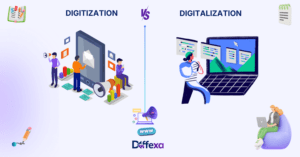
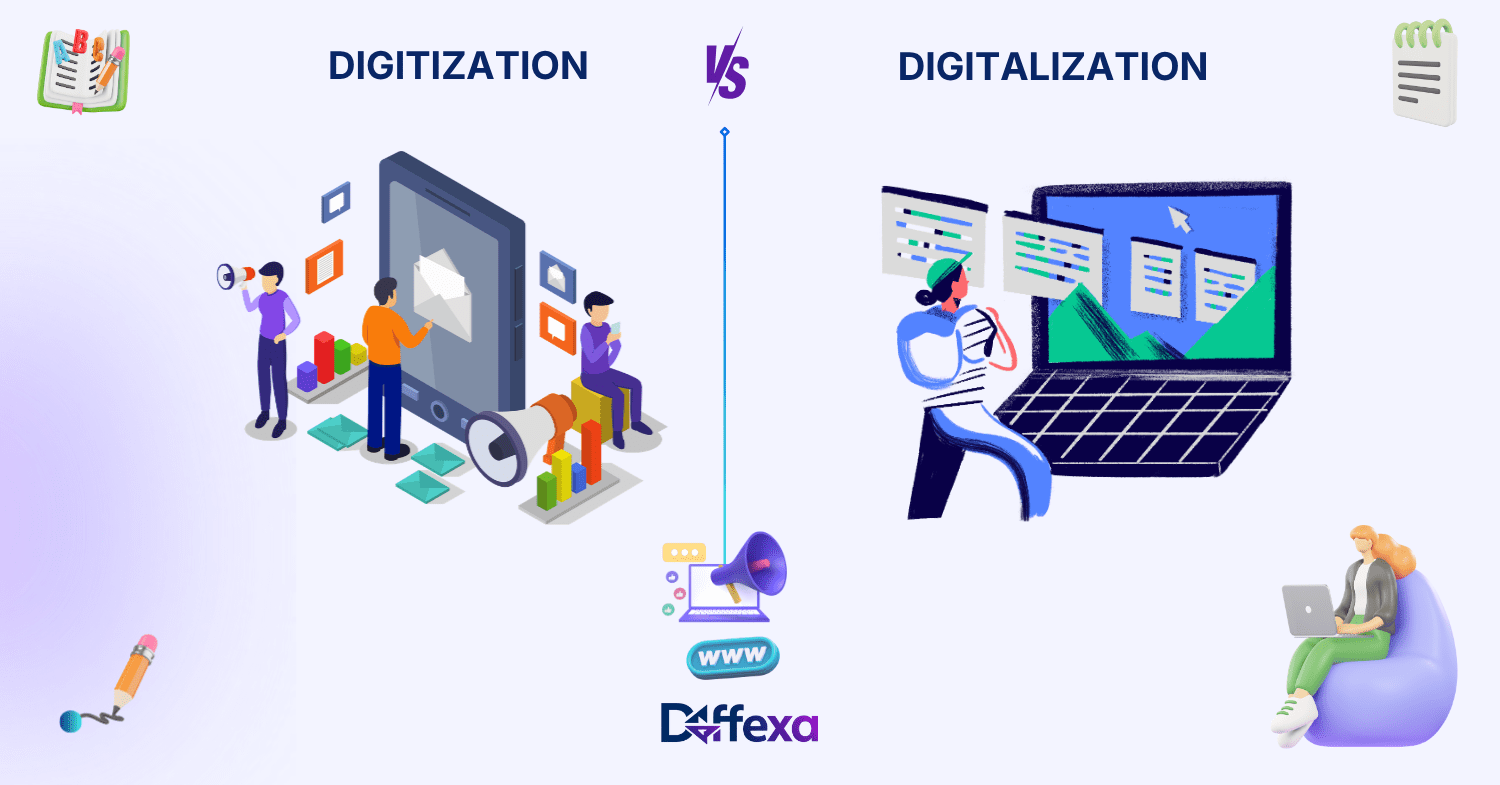
The difference between digitization and digitalization lies in how data and processes move into the digital world. Digitization focuses on converting information, while digitalization focuses on transforming systems and operations.
Understanding the difference between digitization and digitalization helps students, writers, and professionals communicate clearly in technology, business, and academic discussions. Now, let’s explore the key difference between the two concepts.
Key Difference Between the Two
The main difference between digitization and digitalization is their purpose and scope.
Digitization means converting physical or analog information into digital form. It focuses on data conversion and storage.
Digitalization means using digital technologies to improve business processes and services. It focuses on transformation and efficiency.
Digitization is a technical process, while digitalization is a strategic process. This simple distinction helps learners quickly understand how these terms work in modern technology.
Why Is Their Difference Necessary to Know
Understanding the difference between digitization and digitalization helps learners use technology terms correctly. Many academic and professional discussions depend on accurate terminology.
Students benefit because they develop clear knowledge of digital transformation concepts. This clarity improves research, assignments, and technical communication.
Professionals in business, IT, and management rely on this difference to plan digital strategies and implement new technologies effectively. Clear understanding reduces communication errors and improves teamwork.
Knowing this difference helps society adopt technology more efficiently and communicate digital ideas more clearly. Now, let’s learn how to pronounce these terms correctly.
🔊 Pronunciation
Digitization
US: /ˌdɪdʒɪtəˈzeɪʃən/
UK: /ˌdɪdʒɪtaɪˈzeɪʃən/
Digitalization
US: /ˌdɪdʒɪtələˈzeɪʃən/
UK: /ˌdɪdʒɪtəlaɪˈzeɪʃən/
Correct pronunciation helps learners speak confidently in academic and professional environments. Now, let’s define both terms in simple and clear language.
📚 Core Definitions
Digitization
Digitization is the process of converting physical or analog information into digital form. It focuses on transforming paper, images, or audio into computer-readable data.
It usually has a technical and neutral tone because it describes a simple conversion process.
Example:
A library scans old books to create digital copies.
Digitalization
Digitalization is the process of using digital technology to improve business processes, communication, and services. It focuses on transforming operations and systems using digital tools.
It often carries a positive and strategic tone because it relates to innovation and progress.
Example:
A company uses online systems to manage customer service and sales.
📚 10 Clear Differences Between Digitization and Digitalization
- Purpose
Digitization focuses on converting information into digital format. It aims to store and preserve data in electronic form.
Digitalization focuses on improving systems and processes using digital technology. It aims to increase efficiency and innovation.
Example for Digitization:
The company scanned paper documents into digital files.
Example for Digitalization:
The company created an online workflow system.
- Scope
Digitization has a narrow scope because it deals only with data conversion.
Digitalization has a wider scope because it transforms entire business processes.
Example for Digitization:
The hospital digitized patient records.
Example for Digitalization:
The hospital introduced an online appointment system.
- Focus Area
Digitization focuses on information and data.
Digitalization focuses on systems and operations.
Example for Digitization:
The school converted student files into PDFs.
Example for Digitalization:
The school launched a digital learning platform.
- Level of Transformation
Digitization involves basic technical changes.
Digitalization involves organizational and operational changes.
Example for Digitization:
The office stored documents on computers.
Example for Digitalization:
The office automated its workflow.
- Technology Usage
Digitization uses scanners, cameras, and data conversion tools.
Digitalization uses software, cloud systems, and digital platforms.
Example for Digitization:
The museum digitized old photographs.
Example for Digitalization:
The museum created an online virtual tour.
6. Formality
Digitization is mostly used in technical and IT contexts. It sounds more specific and technical.
Digitalization is widely used in business, management, and innovation discussions. It sounds more strategic and modern.
Example for Digitization:
The IT team handled document digitization.
Example for Digitalization:
The management team planned digitalization strategies.
7. Context of Use
Digitization appears in data management and archival work. Libraries, hospitals, and offices use it often.
Digitalization appears in business transformation and digital economy discussions.
Example for Digitization:
The archive completed digitization of historical files.
Example for Digitalization:
The company started digitalization of customer services.
8. Psychological Impact
Digitization feels simple and technical to users. It does not suggest major change.
Digitalization feels innovative and progressive. It suggests growth and modernization.
Example for Digitization:
Employees accepted digitization easily.
Example for Digitalization:
Employees welcomed digitalization for better workflow.
9. Tone
Digitization carries a neutral and technical tone. It describes a process without emotional impact.
Digitalization carries a positive and forward-looking tone. It often signals progress and improvement.
Example for Digitization:
The report explained digitization methods.
Example for Digitalization:
The report highlighted digitalization benefits.
10. Expression Style
Digitization is usually expressed in technical language.
Digitalization is expressed in strategic and business language.
Example for Digitization:
Engineers discussed digitization techniques.
Example for Digitalization:
Leaders discussed digitalization goals.
🎯 Why Knowing the Difference Matters
Students must understand the difference between digitization and digitalization to use technical vocabulary correctly. This clarity improves academic writing and research accuracy.
Professionals must know this difference to plan digital strategies and communicate clearly with teams and stakeholders. It supports better project management and decision-making.
In society, correct use of these terms improves communication in business, technology, and education. It prevents confusion and promotes better understanding of digital transformation.
H3: Real‑World Consequences of Confusion
Confusing digitization with digitalization can lead to wrong project planning. A company may think scanning documents is full digital transformation.
Miscommunication can slow business development and create misunderstanding in meetings and reports.
Clear understanding prevents costly mistakes and improves communication.
🧠 Why People Get Confused
Similar Spelling or Pronunciation
Digitization and digitalization look and sound very similar. This similarity makes learners assume they have the same meaning.
Semantic Overlap
Both terms relate to digital technology. Their shared connection to digital systems creates confusion.
Context‑Based Usage
Many articles and speakers use these terms interchangeably. This incorrect usage spreads misunderstanding.
Influence of Informal Speech
In everyday conversation, people simplify technical language. This informal use increases confusion.
🎭 Connotation & Emotional Tone
Connotation = emotional meaning attached to a word.
Connotation = the emotional meaning associated with a word.
Digitization
Positive:
Digitization suggests organization and efficiency in handling data.
Example:
Digitization improved record management.
Negative:
Some people see digitization as limited and technical.
Example:
Digitization alone cannot transform a company.
Neutral:
Digitization simply describes data conversion.
Example:
The project focused on digitization of documents.
Digitalization
Positive:
Digitalization suggests innovation and modernization.
Example:
Digitalization boosted company growth.
Negative:
Some fear digitalization may reduce jobs.
Example:
Workers worry about digitalization.
Neutral:
Digitalization describes technological transformation.
Example:
The company adopted digitalization strategies.
🗣 Usage in Metaphors, Similes & Idioms (If Applicable)
These terms rarely appear in traditional idioms because they are modern technical words. However, they appear in modern business metaphors.
Example sentences:
- Digitization is the foundation of the digital building.
- Digitalization is the engine of modern business growth.
These metaphors help explain the relationship between the two concepts in simple language.
📊 Comparison Table
| Feature | Digitization | Digitalization |
|---|---|---|
| Meaning | Converting data into digital form | Using digital technology to transform processes |
| Tone | Technical and neutral | Strategic and positive |
| Usage | Data conversion and storage | Business and system improvement |
| Context | IT and data management | Business and digital transformation |
| Formality | Technical term | Business and strategic term |
⚖️ Which Is Better in What Situation?
When to Use Digitization
Use digitization when talking about converting physical or analog data into digital form. It works best in IT, archives, and data management contexts. For example, scanning documents or converting audio files falls under digitization.
When to Use Digitalization
Use digitalization when discussing business transformation and technology integration. It fits management, business, and innovation contexts. For example, online banking systems represent digitalization.
Situational Clarity
Choose digitization for technical processes and digitalization for strategic transformation. This distinction helps maintain clarity in communication.
Contextual Correctness
Use digitization in technical reports and digitalization in business strategy discussions to ensure correct and professional communication.
📖 Literary or Cultural References
Book Reference
Digital Transformation: Survive and Thrive in an Era of Mass Extinction (Business, Thomas M. Siebel, 2019)
This book explains digitalization and its role in modern business transformation.
Movie Reference
The Social Dilemma (USA, 2020)
The documentary shows the impact of digitalization on society and technology.
❓ FAQs
1. What is the main difference between digitization and digitalization?
Digitization refers to converting analog information into digital form, such as scanning documents or recording audio files digitally. Digitalization refers to using digital technologies to improve systems, workflows, and business operations. The first focuses on data conversion, while the second focuses on transformation. Understanding this difference helps in academic and professional communication. It also improves clarity in technology discussions.
2. Is digitization a part of digitalization?
Yes, digitization is usually the first step in digitalization. Organizations often digitize data before they digitalize their processes. Without digital data, digital systems cannot function properly. Therefore, digitization builds the foundation for digitalization. Both work together in modern digital transformation.
3. Can a company digitalize without digitization?
No, digitalization typically requires digitization first. A company must convert physical data into digital format before using digital tools and systems. For example, online systems need digital records to function. Without digitization, digitalization becomes difficult. This shows the strong connection between the two processes.
4. Why do businesses focus more on digitalization?
Businesses focus more on digitalization because it improves efficiency, reduces costs, and increases productivity. It helps companies automate processes and provide better customer services. Digitalization also supports innovation and competitiveness in the market. This makes it a key part of modern business strategy. Therefore, many organizations prioritize digitalization.
5. Are digitization and digitalization interchangeable?
No, they are not interchangeable. Digitization refers to data conversion, while digitalization refers to process transformation. Using them interchangeably creates confusion in technical and business communication. Professionals prefer using each term correctly to maintain clarity. Understanding their difference improves communication accuracy.
🏁 Conclusion
The difference between digitization and digitalization lies in their purpose, scope, and impact. Digitization converts information into digital form, while digitalization transforms systems and processes using digital technology. This distinction helps learners and professionals communicate clearly in modern technological environments.
Understanding these terms improves academic writing, business communication, and technical discussions. It also helps organizations plan digital strategies more effectively and avoid confusion in project development. Clear terminology supports better collaboration and innovation in the digital world.
In today’s technology-driven society, knowing the difference between digitization and digitalization is essential for accurate communication and smart decision-making. Keep practicing these terms in real conversations, assignments, and professional discussions to build a stronger digital vocabulary and confidence in using modern technology concepts 💡

Michael Turner is a business and technology analyst with over 8 years of experience in digital content and market research. He specializes in business, finance, and technology comparisons, helping readers understand key differences between concepts, tools, and systems. At Diffexa, Michael focuses on delivering clear, structured, and research-based comparison articles.
Expertise:
- Business & Finance
- Technology
- Market Research
- Digital Systems