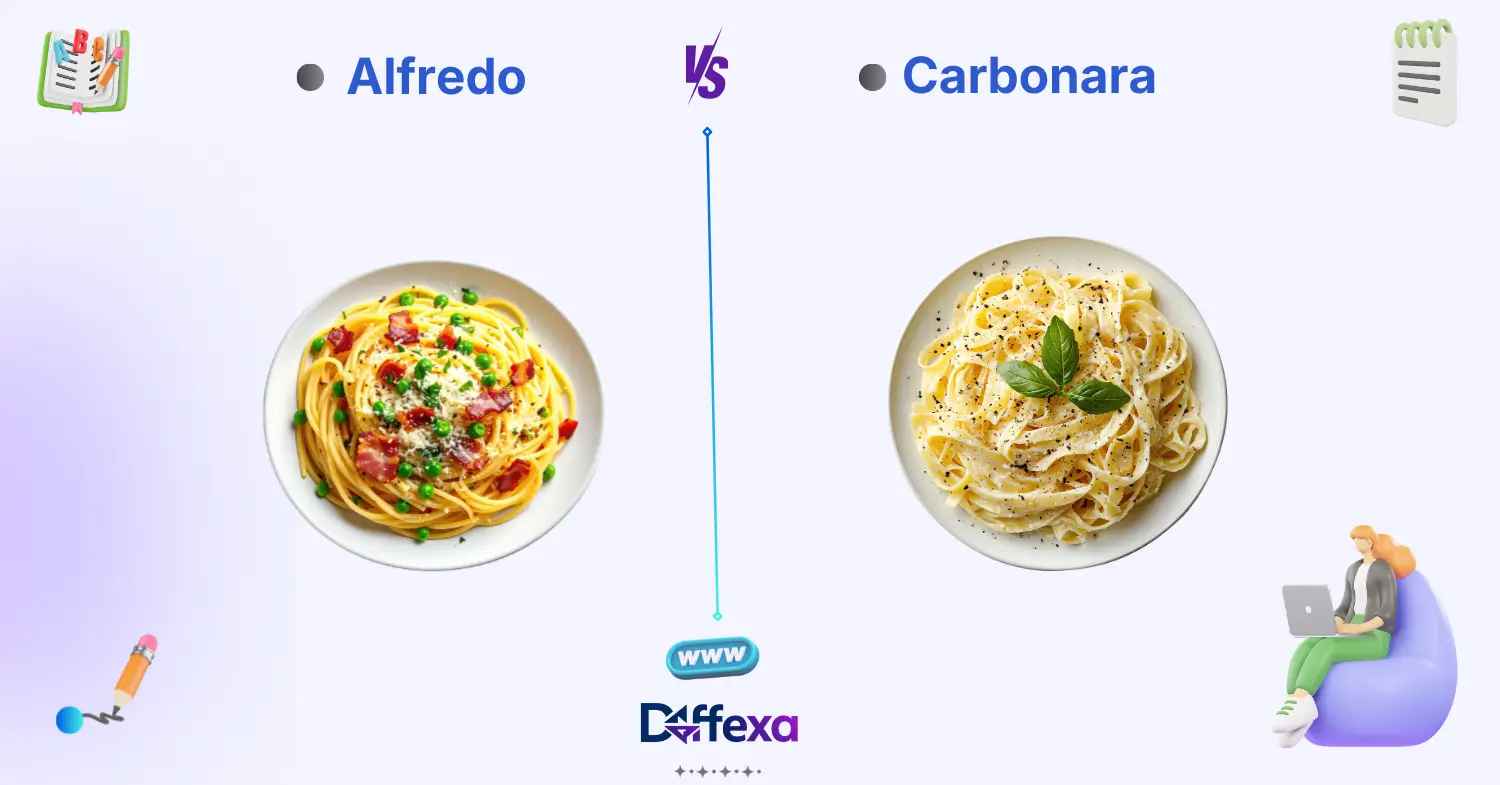
Difference between carbonara and alfredo often becomes a hot topic the moment you stand at an Italian restaurant menu, unsure which creamy pasta to choose.
You see two white sauces. Both look rich. Both sound classic. Yet they taste very different. That is where understanding the difference between carbonara and alfredo helps.
Carbonara and Alfredo are both Italian pasta dishes. However, they use different ingredients, cooking methods, and flavor profiles. Knowing the difference between carbonara and alfredo makes ordering easier and cooking smarter.
Let us explore what truly sets them apart.
Key Difference Between the Two
Carbonara uses eggs, cheese, cured pork, and black pepper to create a creamy texture without cream. Alfredo uses butter, cream, and cheese to create a smooth, rich sauce.
Carbonara feels bold and savory. Alfredo feels smooth and buttery.
One relies on technique. The other relies on dairy richness.
Why is the difference necessary to know?
Understanding the difference matters for both taste and cooking success.
Students of culinary arts must know authentic Italian methods. Professionals must respect traditional recipes. Home cooks avoid recipe mistakes when they know which sauce requires eggs and which requires cream.
In society, food reflects culture. Knowing the difference shows awareness of Italian culinary heritage.
Now, let us understand how to pronounce each dish correctly.
🔊 Pronunciation
Carbonara
US: /ˌkɑːrbəˈnɑːrə/
UK: /ˌkɑːbəˈnɑːrə/
Alfredo
US: /ælˈfreɪdoʊ/
UK: /ælˈfreɪdəʊ/
With pronunciation clear, we can now define each dish properly.
📚 Core Definitions
Carbonara
Carbonara is a traditional Roman pasta dish made with eggs, Pecorino Romano cheese, guanciale, and black pepper. It does not use cream in its authentic form. The emotional tone feels rustic and bold.
Example:
Classic Carbonara – The chef mixed hot pasta with eggs and cheese to create a silky sauce.
Alfredo
Alfredo is a creamy pasta dish made with butter, heavy cream, and Parmesan cheese. It has a smooth and rich texture. The emotional tone feels comforting and indulgent.
Example:
Creamy Alfredo – She poured the buttery Alfredo sauce over fettuccine.
📚 10 Clear Differences Between Carbonara and Alfredo
1. Main Ingredients
Carbonara uses eggs and cured pork. Alfredo uses butter and cream.
Example for Carbonara:
The cook whisked eggs for the sauce.
Example for Alfredo:
The chef melted butter and added cream.
2. Cream Usage
Carbonara traditionally has no cream. Alfredo depends on cream.
Example for Carbonara:
He avoided cream in authentic carbonara.
Example for Alfredo:
She added heavy cream to thicken Alfredo.
3. Origin
Carbonara comes from Rome, Italy. Alfredo became popular in Rome but gained fame in the United States.
Example for Carbonara:
Tourists enjoy carbonara in Roman trattorias.
Example for Alfredo:
Alfredo is common in American Italian restaurants.
4. Texture Creation
Carbonara forms sauce from egg and pasta water. Alfredo forms sauce from dairy fat.
Example for Carbonara:
The pasta water made the sauce silky.
Example for Alfredo:
The butter made the sauce glossy.
5. Flavor Profile
Carbonara tastes salty and peppery. Alfredo tastes creamy and mild.
Example for Carbonara:
Black pepper gives carbonara its bite.
Example for Alfredo:
Alfredo tastes rich and smooth.
6. Protein Inclusion
Carbonara includes guanciale or pancetta. Alfredo often includes chicken but traditionally does not require meat.
Example for Carbonara:
He cooked crispy guanciale.
Example for Alfredo:
She added grilled chicken to Alfredo.
7. Cooking Technique
Carbonara requires precise heat control. Alfredo is simpler to prepare.
Example for Carbonara:
Too much heat scrambled the eggs.
Example for Alfredo:
The sauce thickened easily on low heat.
8. Authenticity Debate
Carbonara has strict traditional rules. Alfredo has many variations.
Example for Carbonara:
Chefs debate adding cream to carbonara.
Example for Alfredo:
Restaurants add shrimp or broccoli to Alfredo.
9. Cultural Identity
Carbonara reflects Roman tradition. Alfredo reflects Italian-American adaptation.
Example for Carbonara:
Locals protect the original recipe.
Example for Alfredo:
American menus highlight Alfredo dishes.
10. Overall Experience
Carbonara feels savory and sharp. Alfredo feels comforting and heavy.
Example for Carbonara:
The pepper made it bold.
Example for Alfredo:
The cream made it soothing.
🎯 Why Knowing the Difference Matters
Students learn proper culinary vocabulary when they understand authentic recipes.
Professionals avoid embarrassing mistakes in kitchens and food writing.
Socially, ordering correctly shows cultural awareness.
Real‑world Consequences of Confusion
If you add cream to carbonara in Italy, locals may correct you quickly.
If you expect pork in Alfredo, you may be surprised.
🧠 Why People Get Confused
Both dishes look white and creamy.
Both use cheese.
Many restaurants modify recipes.
Informal speech also blurs traditional distinctions.
🎭 Connotation & Emotional Tone
Connotation = the emotional meaning attached to a word.
Carbonara
Positive: Authentic, bold, traditional.
Example: Carbonara feels authentic and rustic.
Negative: Heavy if overcooked.
Example: Overheated carbonara becomes clumpy.
Neutral: A Roman pasta dish.
Example: Carbonara uses eggs and cheese.
Alfredo
Positive: Comforting, creamy, indulgent.
Example: Alfredo feels rich and cozy.
Negative: Too heavy for some diets.
Example: Alfredo can feel overly rich.
Neutral: A cream-based pasta sauce.
Example: Alfredo uses butter and cream.
🗣 Usage in Metaphors, Similes & Idioms
People sometimes use food metaphorically.
- “Life is like carbonara — timing matters.”
- “That project was smooth like Alfredo sauce.”
These comparisons highlight texture and intensity.
📊 Comparison Table
| Feature | Carbonara | Alfredo |
|---|---|---|
| Meaning | Egg-based Roman pasta | Cream-based pasta sauce |
| Tone | Savory, bold | Rich, comforting |
| Usage | Traditional Italian | Popular worldwide |
| Context | Fine Italian dining | Casual restaurants |
| Formality | Authentic cuisine | Adaptable dish |
⚖️ Which Is Better in What Situation?
When to Use Carbonara
Choose carbonara when you want authentic Italian flavor. It works well for traditional dinners and food enthusiasts.
When to Use Alfredo
Choose Alfredo when you want creamy comfort food. It suits family meals and casual gatherings.
Situational Clarity
Carbonara fits cultural authenticity. Alfredo fits indulgent cravings.
Contextual Correctness
Use carbonara when eggs and guanciale define the dish. Use Alfredo when cream leads the sauce.
📖 Literary or Cultural References
- Eat, Pray, Love (Memoir, Elizabeth Gilbert, 2006) mentions Italian pasta culture.
- Julie & Julia (USA, 2009) highlights classic cooking traditions.
These works show how food reflects identity and passion.
❓ FAQs
1. Is carbonara healthier than Alfredo?
Carbonara often contains fewer dairy ingredients. However, it still includes cheese and pork. Alfredo contains heavy cream and butter. Both can be rich meals.
2. Does authentic carbonara use cream?
No. Traditional Roman carbonara uses eggs and cheese only. Cream appears in many modern adaptations.
3. Why is Alfredo more popular in the US?
Alfredo became widely adopted in American Italian cuisine. Its creamy texture appeals to many diners.
4. Can vegetarians eat carbonara?
Traditional carbonara includes pork. Vegetarian versions replace guanciale with vegetables.
5. Which dish is harder to cook?
Carbonara requires careful temperature control. Alfredo is simpler because cream thickens naturally.
🏁 Conclusion
The difference between carbonara and alfredo lies in ingredients, technique, and cultural identity. Carbonara relies on eggs and tradition. Alfredo relies on cream and comfort.
Both dishes offer rich flavor. Yet they express different culinary stories.
When you understand the distinction, you cook better and order confidently. You also respect authentic traditions.
Next time you see both on a menu, choose with knowledge and enjoy the experience fully. 🍝

Sajid Ali is an English language educator and content specialist with 7+ years of teaching experience. He holds master’s degrees in Information Technology and Education from the Virtual University of Pakistan and writes SEO-optimized, learner-friendly vocabulary content for diffexa.com.